Clear Sky Science · en
Iron biofortification as a promising strategy to improve productivity and nutritional value of Arthrospira platensis (spirulina)
Why Spirulina and Iron Matter
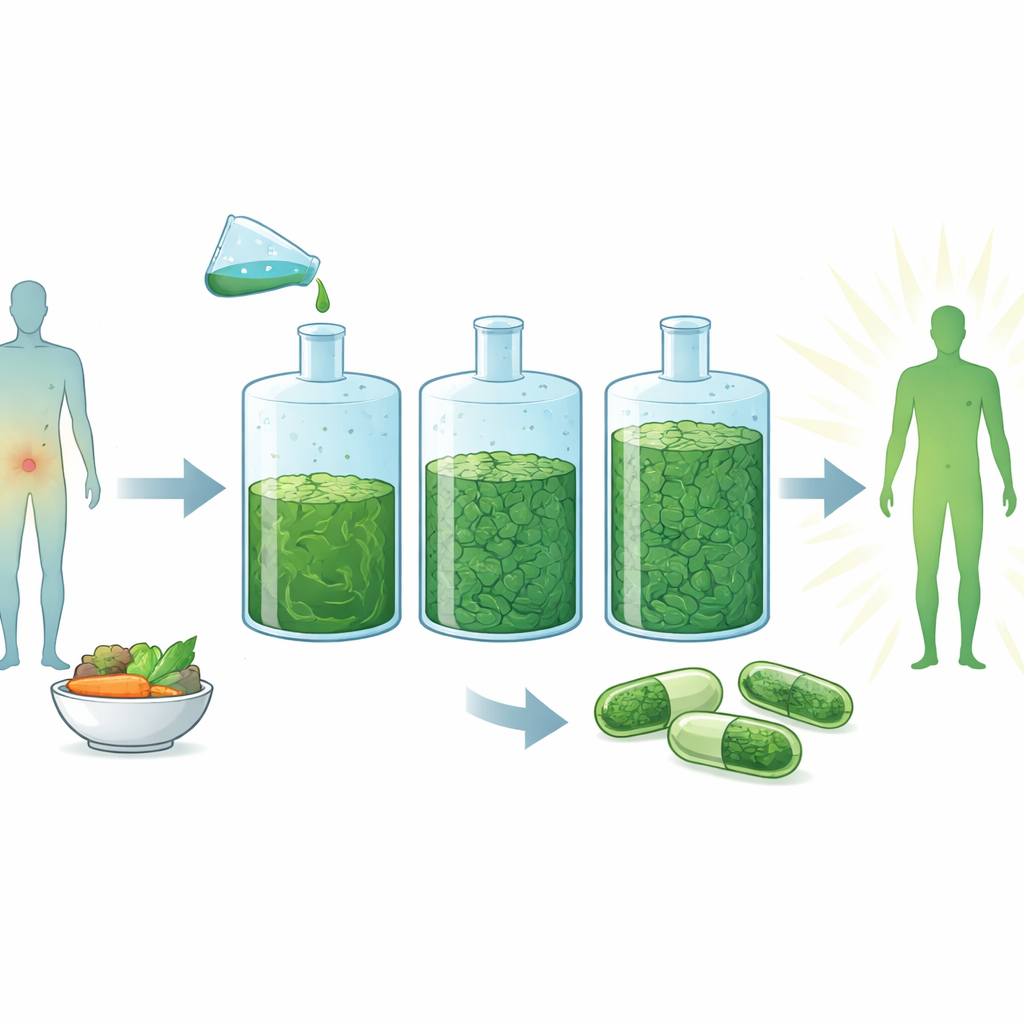
Iron deficiency is one of the world’s most common nutritional problems, yet many iron pills taste unpleasant and can upset the stomach. Spirulina, a blue‑green "superfood" sold as powders and tablets, naturally packs protein, healthy fats, and pigments with antioxidant power. This study asks a simple but important question: if we grow spirulina in water enriched with iron, can we turn it into an even better natural iron source without spoiling its nutritional quality or safety?
Growing a Superfood in Iron-Rich Water
The researchers cultivated the cyanobacterium Arthrospira platensis, better known as spirulina, in standard culture medium containing different amounts of iron, from low (2 mg per liter) to very high (64 mg per liter). Over two weeks they measured how fast the spirulina grew and how much iron it pulled into its cells. They also analyzed key nutritional components of the dried biomass: proteins, carbohydrates, various fats, colorful light‑harvesting pigments, and plant‑like compounds called phenolics that can act as antioxidants but may also interfere with mineral absorption. Finally, they tracked chemical signs of oxidative stress inside the cells, which can rise when too much iron promotes the formation of damaging reactive molecules.
Finding the Sweet Spot for Growth and Nutrition
As iron in the water increased, spirulina grew slightly faster and reached higher cell densities, with growth leveling off at mid‑range iron levels. Iron accumulation in the biomass, however, rose dramatically at the top doses: at the highest iron setting, the dried spirulina contained about 15 times more iron than the control. Proteins and soluble carbohydrates climbed steadily with iron, suggesting that iron feeding can make the biomass richer in basic nutrients. The pattern for fats and pigments was more nuanced. Healthy polyunsaturated fatty acids, including omega‑3‑ and omega‑6‑type molecules, and the bright blue pigment phycocyanin peaked at moderate iron levels (around 16–32 mg per liter) and declined when iron became excessive.
When Too Much Iron Becomes a Burden
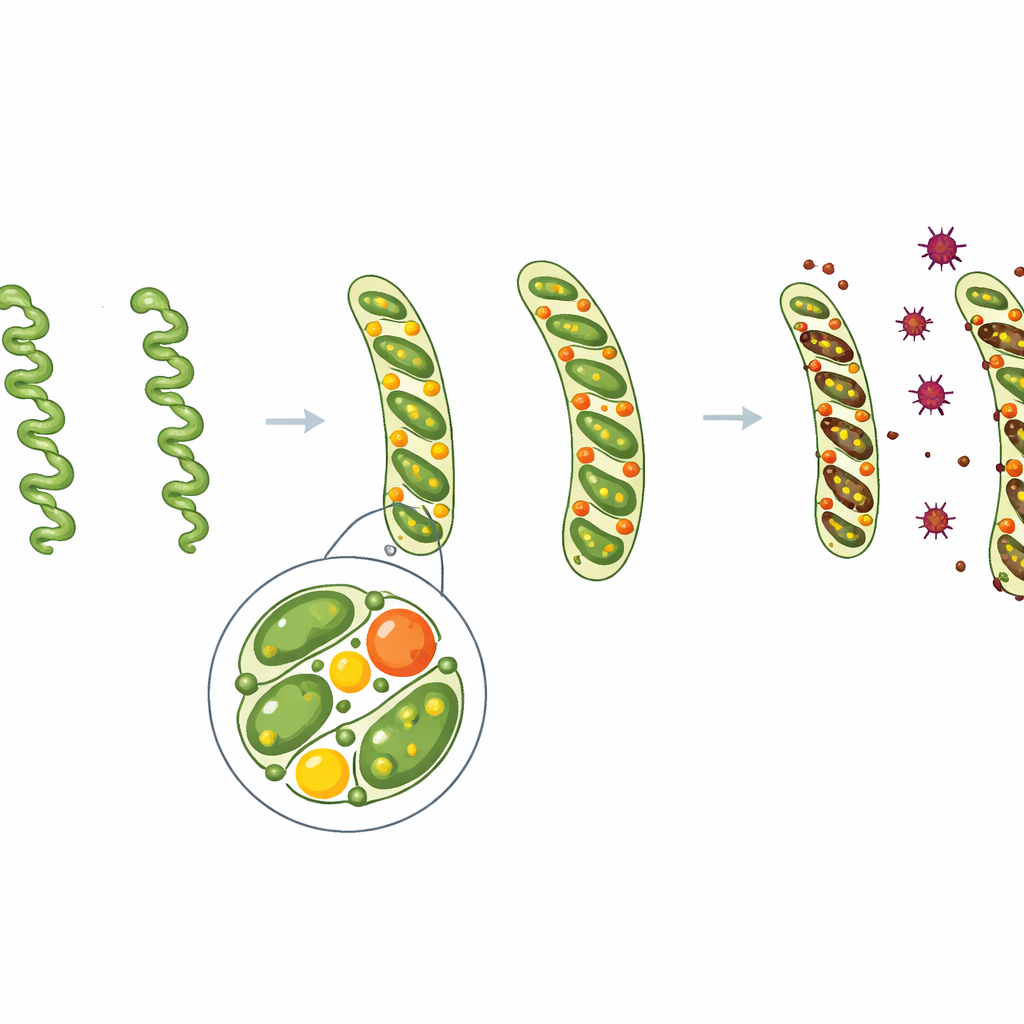
High iron came with a cost inside the cells. Chemical markers of oxidative damage, such as hydrogen peroxide and malondialdehyde, rose as iron levels increased, indicating that surplus iron helped generate reactive oxygen species that can attack membranes and other cell components. Spirulina responded by ramping up phenolic compounds, particularly gallic and benzoic acids, which can neutralize reactive molecules and bind metals. While this boost strengthens the organism’s own defense, it may not be ideal nutritionally: very high phenolic levels are considered "anti‑nutritional" because they can limit how much iron the human gut actually absorbs from food.
Designing Better Iron-Rich Spirulina
Putting these pieces together, the study highlights a practical trade‑off. If iron in the culture is too low, spirulina does not reach its full potential as an iron supplement. If iron is pushed too high, the cells accumulate large amounts of iron but also experience oxidative stress, shift their chemistry toward protective phenolics, and lose some of their most desirable pigments and fats. The most favorable range landed in the middle: iron concentrations of about 16–32 mg per liter delivered robust growth, high iron content, elevated proteins and carbohydrates, and the richest levels of beneficial unsaturated fatty acids and phycobiliprotein pigments, while keeping stress and anti‑nutritional phenolics in check.
What This Means for Everyday Diets
For consumers and product developers, these findings suggest that spirulina can be intentionally grown under carefully tuned iron conditions to create a natural supplement that may supply much of a day’s iron needs in just a few grams of dried biomass, along with protein and protective pigments. Crucially, the work shows that "more iron" is not always better; instead, there is an optimal iron dose for cultivation that maximizes both nutritional value and potential iron bioavailability. Future studies that test how well this iron‑rich spirulina releases iron during digestion will help confirm its promise as a gentle, food‑based way to combat iron deficiency worldwide.
Citation: Gholizadeh, F., Zarinkamar, F. Iron biofortification as a promising strategy to improve productivity and nutritional value of Arthrospira platensis (spirulina). Sci Rep 16, 10099 (2026). https://doi.org/10.1038/s41598-026-40520-8
Keywords: spirulina, iron deficiency, biofortification, functional foods, microalgae nutrition