Clear Sky Science · en
Improved long-term prognosis of eosinophilic granulomatosis with polyangiitis: retrospective analysis of 87 patients after biologic therapy introduction in Japan
Why this rare disease study matters
Eosinophilic granulomatosis with polyangiitis (EGPA) is a rare but serious illness that usually begins with asthma and allergies and can progress to damaging blood vessels and vital organs. Thanks to modern treatments, most patients now survive at least five years, but what happens over decades has been less clear. This study from two Japanese hospitals followed 87 people with EGPA for up to 30 years, through the recent introduction of powerful new biologic drugs, to see how long they lived, how often their disease flared, and which factors truly shaped their future.
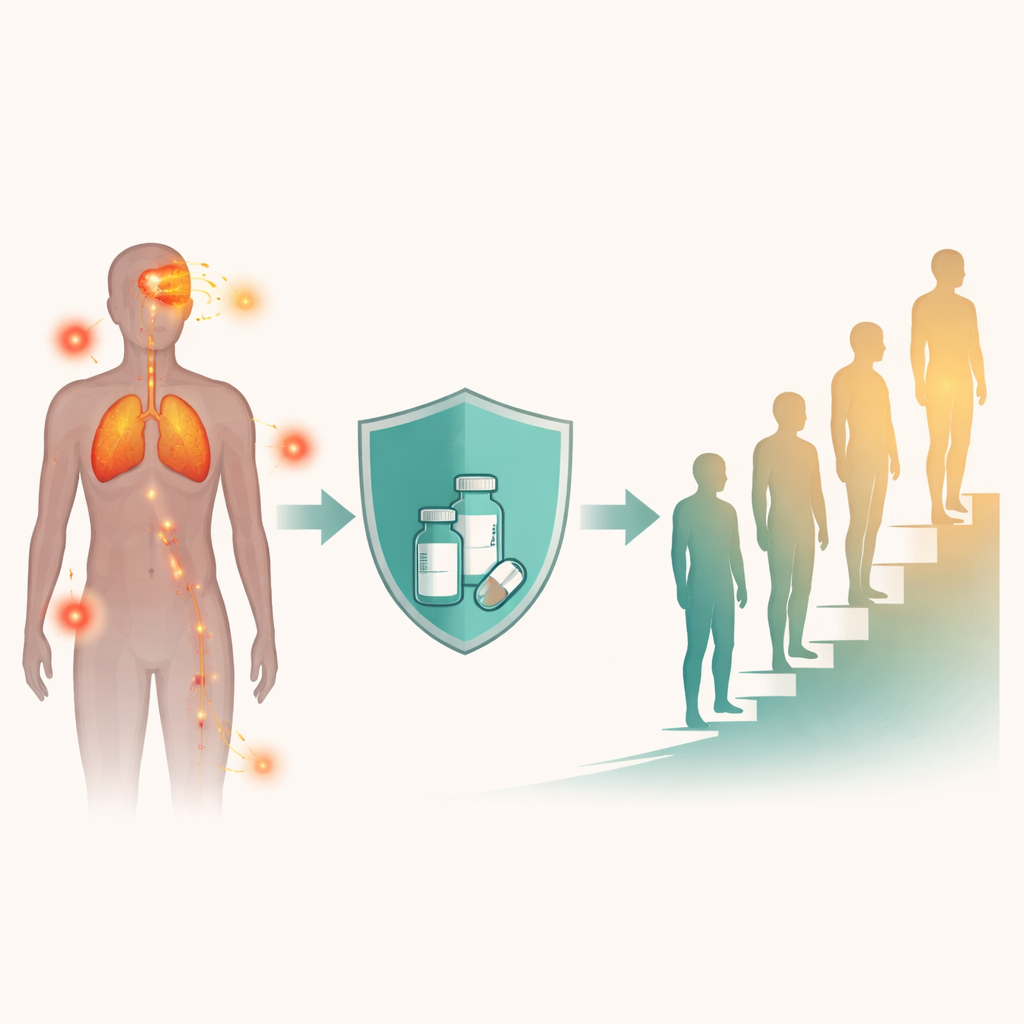
Looking at a long road with better tools
The researchers examined medical records of patients seen between 2018 and 2024, many of whom had been diagnosed years earlier. All had asthma and signs that EGPA was affecting multiple organs such as nerves, lungs, heart, skin, kidneys, or the digestive tract. Doctors recorded how active the disease was at diagnosis, which organs were involved, and what treatments were used, including steroids, classic immune-suppressing drugs, intravenous immunoglobulin (IVIG), and newer biologic medicines like mepolizumab that target eosinophils, a type of white blood cell central to EGPA.
Survival is high, but flares still take a toll
Overall, survival was strikingly good. About 95% of patients were alive five years after diagnosis, 91% after ten years, and 85% after twenty years—better than earlier Japanese reports from before the biologic era. Only nine people died during follow-up, and notably, none of the deaths were due to uncontrolled vasculitis itself. Instead, most were from infections such as aspiration or bacterial pneumonia, often in older patients who had needed repeated or stronger immune-suppressing treatments. Older age when EGPA began and more severe disease activity at the start were both linked to a higher risk of death over time.
Relapses, the heart, and heavy treatment
Flares of EGPA—defined as returns of blood-vessel inflammation after a period of remission—remained common. Roughly half of the patients had frequent relapses, meaning at least one flare every two years. Those with frequent relapses were more likely to have heart involvement, more organs affected, and higher disease activity scores at diagnosis. They also needed higher long-term steroid doses and were more often treated with additional immune-suppressing drugs, IVIG, and mepolizumab. This heavy treatment may help control EGPA but also increases vulnerability to serious infections, especially in older adults.
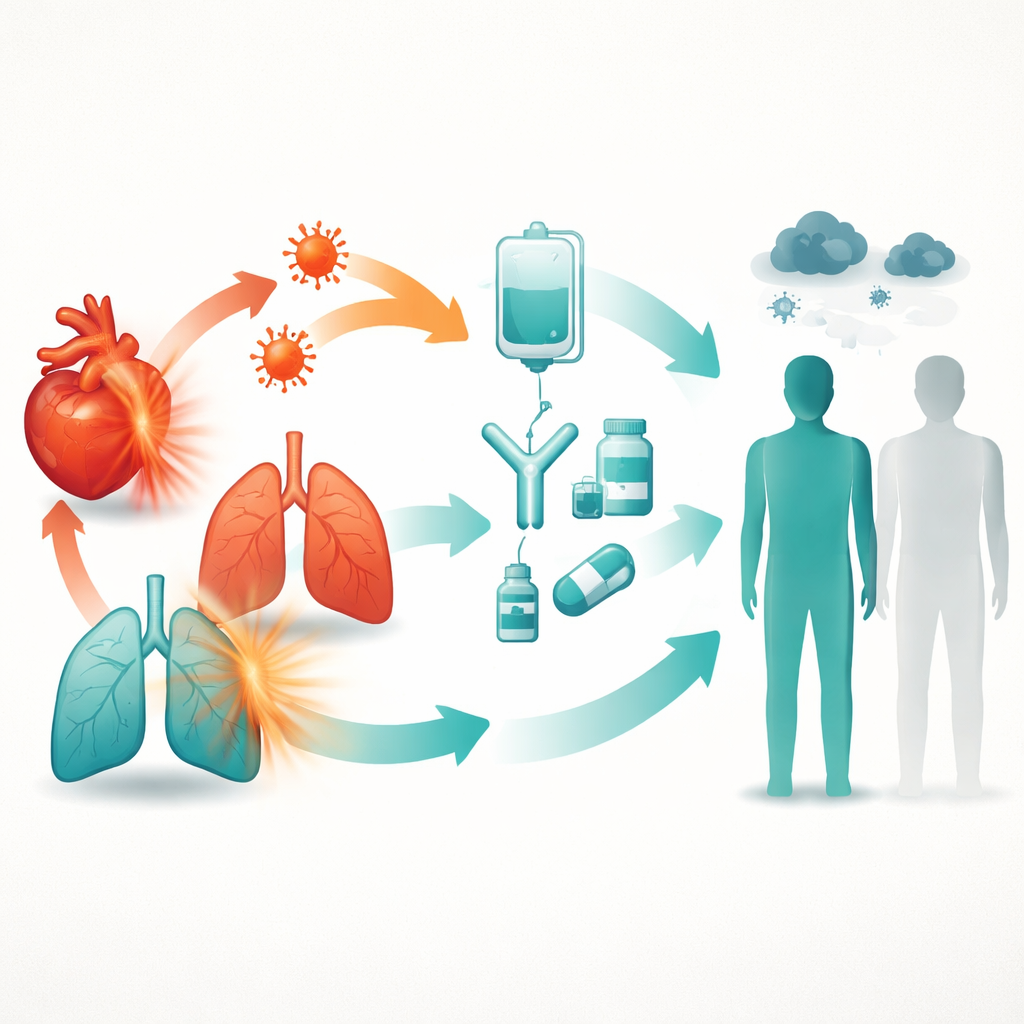
What biologic drugs can and cannot yet prove
About 70% of the patients received mepolizumab, usually after standard therapies had failed to fully control the disease. These patients tended to have more severe or relapsing EGPA than those who did not receive the biologic. When the researchers adjusted for other factors, they did not find clear proof that mepolizumab alone improved long-term survival. However, survival in the biologic-treated group was at least as good as in the less-sick group that never needed it. This pattern suggests that mepolizumab likely helps, but its specific impact is hard to tease apart from the broader treatment package, which includes careful steroid use, traditional immune-suppressants, and IVIG.
What this means for patients and families
The main message for people living with or worried about EGPA is cautiously hopeful. With early diagnosis and modern, multi-pronged treatment, most patients can now expect to live many years, and deaths from the vasculitis itself have become rare. The biggest remaining dangers are frequent disease flares and treatment-related infections, particularly in older adults. Biologic drugs such as mepolizumab are important tools, but they are part of a larger strategy rather than a magic bullet. The study suggests that continued progress will come from fine-tuning the overall care plan—controlling inflammation while minimizing long-term steroid and immune-suppressant exposure—so that patients not only live longer, but also live better.
Citation: Yamashita, Y., Masumoto, N., Takaoka, S. et al. Improved long-term prognosis of eosinophilic granulomatosis with polyangiitis: retrospective analysis of 87 patients after biologic therapy introduction in Japan. Sci Rep 16, 10076 (2026). https://doi.org/10.1038/s41598-026-40518-2
Keywords: eosinophilic granulomatosis with polyangiitis, vasculitis, asthma and allergy, biologic therapy, long-term prognosis