Clear Sky Science · en
Image processing-based warning system for preventing the fuel selector valve from remaining closed in small trainer aircraft
Why this matters for everyday flying
Most people assume that airplane engines stop only because of rare mechanical failures or bad fuel. Yet in many small training airplanes, a simple oversight—forgetting to open a fuel valve—can quietly set the stage for an engine to quit just after takeoff, when there is almost no time to react. This paper introduces a compact, low-cost warning system that uses a tiny camera and onboard computer to watch that valve for the pilot and call out danger before it turns into a crash.
The hidden risk in small training planes
In large passenger jets, the fuel system is highly automated, and computers keep fuel flowing without pilots having to touch valves. In small trainer aircraft such as the Cessna 172 or Viper SD4, however, the fuel selector valve is a manual lever that must be set correctly before every flight. The fuel already sitting in the engine is often enough for taxiing and the first moments of takeoff, so an aircraft can lift off apparently healthy even if the valve is still closed. Only during the first climb—when the ground is close and speed is low—does the engine quietly starve and quit. Under stress, especially for student pilots, recognizing that a forgotten valve is the cause is difficult, and precious seconds slip away.
A safety gap in the current technology
The authors surveyed decades of research on aircraft fuel systems and cockpit technology. Many studies focus on modeling fuel flow, predicting mechanical faults, or improving sensors and pumps in complex airliners. Others look at digital checklists and tablet-based flight bags that still rely on pilots to tap through procedures. What they did not find was a system that automatically watches a simple physical control—like the fuel selector valve—and warns the pilot if it is left in a dangerous position before takeoff. Despite the known consequences of fuel mismanagement, this specific human-factor problem in small trainers had been largely overlooked.
A camera that watches the valve for you
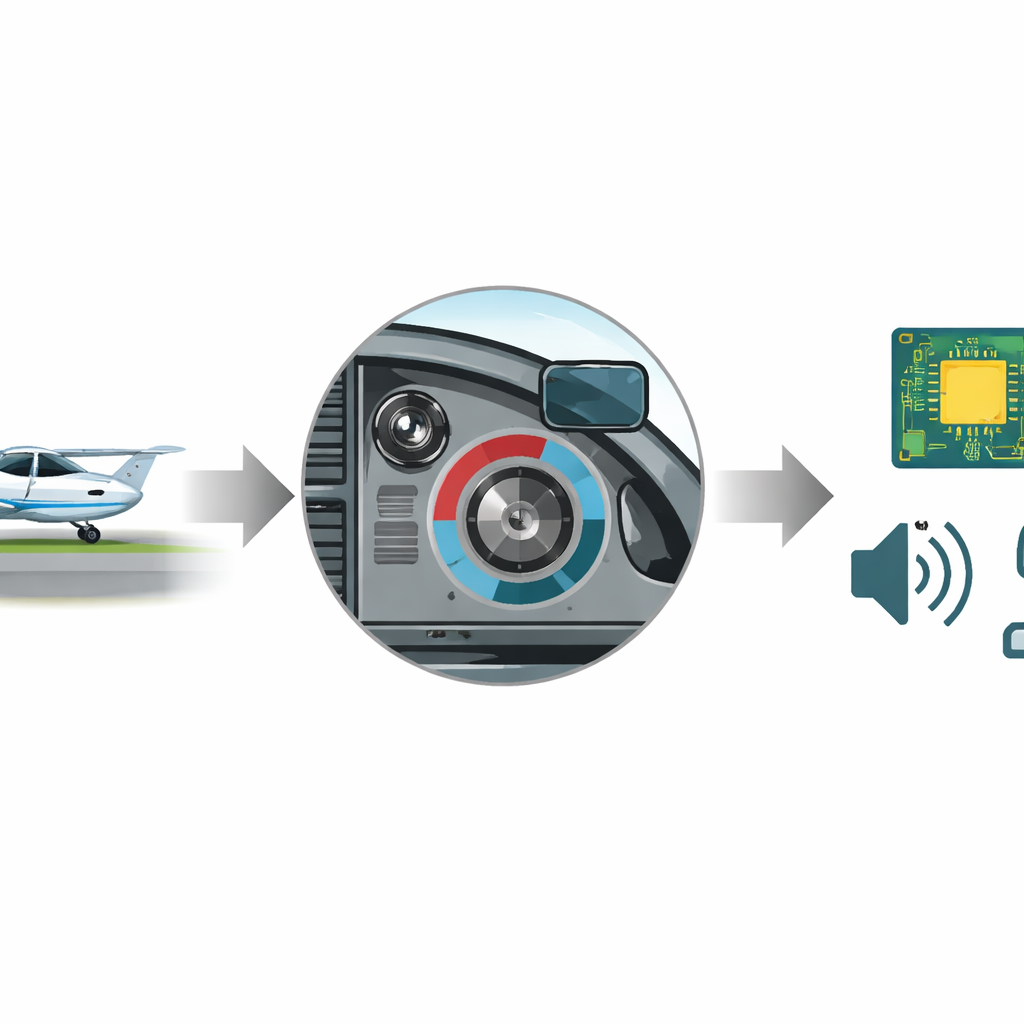
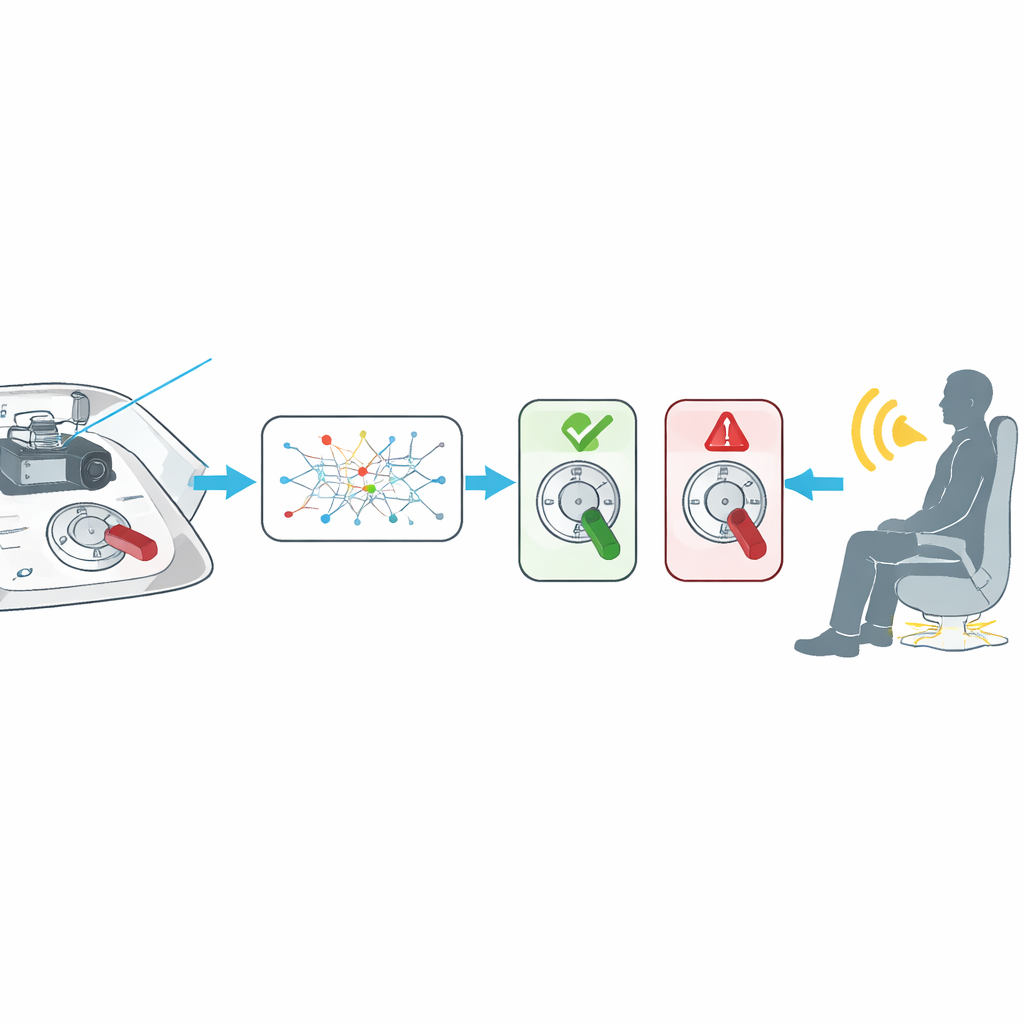
To close this gap, the researchers built a prototype that requires no modification of the aircraft’s fuel system. A small "button" camera is mounted in the cockpit with a clear view of the fuel selector valve. Its images are sent to a compact NVIDIA Jetson Nano computer, which runs a modern artificial-intelligence model called YOLOv5. This model was trained using 1000 carefully chosen images drawn from cockpit videos, where each picture was labeled according to the valve’s position—such as left, right, both tanks, or closed. The computer analyzes each frame in roughly one-tenth of a second, decides which position it sees, and feeds that decision into simple logic that determines whether the situation is safe or hazardous.
From detection to unmistakable alerts
When the system recognizes that the valve is in a risky state—closed or in a special "faulty" setting on one aircraft type—it activates two kinds of warnings at the same time: sound in the pilot’s headset and vibration from a small motor mounted in the seat. This dual alert is designed so that even a distracted or stressed pilot is likely to notice it. The team tested the system on two common training airplanes, placing the valve in each possible position and recording real-time demonstration videos. By checking 418 individual video frames by hand, they found that the system made the correct call in about 91% of cases overall. Most importantly, for the life-critical closed position, it almost never missed: it correctly flagged nearly all truly closed valves and never cried "closed" when the valve was actually safe.
How reliable is it in real flying conditions?
The detailed analysis showed that most errors occurred in edge cases that are unlikely during a calm pre-flight check—for example, when a pilot’s hand briefly blocked the camera or while the valve was moving between positions. Performance was very strong when the valve was still and clearly visible, which is exactly the situation before takeoff. The study also explored standard quality measures for detection systems and found that all valve positions scored highly, with the most critical state performing best. The authors openly discuss limitations: tests were done on only two aircraft types, under daytime lighting, and with a fixed camera. They point out that future versions should be tried under low light, extreme temperatures, and across more cockpit designs, and might eventually be compared with systems that use built-in physical sensors instead of a camera.
What this means for safer training flights
In simple terms, this work shows that a small, smart "eye" in the cockpit can reliably notice when a crucial fuel lever is left in the wrong place and warn the pilot before takeoff. The prototype achieves high accuracy, especially for the most dangerous situation, without touching the fuel system or requiring major changes to the airplane. While more testing is needed before it could be widely adopted or certified, the study demonstrates that modern image recognition can tackle very practical cockpit mistakes. For student pilots and instructors, such a system could add an extra layer of protection against a surprisingly common and easily overlooked source of accidents.
Citation: Çoban, İ.H., Kazan, F.A. Image processing-based warning system for preventing the fuel selector valve from remaining closed in small trainer aircraft. Sci Rep 16, 11014 (2026). https://doi.org/10.1038/s41598-026-40514-6
Keywords: general aviation safety, computer vision, fuel selector valve, pilot warning systems, small trainer aircraft