Clear Sky Science · en
Using deep learning to explore the impacts of street-view green space on school myopia prevalence: a multicenter, cross-sectional study
Why greener streets matter for children’s eyes
Across the world, more and more children are becoming nearsighted, or myopic, especially in fast‑growing cities. Parents often blame screens or homework, but the spaces surrounding schools may also quietly shape how children’s eyes develop. This study asked a simple question with powerful implications: does the greenery children actually see around their schools help protect their vision, and can modern image‑analysis tools capture that effect better than traditional satellite maps of vegetation?
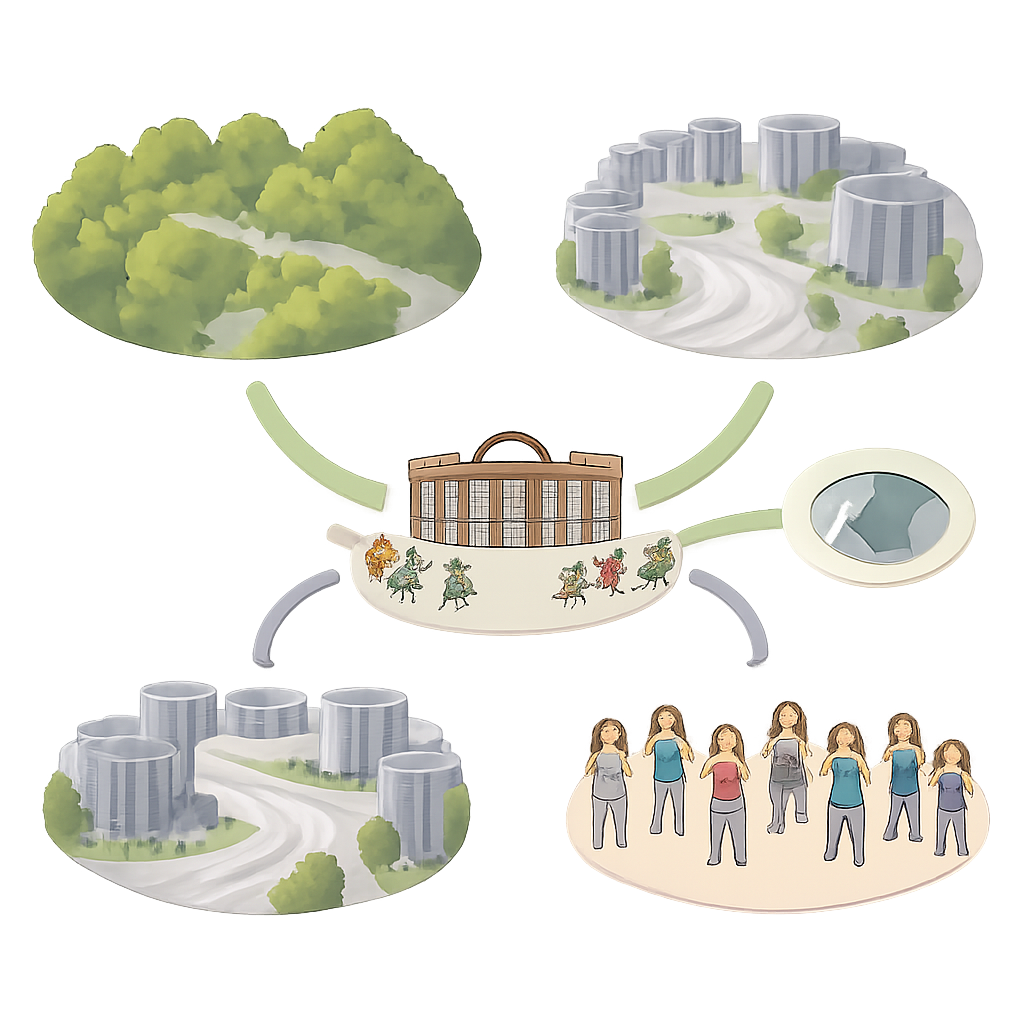
Looking at green space from a child’s point of view
Most earlier research measured green space using satellite data, which look down from space and summarize how much vegetation covers an area. That common measure, called a vegetation index, treats a tall tree and a distant patch of grass much the same way and cannot tell what a child at ground level truly sees. In this work, researchers instead focused on “eye‑level” greenery. They collected nearly 61,000 street‑view photos taken around 146 schools in five cities in China’s Hubei Province, covering kindergartens through high schools. Using deep learning, a type of artificial intelligence, they taught a computer to pick out real plants—trees, lawns, shrubs—from everything else in each image and then calculated the share of the view made up by greenery. This measure, called the Vision Greenness Index, reflects how green a place looks to someone standing there.
Comparing two ways of measuring nearby nature
To see which view of nature mattered more, the team compared the street‑level greenness with the traditional satellite‑based vegetation index around each school, looking at circular zones up to five kilometers in radius. At the same time, they examined detailed eye‑exam data from 69,051 students, all checked in 2022 using standard clinical methods. Nearly 60 percent of these children had myopia, and rates rose sharply from the later years of kindergarten through elementary school, then continued to climb in junior and senior high school. By combining the eye data with the two greenery measures and other local conditions—such as air pollution, sunshine, temperature, rainfall, and nearby sports facilities—the researchers could tease out which environmental features tracked most closely with nearsightedness.
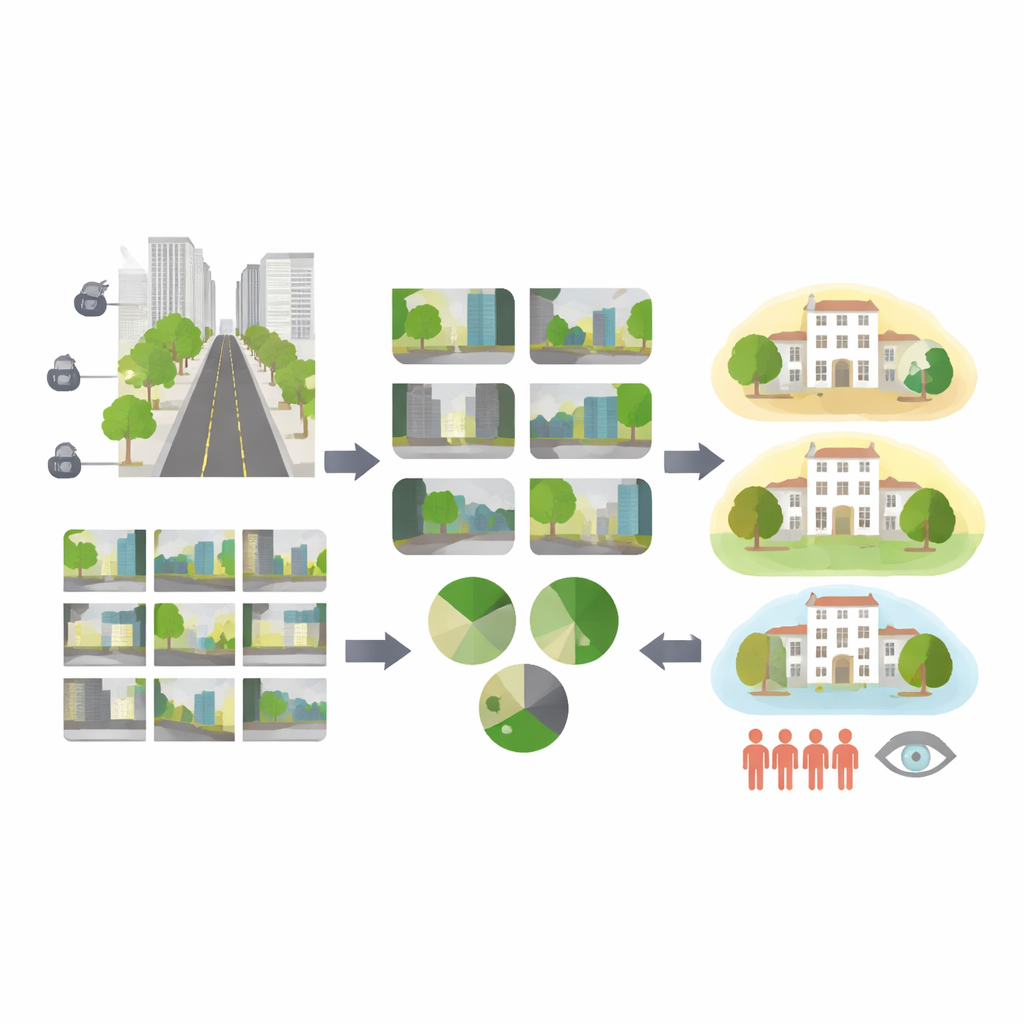
Greener views linked to less myopia in younger children
When all schools were analyzed together, higher street‑level greenness around schools was clearly associated with lower rates of myopia, especially when measured within a five‑kilometer radius. In contrast, the satellite‑based vegetation index did not show a meaningful relationship with myopia in the combined sample. Looking more closely by school stage revealed an important nuance: the protective link between green views and myopia appeared mainly in kindergartens and elementary schools. In these younger groups, increases in the street‑view greenness index corresponded to noticeable drops in the share of children with myopia, and this link was stronger than for the satellite measure. For high schools, neither type of greenness showed a clear connection to myopia, suggesting that heavy study loads and limited outdoor time in older students may overshadow any benefits from nearby nature.
Other clues from light and air
The study also found that environmental factors beyond greenery may shape children’s vision. More annual sunshine hours around schools were associated with lower myopia rates, echoing previous work suggesting that time spent in bright outdoor light can slow the eye’s tendency to elongate. On the other hand, higher levels of fine particle pollution (PM2.5) were linked with more myopia, consistent with concerns that polluted air could irritate or damage eye tissues. These patterns support the idea that the broader outdoor environment—its light, air, and landscapes—acts together on children’s eyes during crucial years of growth.
What this means for schools and cities
For families and planners, the message is straightforward: what children see around their schools may matter for their eyesight, and not all greenery measures are created equal. A computer‑derived score based on street‑view photos, which mimics a child’s own perspective, did a better job than satellite images at flagging schools where myopia was less common, particularly for younger pupils. While this study cannot prove cause and effect, it suggests that expanding and improving visible green spaces within everyday walking and playing distances of kindergartens and elementary schools could be a practical, population‑wide tool to help curb the myopia surge. Thoughtful city design—cleaner air, more daylight, and more trees where children actually spend their time—may become as important to eye health as glasses and clinic visits.
Citation: Hua, D., Yang, T., Cui, Q. et al. Using deep learning to explore the impacts of street-view green space on school myopia prevalence: a multicenter, cross-sectional study. Sci Rep 16, 11032 (2026). https://doi.org/10.1038/s41598-026-40477-8
Keywords: child myopia, urban green space, street-view imagery, school environment, eye health