Clear Sky Science · en
Behavioral determinants of climate-smart agriculture adoption among smallholder leafy vegetable agripreneurs in semi-arid Tanzania
Why this matters for everyday food and farming
In many parts of the world, including semi-arid regions of Tanzania, small farms growing everyday leafy vegetables like kale, spinach, and amaranth are on the front lines of climate change. This study asks a simple but powerful question: what actually convinces these farmers to adopt climate‑smart ways of growing food that can handle heat, drought, and erratic rains? Understanding their motivations is key to securing reliable supplies of fresh vegetables, improving rural incomes, and keeping farming viable in a warming world.
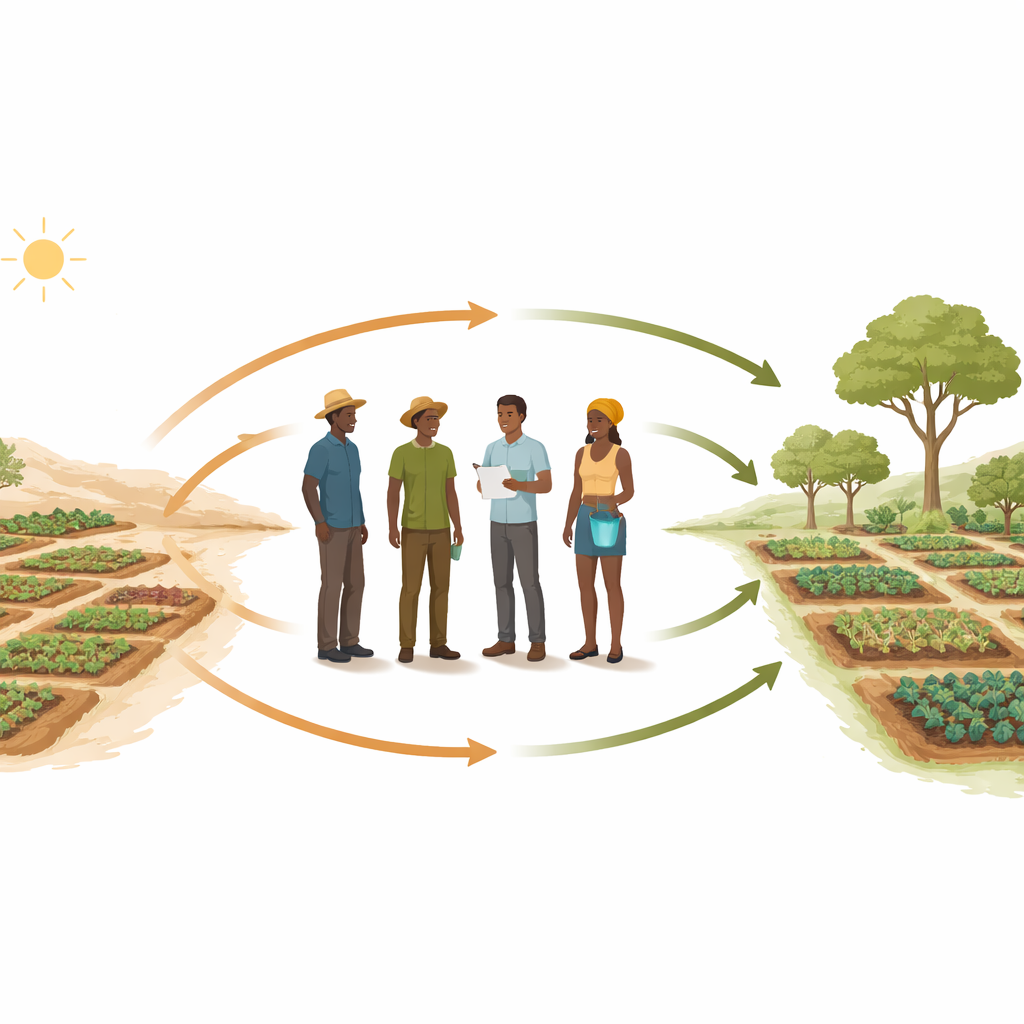
Farming in a tough and changing landscape
The research focuses on smallholder “agripreneurs” who grow leafy vegetables in the dry central regions of Dodoma and Singida in Tanzania. Here, farmers rely heavily on rain, but rainfall is increasingly unreliable, dry spells are longer, and temperatures are rising. Leafy vegetables are a strategic choice in this harsh setting: they grow quickly, can be harvested several times, and are in high demand in local markets. To keep these crops productive under climate stress, farmers can use climate-smart agriculture practices such as rotating crops, diversifying what they plant, mulching to keep soil moist, planting improved seed varieties, enriching soils with organic and mineral inputs, and integrating trees into their fields.
Looking inside farmers’ minds and social worlds
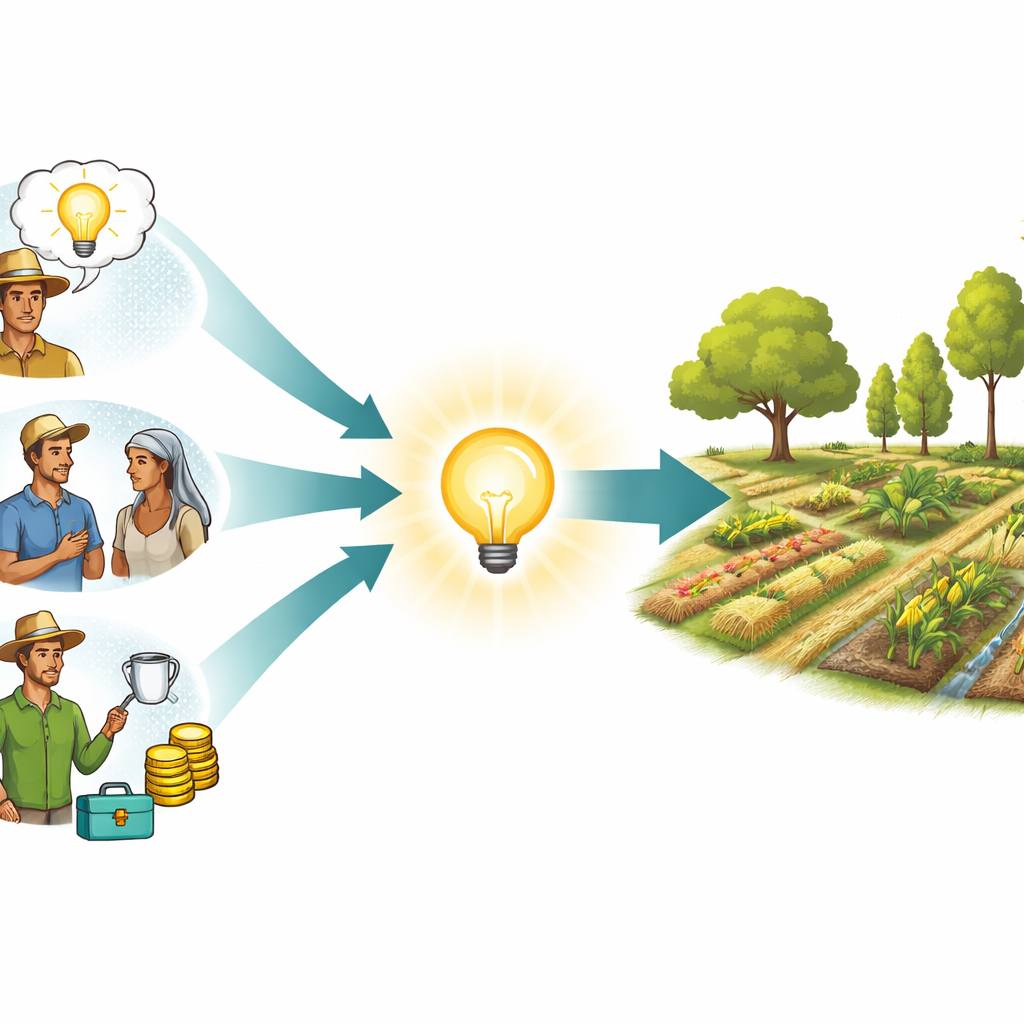
Instead of only counting how many farmers use these practices, the study digs into why they choose to do so. The authors combine two well-known behavior frameworks to build a richer picture. One part looks at attitudes (whether farmers feel climate‑smart practices are good and beneficial), social norms (what important people around them think they should do), and perceived control (whether they feel they have the money, knowledge, and tools to act). The other part zooms in on perceived usefulness – how strongly farmers believe these practices will actually improve yields, profits, and resilience on their own farms. By surveying 385 leafy‑vegetable growers with a detailed questionnaire, the team then used statistical modeling to see how these psychological and social factors fit together.
How beliefs turn into action
The analysis shows that farmers’ attitudes are the strongest driver in the whole chain: when growers hold a positive view of climate‑smart practices, they are far more likely to see them as useful and to actually adopt them. Social surroundings matter too. Farmers who see neighbors, relatives, or community leaders successfully using climate‑smart methods – or who feel encouraged by extension officers – are more inclined to judge these practices as worthwhile. A sense of control also plays a role: when farmers feel they can access credit, inputs, and know‑how, they are more likely to view climate‑smart approaches as beneficial and feasible. Across the board, perceived usefulness stands out as the key “bridge” between these beliefs and real behavior: once farmers are convinced that the practices truly pay off in their own context, adoption rises sharply.
What this means for support and policy
These findings have practical implications for anyone trying to scale up climate‑smart farming. Demonstration plots, farmer field schools, and peer‑to‑peer learning can visibly showcase yield gains, healthier soils, and better income, strengthening positive attitudes and the sense that “this works here.” At the same time, empowering social networks – cooperatives, farmer groups, and community leaders – can spread climate‑smart ideas through trusted relationships. Improving farmers’ access to affordable credit, quality seed, water‑saving tools, and reliable advice boosts their confidence that they can actually put new methods into practice. The study argues that extension services, financial programs, and policy frameworks in Tanzania should explicitly build on these behavioral levers.
Take‑home message for food and climate futures
For leafy vegetable farmers in semi‑arid Tanzania, climate‑smart agriculture is not adopted just because it exists on paper or in policy; it is adopted when farmers genuinely believe it is useful, see respected peers using it, and feel they have the means to follow suit. By designing interventions that nurture positive attitudes, strengthen supportive social circles, and lower practical barriers, stakeholders can help small farms stay productive under climate stress. In doing so, they not only safeguard local food and incomes but also advance a more resilient and sustainable food system that benefits consumers and communities far beyond these drylands.
Citation: Erick, S.B., Mbwambo, J.S. & Salanga, R.J. Behavioral determinants of climate-smart agriculture adoption among smallholder leafy vegetable agripreneurs in semi-arid Tanzania. Sci Rep 16, 12084 (2026). https://doi.org/10.1038/s41598-026-40459-w
Keywords: climate-smart agriculture, leafy vegetable farming, smallholder farmers, Tanzania, farmer behavior