Clear Sky Science · en
Comprehensive molecular characterization and comparison of venom proteins and transcripts in three Gloydius species from South Korea
Why snake venom differences matter
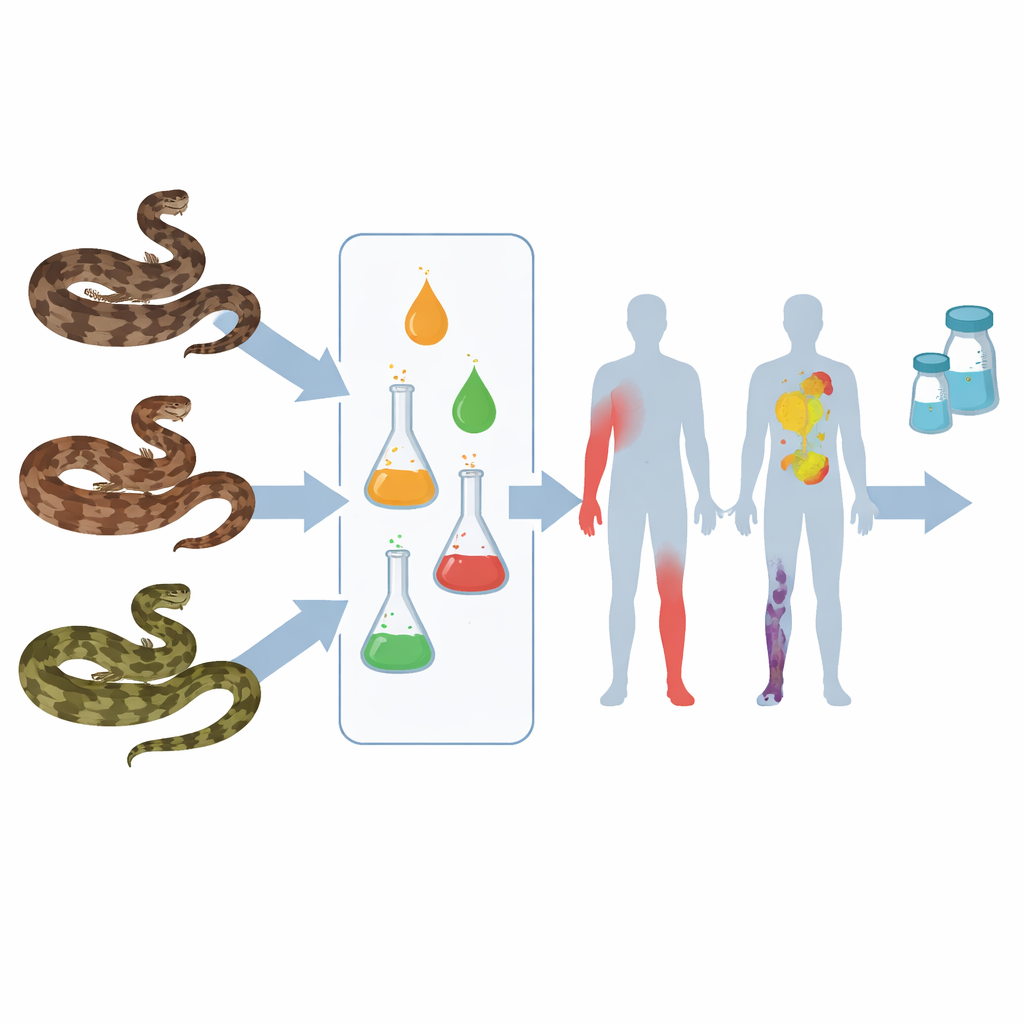
Every summer in South Korea, hundreds of people are rushed to emergency rooms after being bitten by pit vipers. Most bites come from three closely related snakes in the genus Gloydius. Yet their victims often show quite different symptoms, and the standard antivenom does not always work smoothly, sometimes triggering its own harmful reactions. This study asks a simple but crucial question: how different are these venoms at the molecular level, and could that knowledge lead to safer, more precise treatments?
Three similar snakes with very different venoms
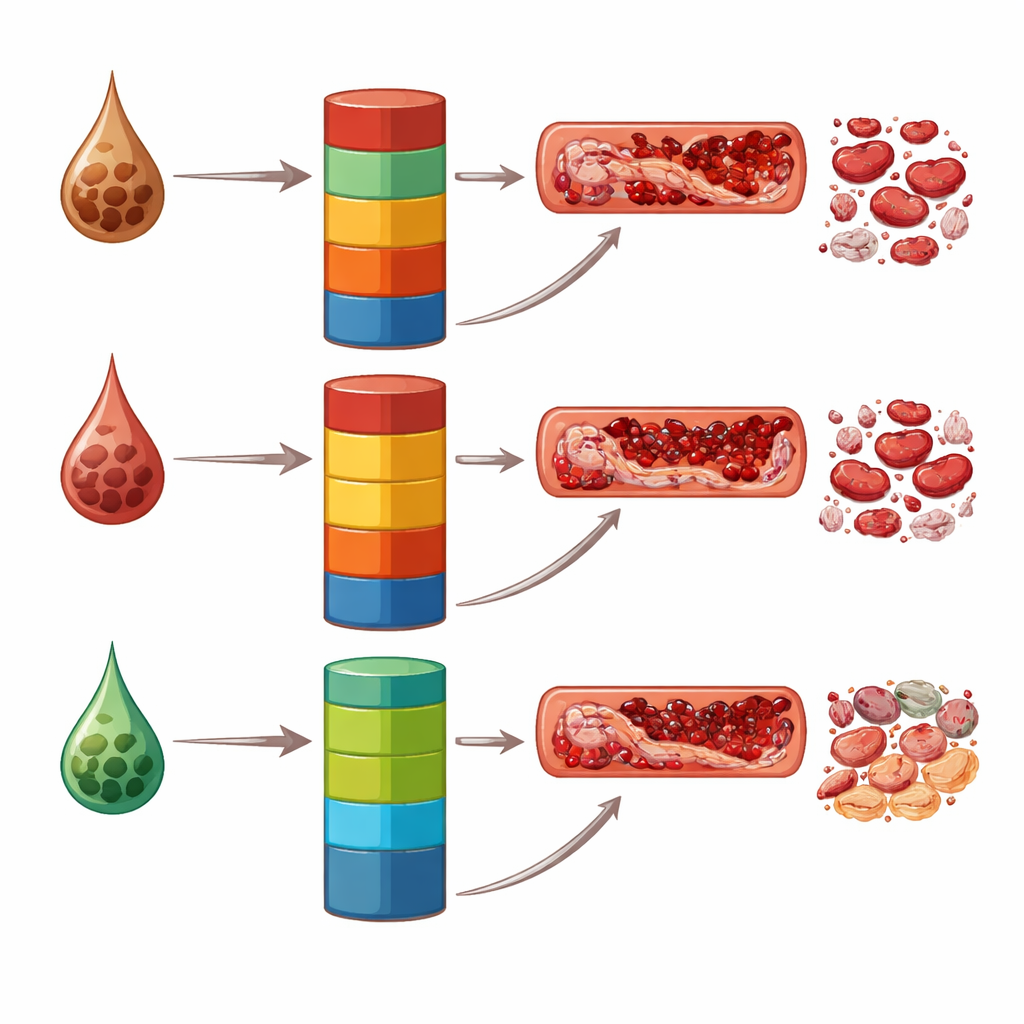
The researchers focused on three species—Gloydius brevicaudus, G. intermedius, and G. ussuriensis—that cause most medically significant bites in Korea. Although these snakes share a common lineage, their venoms turned out to be surprisingly distinct cocktails of toxic proteins. Using two-dimensional gel electrophoresis and mass spectrometry, the team separated and identified dozens of venom components. Each species showed its own signature pattern of protein spots on the gels, indicating that evolution has tailored their venom mixtures in different ways, even within the same genus.
Mapping the venom recipe from gene to protein
To understand where these differences come from, the scientists went inside the venom glands and read the active genes using high-throughput RNA sequencing. This transcriptome analysis revealed which toxin genes were being switched on and how strongly. In G. brevicaudus and G. ussuriensis, genes for a family of enzymes known as metalloproteases dominated, while in G. intermedius, genes for serine proteases were far more abundant. All three species produced high levels of phospholipase A2 genes, which disrupt cell membranes. By comparing these genetic data with the protein profiles from the gels, the team could link particular spots to specific toxin families and pinpoint which genes were shared or unique across species.
Hidden layers of control inside the venom gland
The picture was not perfectly one-to-one. In some cases, a toxin gene was abundant in the gland, but its protein appeared only weakly in the venom, and vice versa. This mismatch suggests that venom composition is not controlled by gene activity alone. Steps such as protein folding, chemical modification, trafficking, and degradation also shape what ends up in the venom. For example, G. ussuriensis showed very high levels of metalloprotease genes, yet the corresponding proteins were less dominant than expected, while some proteins with modest gene signals were strikingly abundant. These layers of regulation likely contribute to the nuanced differences in how each venom acts on blood, blood vessels, and tissues.
From molecular fingerprints to better antivenom
To confirm that the gene sequences truly encoded active toxins, the researchers chose two metalloprotease genes from different species, rebuilt them in yeast cells, and produced recombinant versions of the venom enzymes. One of these lab-made proteins efficiently broke down human fibrinogen—a key blood-clotting molecule—while the other did not, even though both could cut a generic test substrate. This functional test underscored that closely related toxins can behave differently and that small sequence changes matter. Combining protein maps, gene expression patterns, and activity tests, the team identified sets of species-associated toxin candidates that could serve as molecular markers for distinguishing bites from the three snakes and as starting points for designing more tailored antivenoms, diagnostic kits, and even venom-derived drugs.
What this means for patients and future treatments
For a person lying in an emergency room after a bite, the immediate question is whether the antivenom will help more than it harms. This study shows that, beneath the surface, the three main Korean pit vipers inject markedly different mixtures of toxins, controlled by complex gene and protein regulation in their venom glands. Recognizing these molecular fingerprints could lead to rapid tests that identify which species struck and to next-generation antivenoms tuned to neutralize the right toxins while reducing side effects. In the longer term, some of these carefully mapped venom components may also be repurposed as precise tools for medicine, turning a rural health hazard into a source of new therapies.
Citation: Park, H.S., Moon, J.M., Chun, B.J. et al. Comprehensive molecular characterization and comparison of venom proteins and transcripts in three Gloydius species from South Korea. Sci Rep 16, 12299 (2026). https://doi.org/10.1038/s41598-026-40454-1
Keywords: snake venom, Gloydius, antivenom, proteomics, transcriptomics