Clear Sky Science · en
Advanced strategies for enhanced decolorization and detoxification of textile dyes using biofilm NAS2–Ag/AgCl/Fe3O4 nanocomposites immobilized on peach pit
Why colored wastewater matters
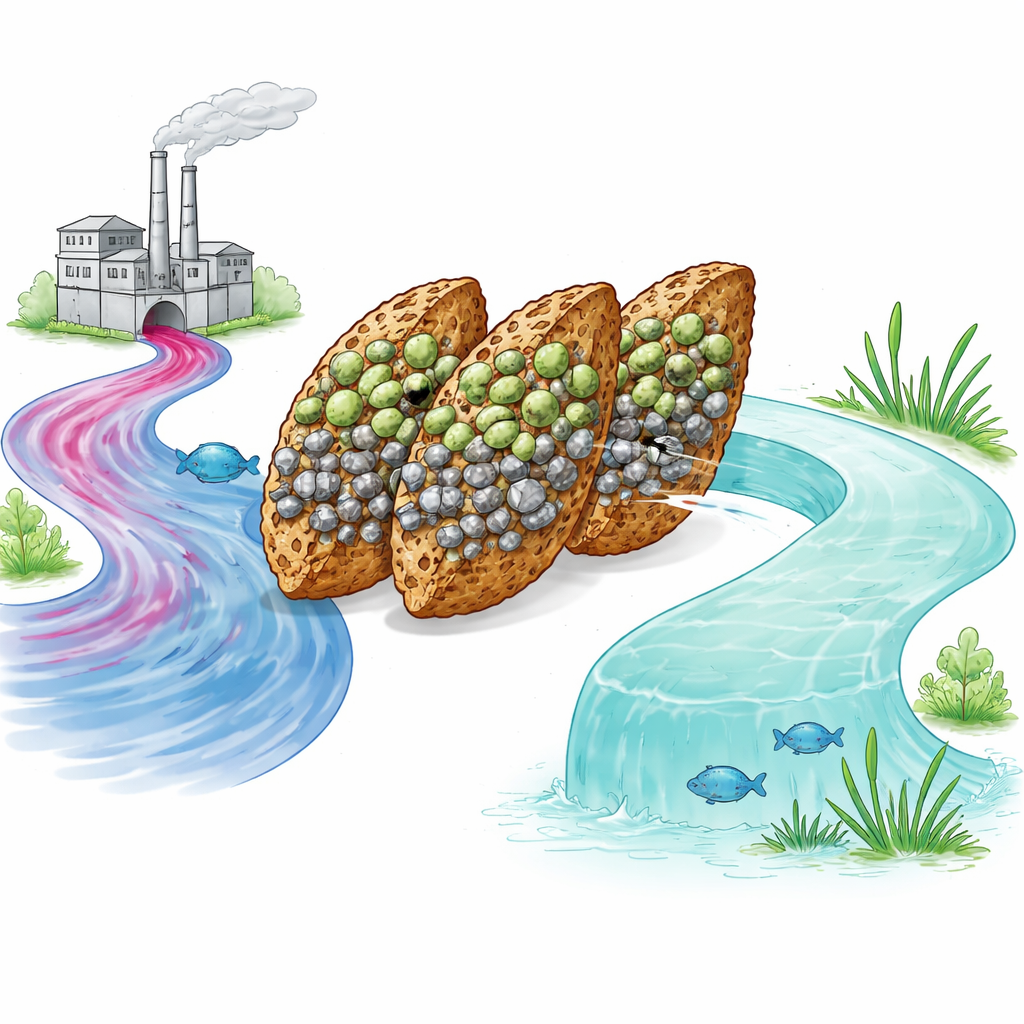
Most of the clothes we wear are dyed with synthetic colors that do not easily break down in nature. When textile factories release this leftover dye into rivers and soil, the water can turn into a toxic, long‑lasting cocktail that harms plants, animals, and people. This study explores a clever, eco‑friendly way to strip both the color and much of the toxicity from these waste streams by teaming up living microbes with tiny engineered particles on an agricultural waste material.
Tiny cleaners from factory waste and soil
The researchers began with three types of naturally occurring bacteria, isolated from textile wastewater and iron‑rich soil. On their own, these microbes can use dye molecules as a food source, gradually breaking them apart. The team combined them into a mixed community called NAS2 so that each member’s strengths could complement the others. Together, this trio was tested on a realistic mixture of four common textile dyes, chosen because they are widely used, highly soluble in water, and notoriously difficult to remove with standard treatment methods.
Building a smart sponge on peach pits
To turn these free‑swimming microbes into a practical treatment tool, the scientists encouraged them to grow as a slimy, cooperative layer—called a biofilm—on the rough, porous surface of discarded peach pits. At the same time, they used one of the bacterial strains to biologically manufacture a special magnetic nanocomposite made of silver, silver chloride, and iron oxide. These nanoparticles were only a few tens of billionths of a meter across and attached themselves within the biofilm and the pores of the peach pit. The result was a reusable “smart sponge” where bacteria and nanoparticles sit side‑by‑side, ready to capture and dismantle dye molecules as polluted water flows past.
From bright dyes to smaller, safer pieces
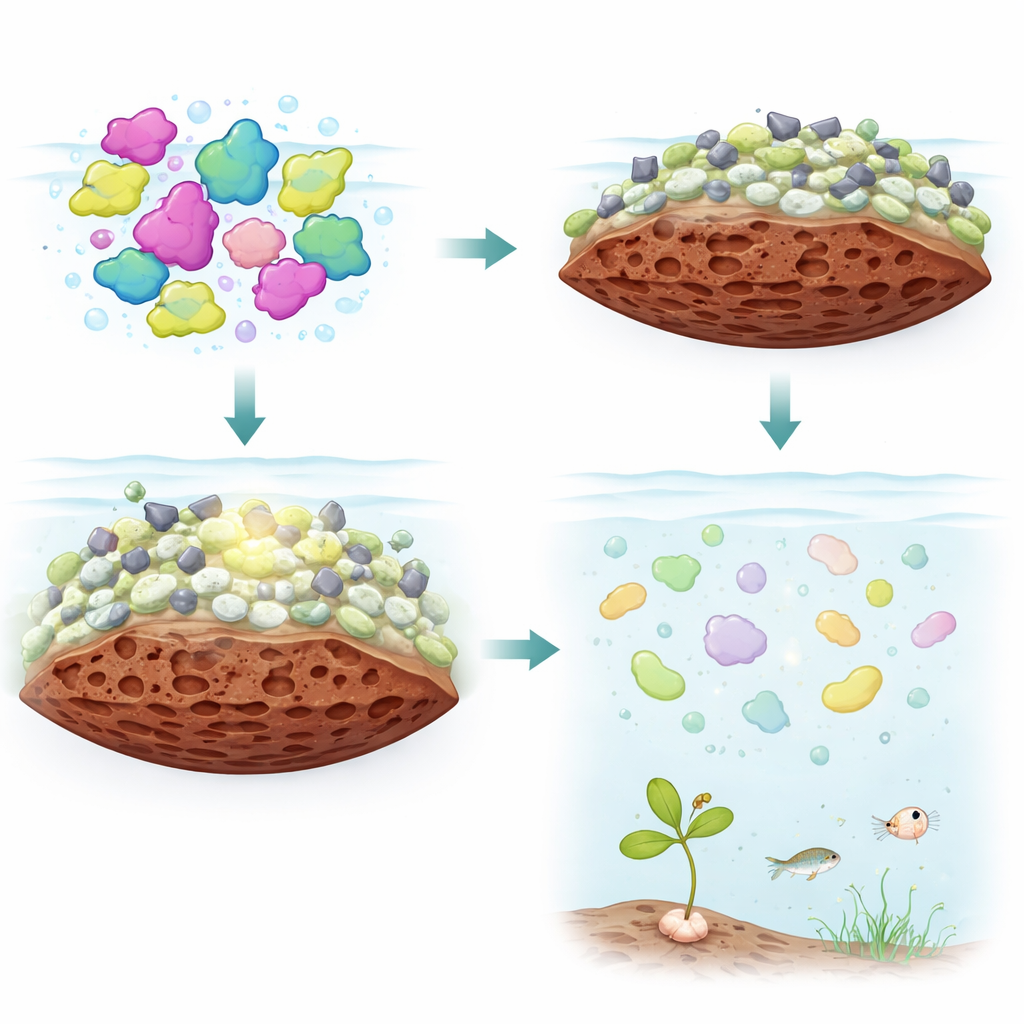
When the dye mixture was treated only with the NAS2 community, the color almost completely vanished within 24 hours. With the full biofilm–nanocomposite system on peach pits, the same job was done in just 12 hours. Measurements of light absorption confirmed that the original dye structures were disappearing, and chemical fingerprinting tools showed that the once‑bulky molecules were being chopped into much smaller fragments, mainly simple fatty acids and esters. These changes signal that the dyes’ complex, often hazardous ring structures were being broken open, a key step in making them less persistent and less dangerous in the environment.
Testing safety with seeds, shrimp, and bacteria
Removing color is not enough if the leftovers are still poisonous, so the team tested how harmful the dyes and their breakdown products were to living organisms. Radish seeds barely sprouted in the original dye mixture, but germination rose to about two‑thirds after treatment and was even higher in the presence of the nanocomposite alone. Tiny brine shrimp, often used as a simple animal safety test, suffered high death rates in untreated dye solutions, while the treated water caused much lower mortality, even at high concentrations. A common laboratory strain of E. coli also grew poorly in the untreated dyes but thrived in the decolorized solutions, another sign that the process stripped away much of the toxicity. At working doses, the magnetic nanocomposite itself showed modest toxicity and can be held in place and magnetically recovered, limiting its escape into nature.
A path toward cleaner clothes and cleaner water
Taken together, the findings suggest that pairing microbial communities with carefully designed magnetic nanoparticles on inexpensive peach pits can rapidly remove both color and toxicity from textile dye wastewater. The bacteria supply a powerful biochemical toolkit, while the nanomaterials speed up reactions and help disinfect the water, all within a solid support that can be reused and physically contained. For a layperson, the key message is that waste from one system—microbes from polluted sites and pits from fruit processing—can be turned into a robust filter that makes dyed wastewater far less harmful. With further scaling and safety checks, such hybrid bio‑nanotech systems could help the textile industry move toward cleaner production without relying on energy‑intensive or highly chemical treatments.
Citation: Heydari, F., Jookar Kashi, F. Advanced strategies for enhanced decolorization and detoxification of textile dyes using biofilm NAS2–Ag/AgCl/Fe3O4 nanocomposites immobilized on peach pit. Sci Rep 16, 11661 (2026). https://doi.org/10.1038/s41598-026-40451-4
Keywords: textile wastewater, dye decolorization, bacterial biofilm, nanocomposites, bioremediation