Clear Sky Science · en
Research and implementation of intelligent clothing personalized customization system based on deep learning
Why Smarter Clothing Matters
Buying clothes online can feel like a gamble: sizes vary, styles look different on real bodies than on models, and returns pile up in closets and landfills. This study explores a new way to tackle that problem by using advanced artificial intelligence to design clothing that fits your body and taste from the start. The researchers built an intelligent customization system that can measure your body from photos, learn what you like to wear, show you realistic virtual try-ons, and then recommend garments tailored just for you.
From One-Size-Fits-All to Made-For-You
Modern shoppers expect clothes that match their bodies, lifestyles, and personal style, yet most fashion still follows a mass-production playbook. Traditional custom tailoring delivers better fit but is slow, expensive, and hard to scale. The authors argue that deep learning can bridge this gap by reading subtle patterns in images and behavior: it can estimate body shape from simple photos, recognize style preferences from the items people browse and choose, and even generate new designs. At the same time, producing only what people actually want—and in the right size—can cut waste and support more sustainable, “circular” fashion. Their system aims to join these goals by making high-quality personalization practical for everyday shoppers and brands.
How the Smart Wardrobe System Works
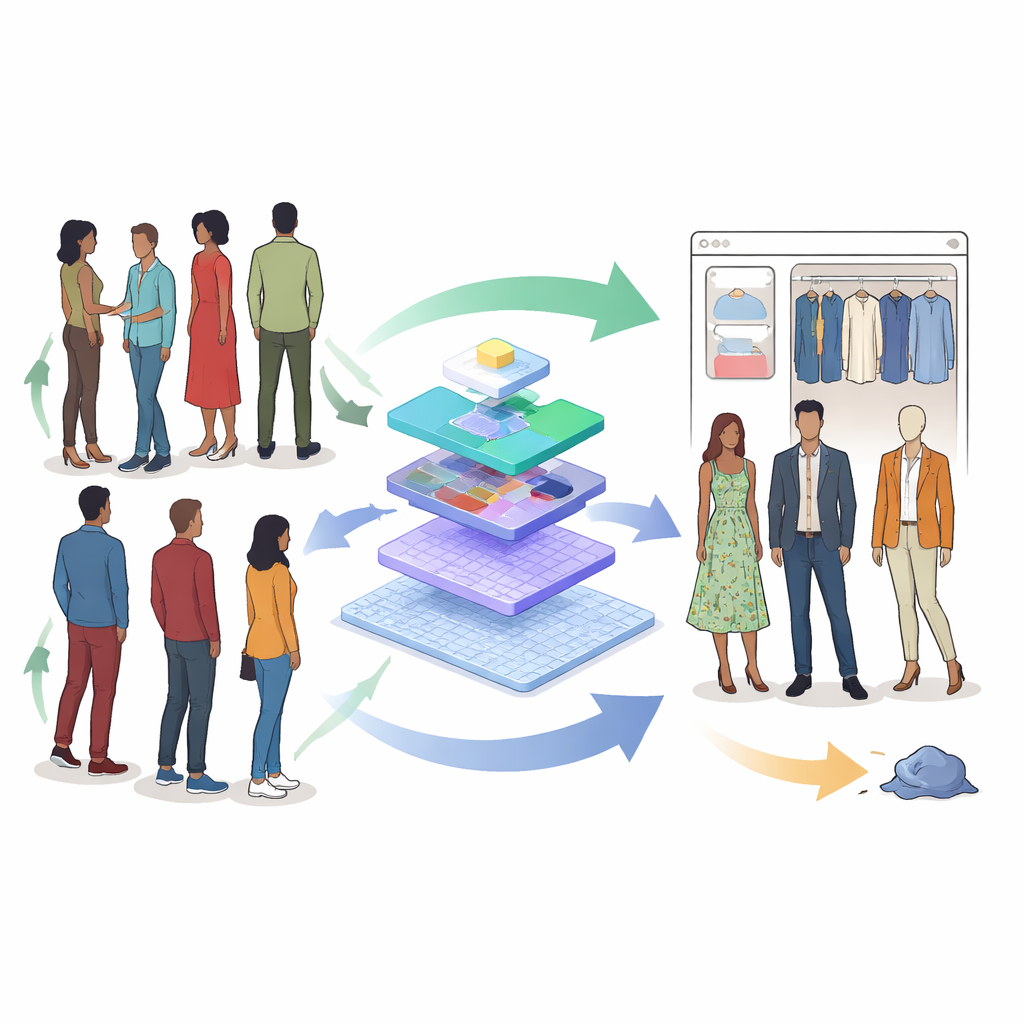
The proposed system sits inside a modular, web-ready platform similar to a modern online store, but with a powerful brain underneath. It combines four main abilities: extracting body measurements, learning style preferences, creating lifelike virtual try-ons, and generating design recommendations. A shopper provides one or a few simple images, some basic context (like season or occasion), and interacts through a web, mobile, or in-store kiosk interface. Behind the scenes, specialized services talk to shared databases for user profiles, garment details, style features, and interaction logs. This microservice architecture lets companies swap in better models over time, handle traffic spikes during sales, and keep sensitive body data encrypted and separated from other records.
Teaching Computers to See Fit and Style
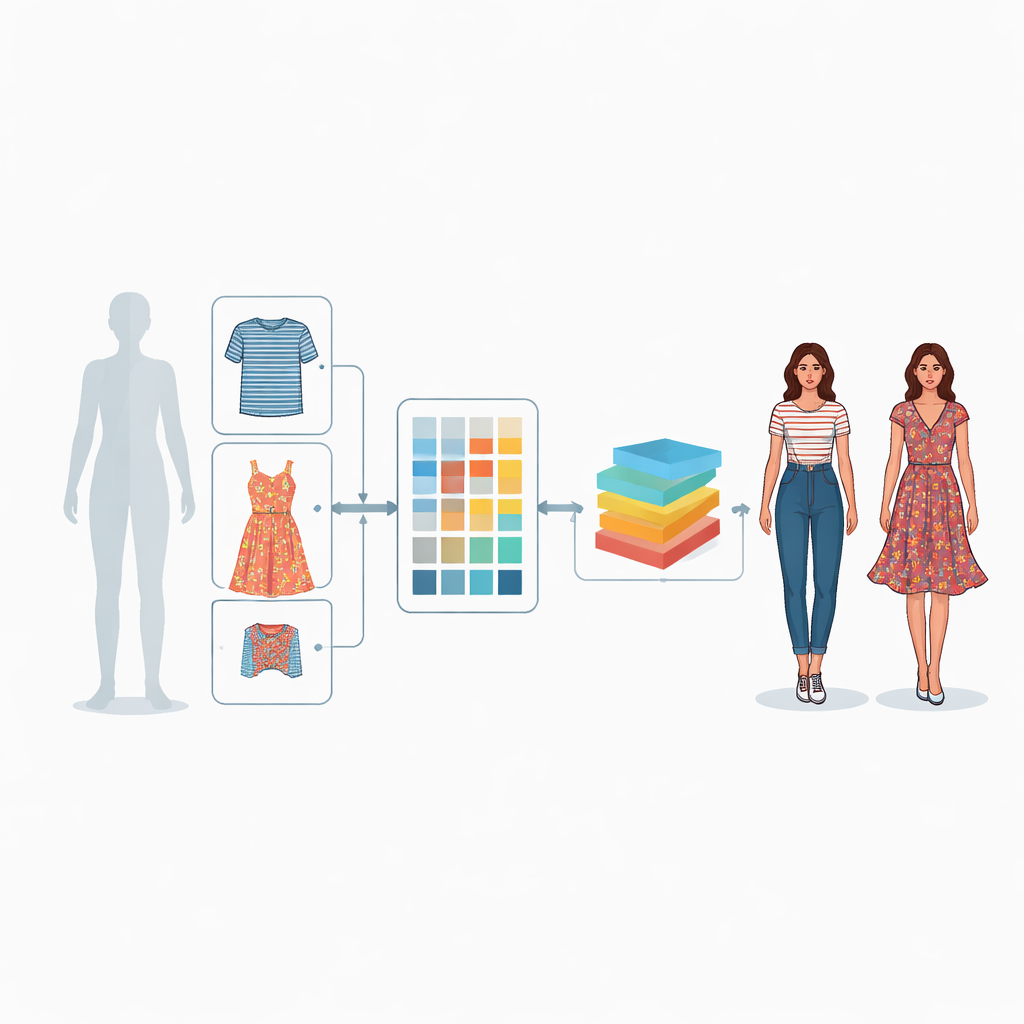
At the technical core is a hybrid artificial intelligence pipeline that treats fit and style as two sides of the same outfit. First, a vision network trained on high-resolution images reads key points and contours from a front-view photo to estimate dozens of body measurements with an average error of only 0.38 centimeters—much tighter than earlier methods. In parallel, a style module examines garment images and contextual clues (such as whether the item is for work, a wedding, or casual wear) to build a compact “style fingerprint” for each look. A learnable controller then blends the body information with this style fingerprint, deciding when to prioritize precise fit (for a suit, for example) and when to lean more on expressive style (for an evening dress). This fused representation guides a generative model that can place recommended garments onto the shopper’s virtual body in realistic poses and fabrics.
Trying On Clothes Without the Closet
To make the virtual try-on experience convincing, the system simulates how different fabrics stretch, bend, and drape over real bodies. It combines fast physical models with machine learning shortcuts so that garments can be updated on screen in under a second or two, even on complex outfits. Users can explore options, tweak design elements, and see immediate changes, while the system quietly learns which cuts, colors, and silhouettes they favor. In tests on public fashion datasets, this combined approach beat several leading methods in measurement accuracy, style matching, and visual realism. Compared with other advanced platforms, it offered similar image quality at much lower delay, and achieved style recommendation accuracy of about 87 percent when all information sources were used together.
What This Means for Shoppers and the Planet
To understand how people actually feel about this technology, the researchers ran both controlled studies and real-world trials. Participants rated the system highly on ease of use, realism of virtual try-ons, and how well recommendations matched their tastes, with overall satisfaction around four and a half stars out of five. At scale, such a system could cut return rates by improving fit, lower overproduction by letting brands make only what customers are likely to keep, and give shoppers more confidence and enjoyment in choosing clothes. The authors note that challenges remain—especially for very unusual body shapes, the feel of real fabrics, and fair treatment across demographics—but their work shows that combining body-aware vision, style-sensitive learning, and responsive interfaces can bring truly personalized fashion much closer to everyday reality.
Citation: Lu, Y. Research and implementation of intelligent clothing personalized customization system based on deep learning. Sci Rep 16, 12080 (2026). https://doi.org/10.1038/s41598-026-40436-3
Keywords: personalized fashion, virtual try-on, body measurement AI, style recommendation, sustainable clothing