Clear Sky Science · en
Optimizing brown rice liquefaction and saccharification using response surface methodology for grain ethanol production
Why turning brown rice into drink matters
Brown rice is often praised as a healthier choice than white rice because it keeps its outer layers, which are rich in fiber and helpful plant compounds. But those same layers make it harder to turn the grain’s starch into simple sugars that yeast can ferment into alcohol for rice wine and other beverages. This study explores how to fine-tune the cooking and enzyme treatment of brown rice so that it can be used more efficiently to make grain-based drinks like makgeolli, potentially adding both flavor and nutritional value.
From whole grain to sweet starter liquid
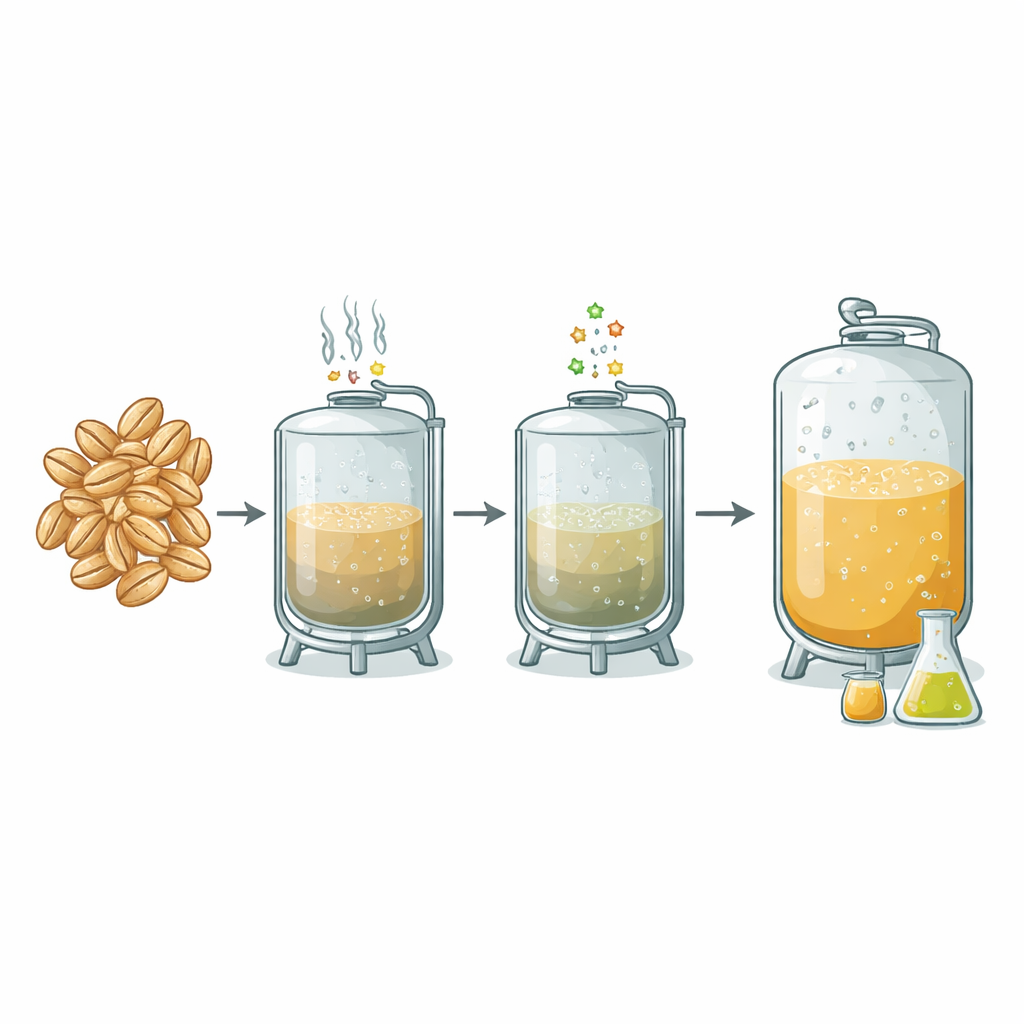
The researchers began by mimicking what a brewery might do on a small scale. Brown rice kernels were soaked, steamed until soft, and then mixed with water. Instead of grinding the rice, they used the whole kernels and added specialized enzymes that break starch into smaller sugar molecules. The process happens in two stages: liquefaction, where starch granules are loosened and partly broken down, and saccharification, where remaining starch fragments are converted into fermentable sugars such as glucose. The team set out to find which combinations of acidity (pH), temperature, and time would give the most sugar in the shortest practical time.
Testing many conditions with a smart design
Rather than changing one factor at a time, the scientists used a statistical planning approach called response surface methodology. This allowed them to vary pH, temperature, and heating time together across a grid of carefully chosen conditions and then model how these factors affected several outputs: soluble solids (a measure similar to sweetness), reducing sugars, total sugars, and the individual sugars maltose and glucose. In the liquefaction step, they tested temperatures from 60 to 100 degrees Celsius, pH from 3.5 to 6.5, and heating times from 1 to 4 hours. They found that temperature and time, much more than pH, drove how much starch was converted into soluble material and total sugar, with a clear sweet spot around 80 degrees and several hours of heating.
Zooming in on the sugar-making step
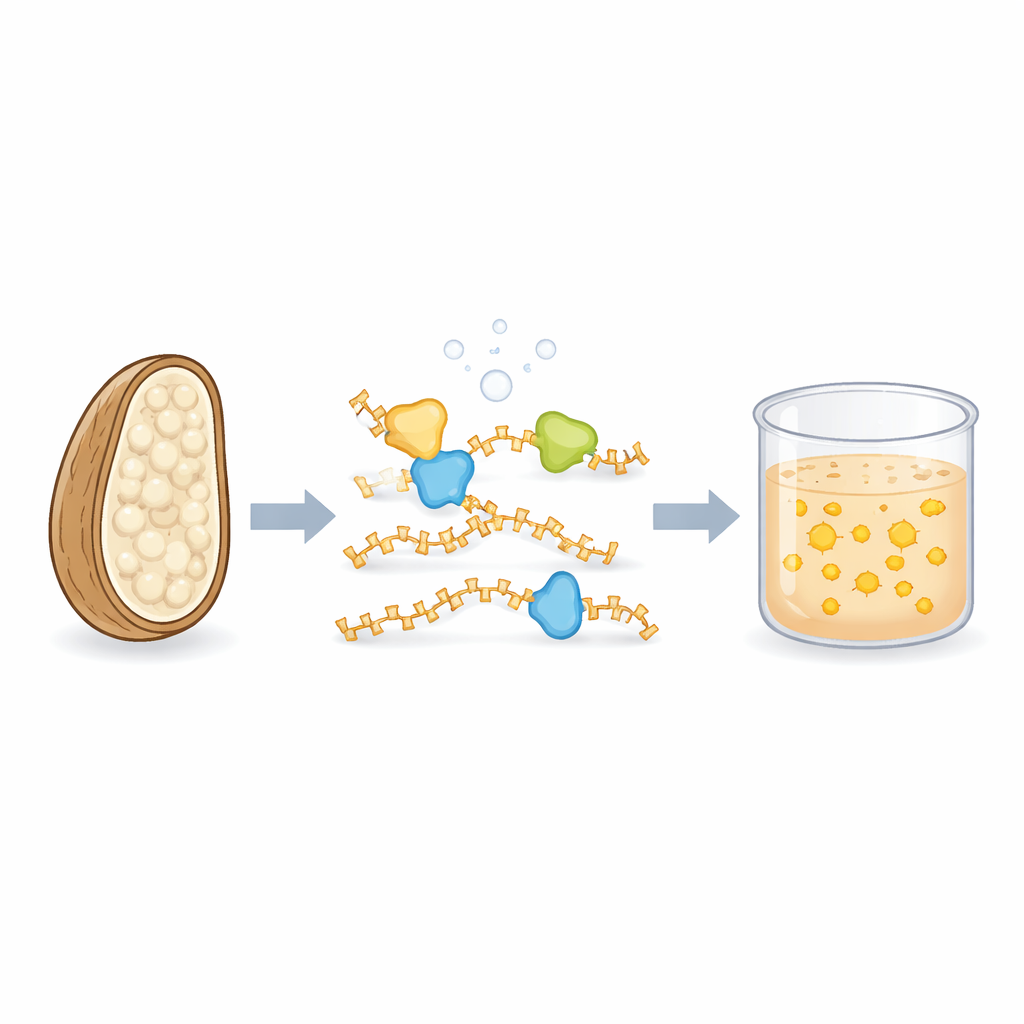
For saccharification, they took brown rice liquid prepared under the best liquefaction settings and added a different enzyme that specializes in chopping starch chains down to single-glucose units. In this step, lower pH and moderate temperatures around 50 to 70 degrees favored high levels of reducing sugar and especially glucose, while very long heating changed the balance between maltose and glucose. By fitting mathematical surfaces to their data, the authors identified an optimal saccharification recipe at pH 3.5, 65 degrees Celsius, and about 4.8 hours, which maximized desirable sugars while keeping the process time reasonable.
Putting the optimized syrup to the test
To see whether the optimized process worked in real fermentation, the team produced a 10-liter batch of brown rice sugar syrup under these conditions and inoculated it with a standard wine yeast. Over ten days, they tracked how sugar levels fell and ethanol levels rose. Most of the maltose and glucose were consumed by day seven, while ethanol climbed steadily and reached about 62.8 milligrams per milliliter by day ten. When compared to the starting soluble solids, this corresponded to an apparent conversion efficiency slightly above the theoretical maximum for pure sugar, which the authors explain by noting that the initial measurement also included non-fermentable soluble components.
What this means for brown rice drinks
In plain terms, the study shows that careful control of heating temperature, acidity, and time in two enzyme-driven steps can make brown rice much more suitable as a raw material for alcoholic and fermented beverages. The optimized conditions produced sugar-rich syrups that yeast could turn into ethanol at levels similar to traditional rice wines, despite the extra fiber and bran in brown rice. These findings provide a blueprint for breweries and beverage makers who want to tap the nutritional and marketing appeal of whole-grain brown rice without sacrificing fermentation performance.
Citation: Jang, SW., Yu, H.H., Kim, JC. et al. Optimizing brown rice liquefaction and saccharification using response surface methodology for grain ethanol production. Sci Rep 16, 9982 (2026). https://doi.org/10.1038/s41598-026-40430-9
Keywords: brown rice ethanol, enzyme fermentation, rice wine, saccharification, grain bioethanol