Clear Sky Science · en
Reduction of the space dimension of parameters characterizing geomagnetic storms during the Solar Cycle 24
Space storms and everyday technology
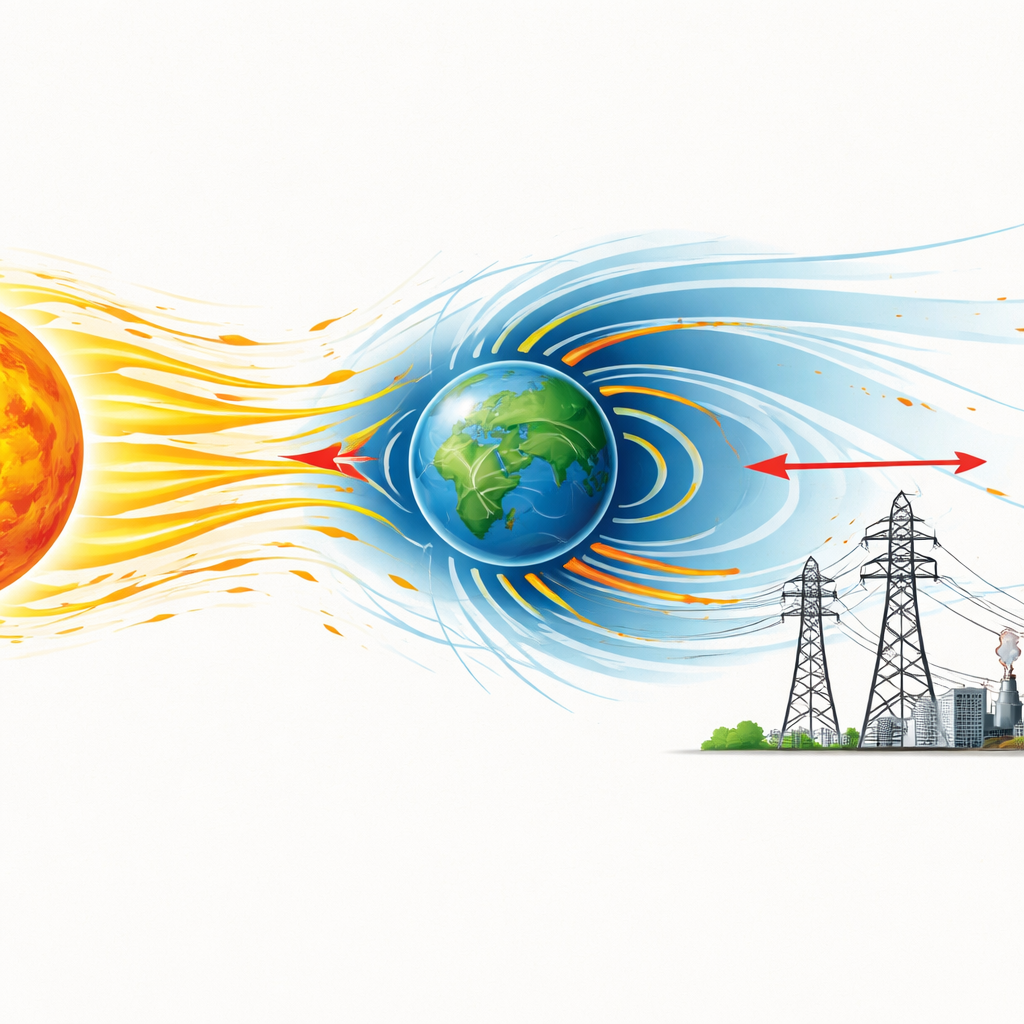
Most of the time, the Sun’s outbursts feel very far away from daily life. Yet violent space storms can disturb Earth’s magnetic shield and quietly interfere with electric power grids and other technology, even in countries far from the poles. This study asks a practical question: when space scientists measure dozens of different solar-wind and geomagnetic parameters during such storms, which of them really matter most for understanding and predicting their impact on our infrastructure?
Too many dials to read at once
Modern space-weather monitoring produces a flood of information: solar wind speed and density, magnetic field strength and direction, electric fields, and several indices that summarize how disturbed Earth’s magnetic environment is. For thirteen strong geomagnetic storms during Solar Cycle 24 (2010–2021), the authors assembled twelve such parameters. Treating each storm as a point in a twelve-dimensional space captures a rich physical picture, but it is also unwieldy: models built on too many overlapping inputs are hard to interpret and easy to overfit, especially when the number of storms is limited.
Boiling many measures down to a few
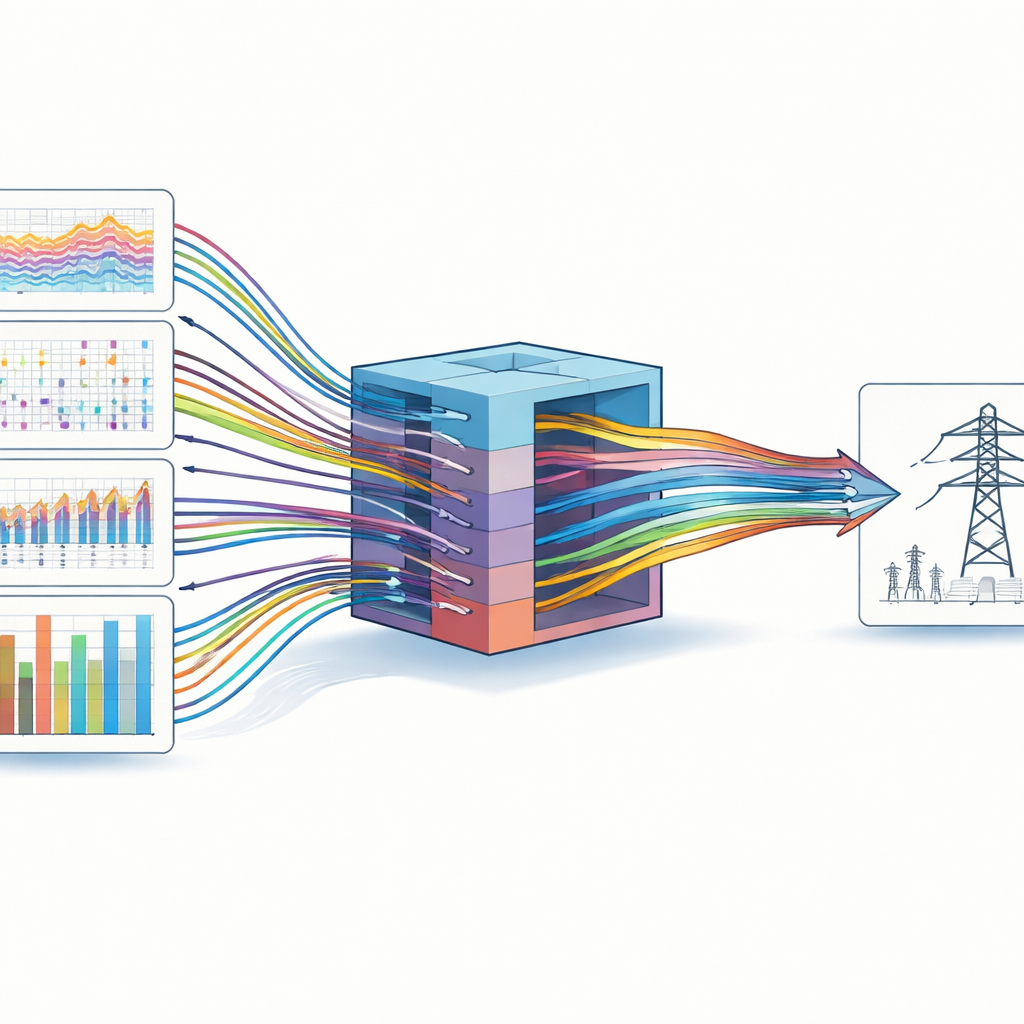
To tame this complexity, the team used principal component analysis (PCA), a mathematical method that finds new combinations of the original variables which capture most of the variation in the data. Instead of looking at all twelve input parameters separately, PCA constructs a smaller number of synthetic “axes” that are uncorrelated with each other but still retain the essential information. For each storm, the first three to four components already explained around 80–90 percent of the total variability, meaning the twelve-dimensional problem could effectively be reduced to three or four key directions without losing much physical content.
What really drives the storms
The analysis reveals a clear physical structure in these new components. The leading component in every storm is dominated by geomagnetic indices such as Kp, Dst, AE, ap and the ground electric field, often together with the strength and north–south orientation of the interplanetary magnetic field and the associated electric field. In plain language, this first axis tracks the overall level of geomagnetic disturbance around Earth. The second and third components are shaped mainly by solar-wind properties, such as speed, temperature and density, and by certain magnetic-field components. Some pairs of parameters naturally move together—for example, solar-wind speed with temperature, or the north–south magnetic component with the electric field—while other components, such as the east–west magnetic field, tend to form their own weaker, separate mode.
From space storms to power-grid behavior
Having compressed the space-weather data into a handful of components, the authors then asked whether these new variables could help relate storms to real-world effects. They built simple regression models that used the leading components as inputs and the power load in parts of the Polish transmission network as outputs. Even with only four components, the models captured a substantial fraction of the variations in power demand during a well-studied storm, suggesting that PCA-derived features can serve as practical, compact inputs for more advanced forecasting tools, including neural networks. The study also uncovered an unexpected use for PCA: when data gaps in solar-wind records were filled by straightforward interpolation, the resulting PCA patterns became disordered compared with clean events, signaling that the gap filling was not trustworthy.
Why this matters for future warnings
By showing that a dozen intertwined space-weather parameters can be distilled into just three or four physically meaningful components, this work provides a streamlined way to build statistical and machine-learning models of geomagnetic-storm impacts. These reduced descriptions make it easier to understand which aspects of solar activity threaten power grids and other systems, and they help avoid the pitfalls of noisy or improperly repaired data. In the long run, such techniques could support more reliable early-warning tools, giving grid operators in mid-latitude countries extra time to prepare for the next big space storm.
Citation: Siluszyk, A., Gil, A., Modzelewska, R. et al. Reduction of the space dimension of parameters characterizing geomagnetic storms during the Solar Cycle 24. Sci Rep 16, 10135 (2026). https://doi.org/10.1038/s41598-026-40415-8
Keywords: space weather, geomagnetic storms, principal component analysis, solar wind, power grid impacts