Clear Sky Science · en
Sustainable production of insecticidal and acaricidal metabolites by endophytic fungi using solid-state fermentation
Turning Hidden Fungi into Crop Protectors
Modern farming depends heavily on chemical pesticides to keep insects and mites from destroying harvests. But these chemicals can harm pollinators, contaminate soil and water, and push pests to evolve resistance. This study explores a very different strategy: recruiting harmless fungi that live inside wheat roots and teaching them to turn farm leftovers into natural pest‑killing mixtures, potentially offering safer protection for crops and the environment.
Quiet Allies Living Inside Wheat Roots
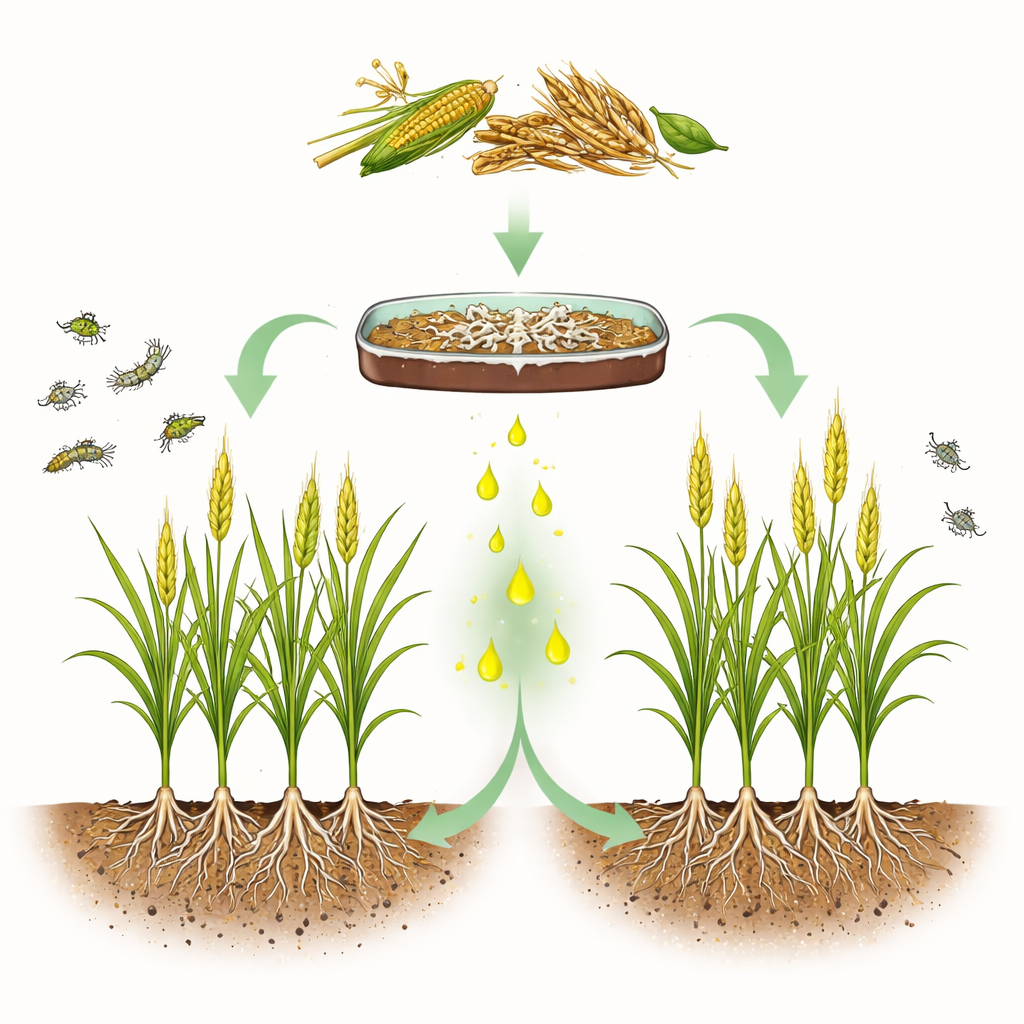
The researchers began with a simple question: could the microscopic fungi that naturally inhabit healthy wheat roots help defend the plant? These so‑called endophytic fungi live inside plant tissues without causing disease. The team collected wheat plants from three regions of Egypt and isolated 38 different fungal strains from their roots. They then tested each strain to see how well it could make chemical compounds and enzymes known to damage insect bodies or otherwise act as natural pesticides. One standout strain, labeled MORSY‑27 and later identified as a Geomyces species, consistently produced the highest levels of these potentially protective substances.
Feeding Fungi with Farm Waste
To make any biological pesticide useful in practice, it must be cheap and scalable. Instead of growing the fungus in liquid tanks, the scientists used solid‑state fermentation, letting it grow on moist plant leftovers that would otherwise be discarded—such as orange and tomato pulp, banana peels, taro waste, sunflower seed cake, and stalks of a leafy vegetable called molokhia. These materials are rich in sugars, fibers, oils, and proteins, and they mimic the fungus’s natural habitat. By adjusting temperature and moisture, the team searched for conditions that would coax the fungus into making the largest possible amounts of pesticidal compounds.
Finding the Best Recipe for Natural Toxins
Under the microscope and through chemical tests, Geomyces sp. MORSY‑27 proved to be a prolific mini‑factory. On most of the plant wastes it produced four major groups of plant‑like chemicals—phenolics, flavonoids, terpenoids, and alkaloids—as well as fatty acids that can disrupt insect cells. It also secreted powerful enzymes that digest the outer shell (cuticle) of insects and mites, including chitin‑eating, protein‑cutting, and fat‑breaking enzymes. Sunflower cake and taro waste were especially good fuels, and a temperature around 20 °C with moderate moisture produced the richest mix of these bioactive molecules. When the team analyzed the sunflower‑based extract with gas chromatography–mass spectrometry, they found 39 different compounds, many related to fatty acid esters and amides previously linked to insect‑killing or microbe‑killing activity.
Putting the Fungal Cocktail to the Test
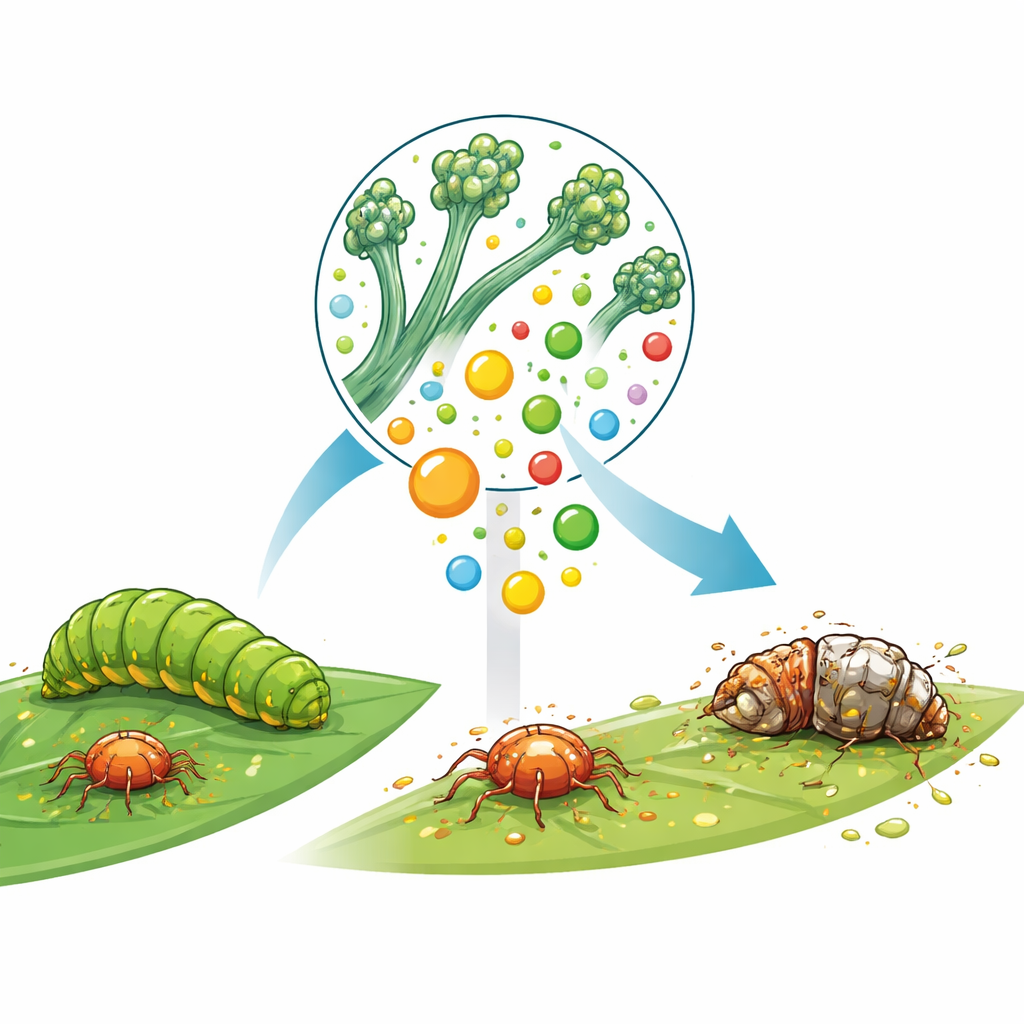
To see whether these mixtures actually harmed pests, the scientists tested the extracts against two major agricultural enemies: the black cutworm, whose caterpillars can wipe out young seedlings, and the two‑spotted spider mite, a tiny sap‑sucker that infests hundreds of crop species. When caterpillars fed on leaves treated with the fungal extracts, their development slowed dramatically; in some treatments the larval stage stretched from about 18 to more than 40 days. Many larvae and pupae died, and survivors often emerged as deformed adults with shriveled wings or stuck in partial molts, signs that their hormones and cuticle formation had been disrupted. In spider mites, the extracts caused strong, dose‑ and time‑dependent adult mortality and sharply reduced egg hatch. Some treatments achieved nearly 100% adult death and complete failure of eggs to hatch when females were exposed before laying.
What This Could Mean for Future Farming
To a non‑specialist, the message is straightforward: by partnering with fungi that already live inside crops and feeding them cheap plant leftovers, it may be possible to brew powerful, natural pest‑control mixtures. The Geomyces strain studied here turned sunflower and other processing wastes into a complex blend of enzymes and oils that crippled caterpillars and spider mites while relying on renewable, low‑cost inputs. Although more work is needed to isolate the safest ingredients, test them in fields, and compare them with existing products, this approach points toward a future where farmers could protect yields using tailored fungal allies instead of depending mainly on synthetic chemicals.
Citation: El-Gendy, M.M.A.A., Sadek, H.E., Barghout, M.E. et al. Sustainable production of insecticidal and acaricidal metabolites by endophytic fungi using solid-state fermentation. Sci Rep 16, 11356 (2026). https://doi.org/10.1038/s41598-026-40413-w
Keywords: biopesticides, endophytic fungi, wheat pests, solid-state fermentation, sustainable agriculture