Clear Sky Science · en
Deep learning-based labor relations prediction system with multi-source data fusion and early warning mechanisms
Why hidden workplace tensions matter
Most people experience workplace tensions long before they explode into open fights, grievances, or even strikes. Yet managers usually notice trouble only when it is already costly and stressful for everyone involved. This study asks a simple but powerful question: can we use the digital traces organizations already collect—like HR records, emails, performance trends, and surveys—to spot brewing conflicts early enough to step in calmly instead of scrambling during a crisis?
Seeing the modern workplace as a data-rich system
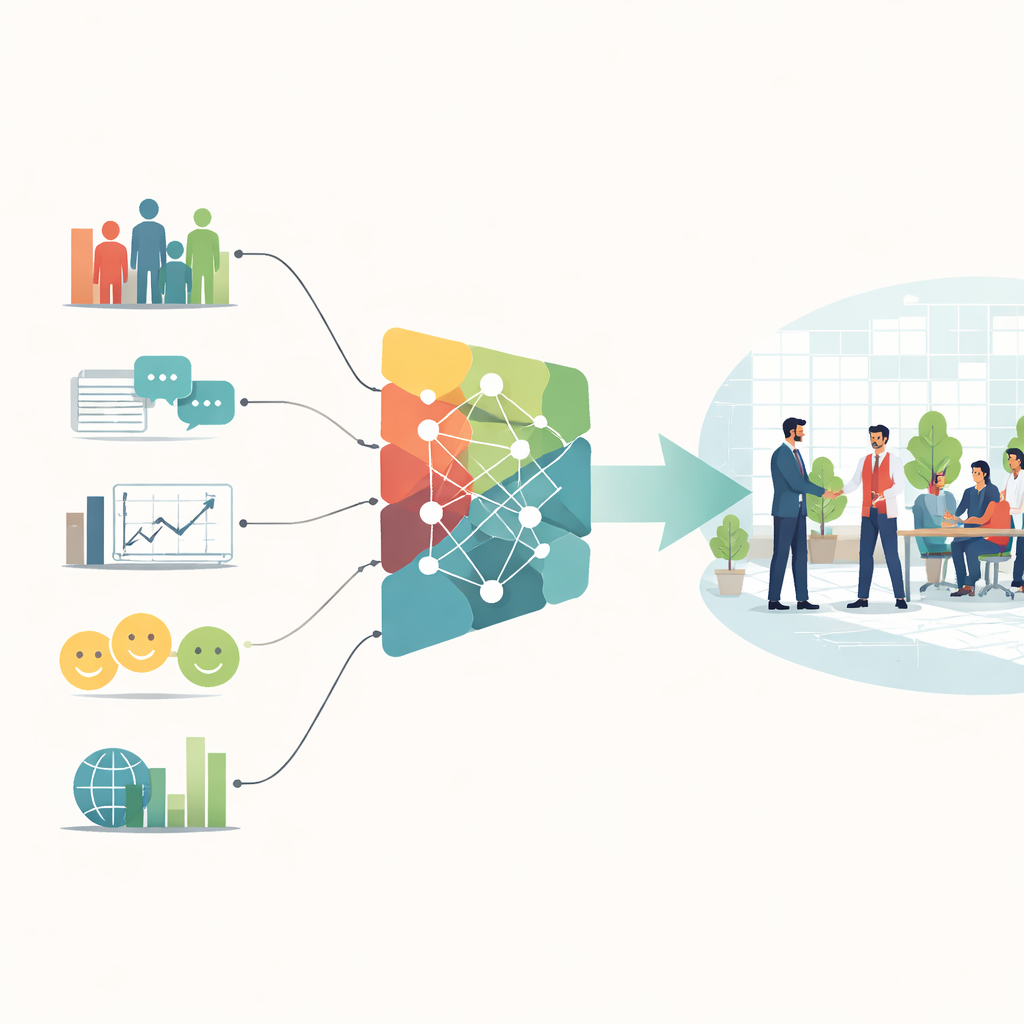
The authors argue that today’s workplaces generate an enormous variety of information: hiring and pay data, attendance and performance metrics, anonymous satisfaction surveys, and minute‑by‑minute communication logs. Traditional approaches to labor relations—expert checklists, simple statistics, past dispute counts—tend to look at one slice at a time and assume neat, linear effects. But real tensions build through messy feedback loops: pressure on deadlines affects communication tone, which affects performance, which in turn shapes job security fears. The paper proposes treating the organization as a living system whose health can be monitored by combining all these data sources instead of examining them in isolation.
How the early warning engine works
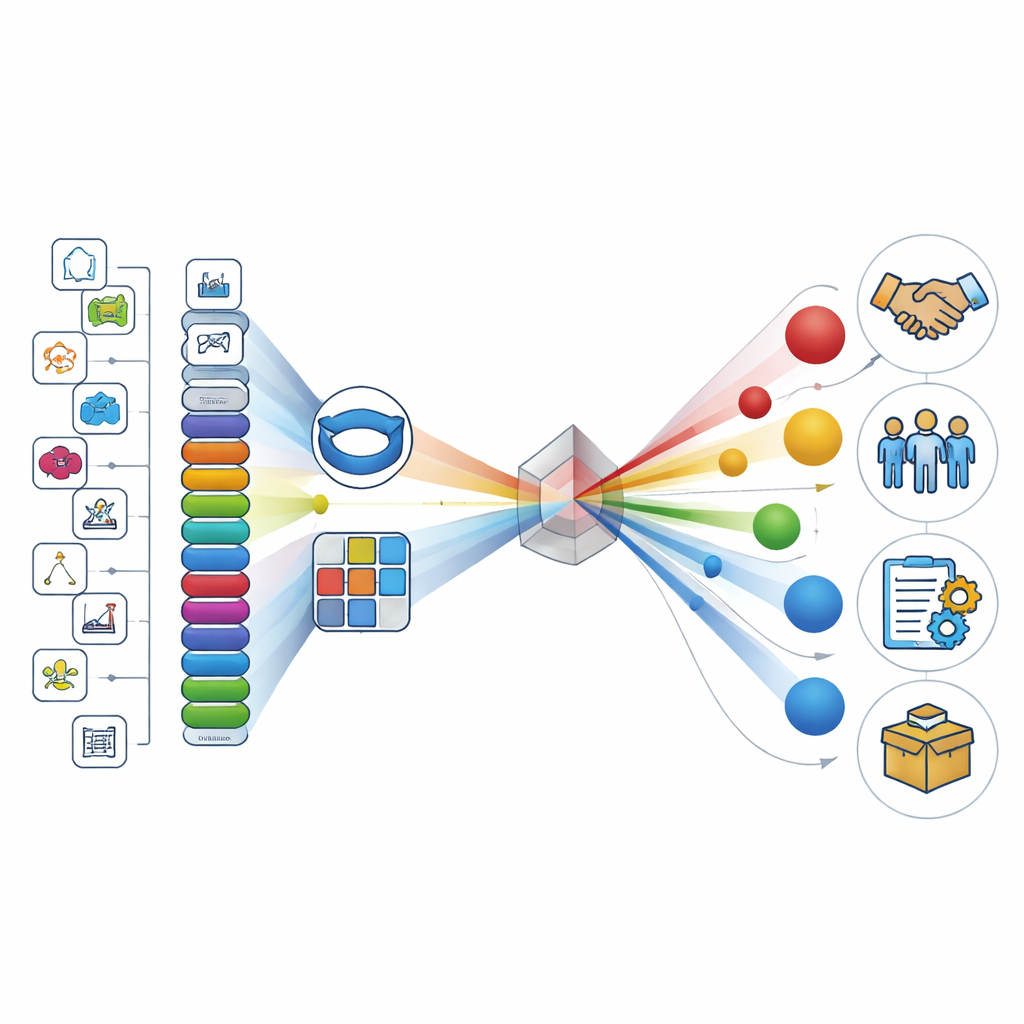
To turn this diverse information into useful warnings, the researchers build a layered prediction system using deep learning. One part of the model focuses on relatively stable features of each department, such as pay patterns, job structures, and past dispute history, using a type of network well suited to snapshot data. Another part tracks how things change over time—rising absence rates, slipping performance, or darkening communication tone—using a sequence‑aware network often used for language and time series. A third component analyzes the content and mood of written communication with a language model similar to those used in modern chatbots, but fine‑tuned on millions of anonymized workplace messages. An attention mechanism then learns, for each situation, how much weight to give to structure, trends, or communication mood, rather than relying on a fixed recipe.
Testing the system in real organizations
The authors do not stop at lab experiments. They deploy the system in 12 enterprises across manufacturing, technology, healthcare, and finance, monitoring hundreds of departments over several years. Each department‑month is labeled according to whether a formal conflict occurred and how severe it was, using a rigorous expert review process to ensure consistency. When compared against widely used machine‑learning tools such as gradient‑boosted trees and recent deep models for tables of numbers, the multi‑source system comes out ahead: it predicts conflict with about 89% accuracy, improving on strong baselines by 3–5 percentage points. More importantly for real life, it correctly flags 87% of actual conflicts at least several days in advance, typically giving 5 to 21 days of lead time for HR and managers to respond.
What the model gets right—and wrong
By analyzing simplified versions of the model, the authors show that no single data source is enough. Using only HR records, only time‑varying performance data, or only communication sentiment leaves too many blind spots; combining all three raises accuracy by 4.5–12.8 percentage points. Attention‑based fusion, which lets the model focus on whichever signals are most informative in a given case, adds another modest but meaningful boost. Still, the system has important limitations. It generates false alarms in about 13% of cases, especially during high‑stress periods like seasonal rushes or public health crises, when anxiety runs high but does not always turn into conflict. It also struggles with sudden flare‑ups triggered by events that leave little digital trail, such as abrupt policy changes or scandals.
Balancing prediction power with ethics and trust
Because the system works with sensitive employee data, the authors devote substantial attention to ethics. They keep predictions at the department level instead of rating individuals, strip direct identifiers, and restrict who can see alerts. They test for obvious demographic imbalances and design dashboards that explain why a department is flagged—showing, for example, that rising overtime, slipping quality, and souring message tone together pushed risk above normal. Crucially, HR staff can override warnings and feed corrections back into the system. The authors emphasize that such tools should support, not replace, human judgment, and that worker representation and clear governance are essential to prevent misuse as a surveillance weapon.
What this means for everyday workplaces
For a non‑specialist reader, the takeaway is that it is increasingly possible to build an “early warning radar” for workplace trouble by responsibly combining information organizations already collect. Done well, such a system can help managers notice brewing tensions, allocate support, and open conversations before frustration turns into formal disputes or walkouts. Yet the study also shows that algorithms are far from infallible: they miss fast‑moving crises, confuse general stress with true conflict, and reflect the values baked into their training data. The authors conclude that the greatest benefits come when predictive tools are used as prompts for dialogue—signaling where to look and what to ask—while people remain in charge of understanding the story behind the numbers and deciding how to act.
Citation: Liu, E., Cho, K. Deep learning-based labor relations prediction system with multi-source data fusion and early warning mechanisms. Sci Rep 16, 11774 (2026). https://doi.org/10.1038/s41598-026-40369-x
Keywords: workplace conflict prediction, labor relations analytics, multi-source data fusion, deep learning in HR, early warning systems