Clear Sky Science · en
Whole exome sequencing and 12-SNP LDL polygenic score in South Indian patients with familial hypercholesterolemia
Why this matters for everyday health
Heart attacks and strokes are striking Indians at younger ages than many other populations, often in people who do not appear severely ill. One important culprit is very high "bad" cholesterol (LDL) caused by inherited factors. This study looks closely at South Indian patients with unusually high cholesterol to ask a simple question with big consequences: is their risk driven by a single powerful gene fault, by the combined effect of many small genetic changes, or by both together?
Looking for hidden causes of high cholesterol
The researchers focused on 116 unrelated adults in South India whose LDL cholesterol had reached very high levels before treatment and who met clinical criteria for familial hypercholesterolemia, a condition that greatly increases early heart disease risk. Using a scoring system based on symptoms, cholesterol levels and family history, patients were grouped as having definite, probable or possible familial hypercholesterolemia. The team then examined their DNA and blood in detail to understand what was driving these dangerous cholesterol levels.
Scanning the genes in fine detail
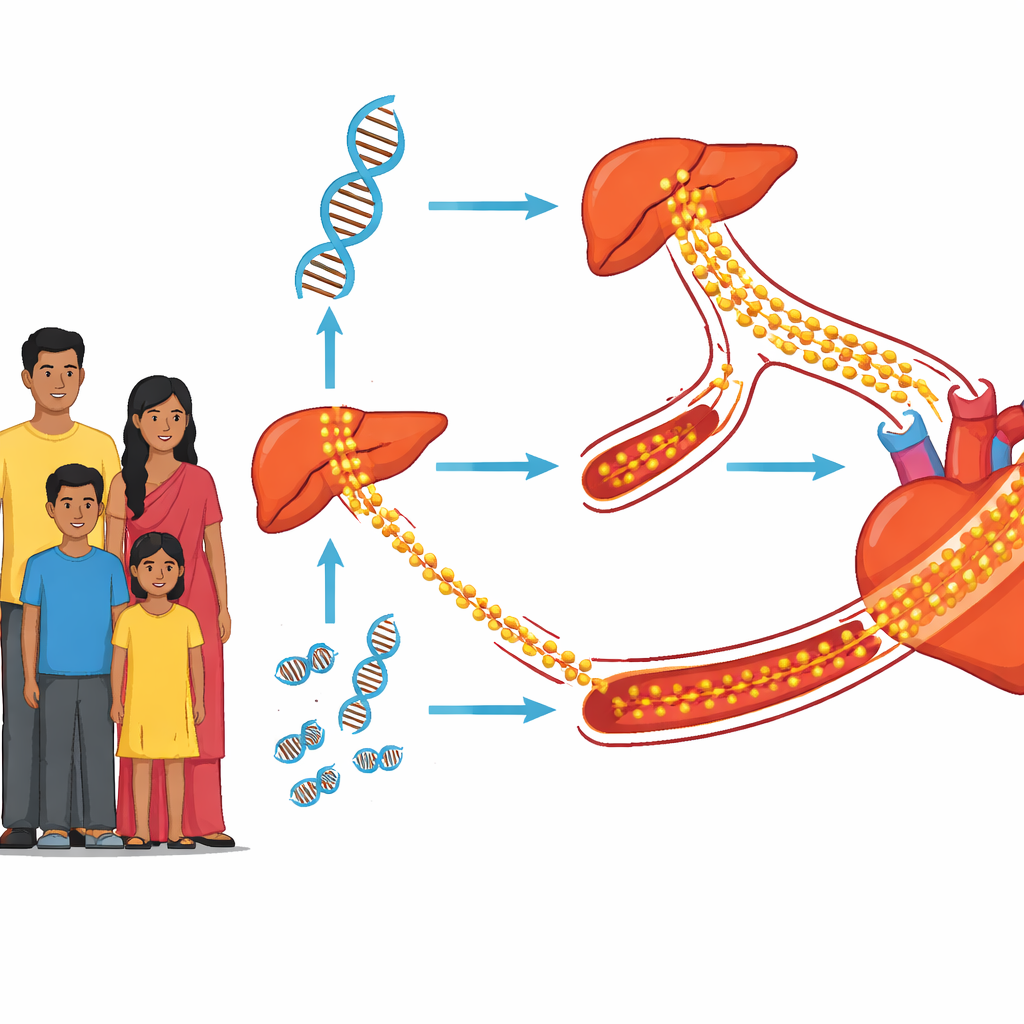
To search for strong, single-gene causes, the scientists used next-generation sequencing to read the coding regions of 23 genes known to influence blood fats. They found 39 different genetic changes, of which 13 were clearly disease-causing and 26 were uncertain. Most of the harmful changes were in the LDL receptor gene, which helps clear LDL from the bloodstream, but some appeared in less well-studied genes involved in handling cholesterol and plant sterols. People carrying these damaging variants tended to be younger, to have higher LDL levels and classic physical signs such as tendon lumps, and to report more family members with early heart disease.
When one big fault is not the whole story
Even after this careful search, about two-thirds of patients had no clearly harmful variant detected. To see whether many small genetic nudges could explain their high LDL, the team calculated a polygenic risk score based on 12 common DNA markers previously linked to LDL levels. They compared each patient’s score against a reference group of South Asians. Among those without a detected strong variant, nearly two-thirds had a high polygenic score, suggesting that an accumulation of many modest genetic effects was pushing their cholesterol upward. Surprisingly, most patients who did carry a strong disease-causing variant also had high polygenic scores, implying that these two types of inherited risk often coexist rather than being mutually exclusive.
Linking inherited risk to heart disease
The next question was whether this combined genetic burden translated into more actual heart disease. When the researchers examined who had experienced coronary artery disease, they found that patients with a clear disease-causing variant plus a high polygenic score were more likely to have developed heart problems than those with the variant but a lower score. Overall LDL levels did not differ sharply between high and low polygenic score groups, but the proportion of people with high scores increased with rising LDL, reinforcing the idea that many small inherited changes can quietly amplify risk in people who already have high cholesterol.
What this means for patients and families
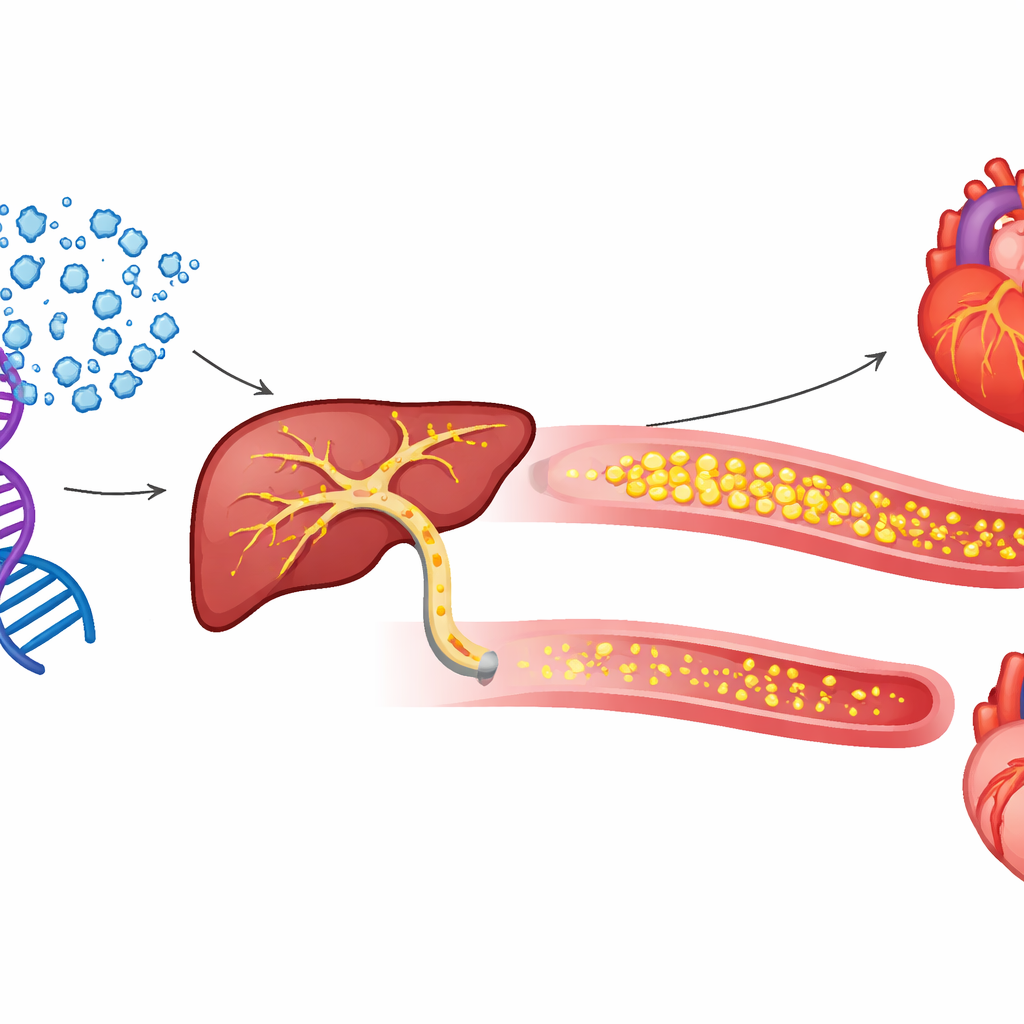
This study shows that in South Indian families with very high LDL cholesterol, both single powerful gene faults and the combined effect of many small genetic changes matter. Advanced DNA testing can confirm a diagnosis in some patients and reveal rare variants in less familiar genes, while polygenic scores help explain high cholesterol in others and sharpen risk estimates for those who already carry a known harmful variant. For everyday care, the message is clear: people with very high LDL need aggressive treatment and family screening whether their high cholesterol is driven by one big genetic hit, many small ones, or both. Larger studies in Indian populations will be needed before polygenic scores can be routinely used in clinics, but this work is an important step toward more precise, personalized prevention of early heart disease.
Citation: Abraham, N., P, P.V., Menon, U. et al. Whole exome sequencing and 12-SNP LDL polygenic score in South Indian patients with familial hypercholesterolemia. Sci Rep 16, 11474 (2026). https://doi.org/10.1038/s41598-026-40367-z
Keywords: familial hypercholesterolemia, genetic cholesterol risk, polygenic risk score, South Asian heart disease, LDL cholesterol