Clear Sky Science · en
The development and validation of a clinical measurement tool for fear of recurrence and progression in cardiac patients
Why worries after a heart scare matter
Surviving a heart attack or major heart procedure is often described as getting a “second chance.” Yet for many people, that new lease on life is shadowed by a constant, unsettling question: what if it happens again, or keeps getting worse? This study explains how psychologists created and tested a new questionnaire that helps doctors spot when these perfectly understandable worries about the heart’s future are becoming overwhelming and harmful, so that patients can receive the emotional support they need alongside their medical care.
Everyday fear after heart disease
Heart patients commonly live with fear that their condition might return or deteriorate, bringing more pain, disability, or even sudden death. The authors call this fear of recurrence and progression, and distinguish it from general anxiety: it is rooted in a very real medical threat, but can still spiral into constant worry, sleepless nights, and avoidance of normal activities. Research in cancer care has shown that such fears are widespread and damaging, yet until now no tool was designed specifically to capture how they play out in people with heart disease. Existing “one size fits all” questionnaires often miss concerns that are unique to cardiac patients, such as being afraid to exercise, to be far from a hospital, or to notice every flutter in the chest.
Designing a tool with patients in mind
To build a heart-focused measure, the researchers followed best-practice guidelines for developing psychological scales. They began by examining previous studies and questionnaires on fear of illness across conditions, then zeroed in on published work and patient reports about living with heart disease. Next, they refined potential questions with input from a broad group: cardiac rehabilitation staff, psychologists and other academic experts, and people who had personally experienced cardiac events. This co-design process produced 44 candidate items covering both what patients fear and how they react to those fears, all rated on a simple four-point scale. 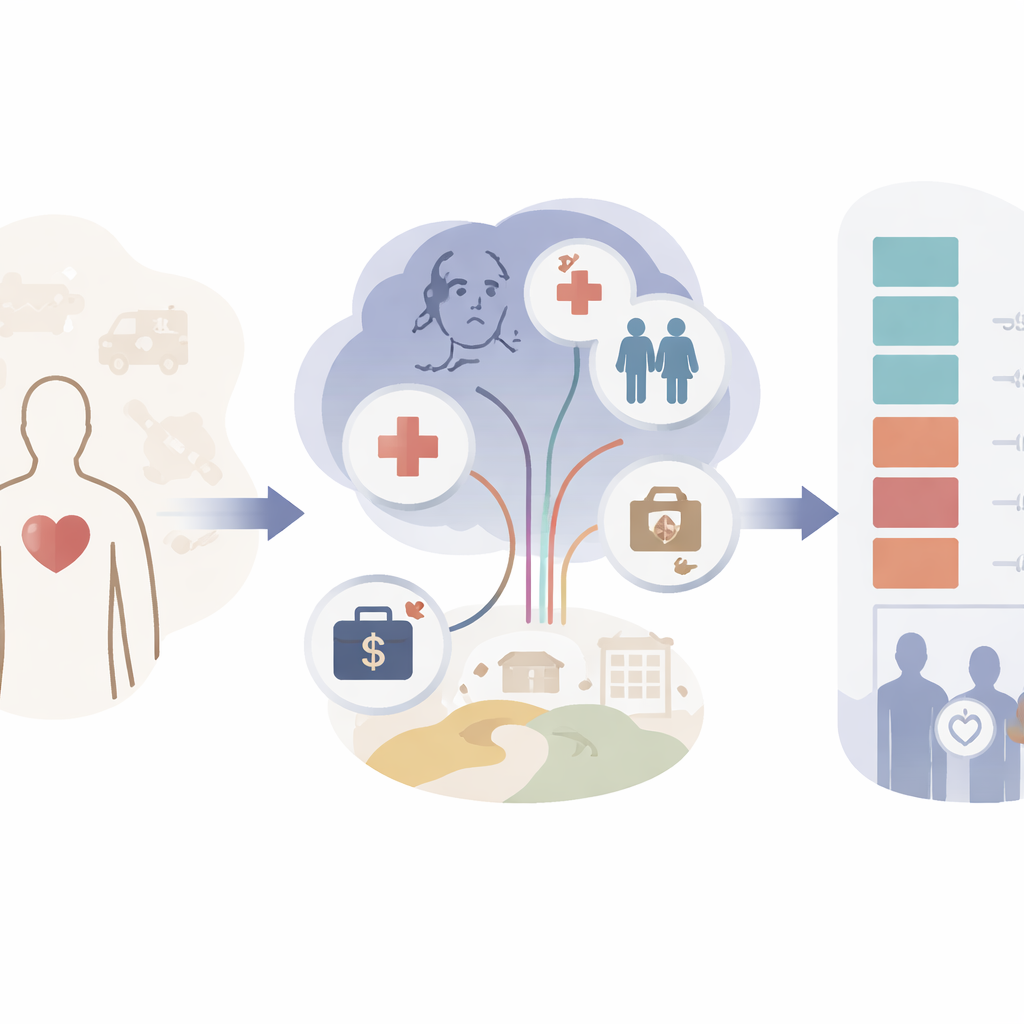
Uncovering the main types of fear
The team then tested this draft questionnaire with 241 adults who had survived a heart attack, heart surgery, rhythm problems, or other cardiac conditions. Using statistical techniques, they looked for patterns in how items clustered together, trimming out questions that overlapped or added little. Two different methods were combined. Exploratory factor analysis showed how fears grouped into themes, while Rasch analysis, a modern approach to measurement, checked whether each group of questions behaved like a coherent scale that could reliably distinguish patients with milder versus more intense worries. Through several rounds of refinement, the inventory was reduced to 29 items that formed seven subscales with strong measurement properties.
What the new questionnaire measures
The final Fear of Cardiac Recurrence and Progression Inventory (FCRPI) captures both the content of people’s worries and how they cope with them. Five subscales reflect specific fear themes: health getting worse or another heart event; needing more treatment or medication; losing independence and roles in daily life; strain on intimate and sexual relationships; and impacts on work and finances. Two further subscales track common responses: avoiding situations linked with risk, such as physical exertion or being far from medical help, and becoming hyperaware of heart-related sensations, like every skipped beat or bout of breathlessness. The overall score showed excellent reliability and was strongly linked with other measures of health-related fear, as well as with symptoms of depression, anxiety, and post-traumatic stress.
From numbers to clinical action
To make the FCRPI useful in real-world care, the authors identified a total score that signals particularly high and potentially harmful levels of fear. By comparing it with an established measure of overall cardiac distress, they found that a score of 39 or higher best distinguished patients whose worries were severe enough to be clinically significant. In this study, about four in ten participants exceeded that threshold. This cut-off can help busy clinicians quickly recognize who might benefit from more in-depth psychological support, targeted counseling, or referral to mental health specialists, and can guide researchers studying which patients are most at risk and which therapies work best. 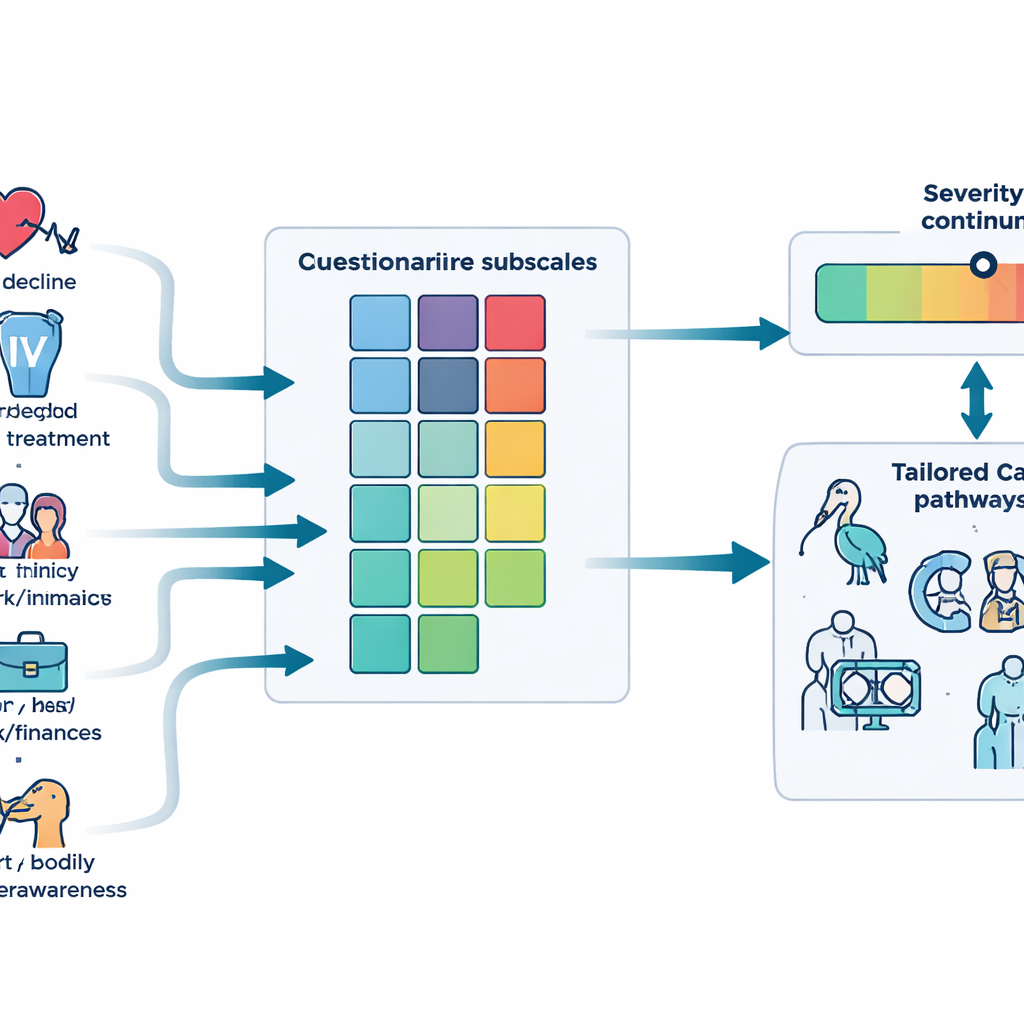
Helping hearts and minds recover together
For people living with heart disease, some fear about the future is inevitable—and often reasonable. The contribution of this study is to transform that vague worry into something that can be measured, talked about, and treated. By offering a carefully tested questionnaire tailored to cardiac experiences, the FCRPI gives health professionals a structured way to ask about fears that patients may otherwise keep to themselves. In turn, this opens the door to more personalized, compassionate care, where protecting the heart means caring for both the physical organ and the emotional burden carried with it.
Citation: Clarke, S.T., Le Grande, M.R., Murphy, B.M. et al. The development and validation of a clinical measurement tool for fear of recurrence and progression in cardiac patients. Sci Rep 16, 13725 (2026). https://doi.org/10.1038/s41598-026-40353-5
Keywords: heart disease, patient anxiety, fear of recurrence, cardiac rehabilitation, psychological assessment