Clear Sky Science · en
Shaking and withering intensity from oolong tea processing alters the chemical and sensory quality of tobacco
From Tea Tricks to Tobacco Taste
Most of us think the flavor of tobacco is fixed in the leaf, but this study shows it can be actively crafted, much like fine tea or coffee. Borrowing a key step from oolong tea making, the researchers gently shake and wither tobacco leaves to stress them in a controlled way. This extra handling doesn’t change nicotine levels dramatically, but it does reshape the chemistry that produces caramel, roasted, and nutty aromas. For manufacturers, it offers a new knob to tune flavor; for curious readers, it reveals how physical handling of plants can rewrite their sensory character.
A New Way to Handle Tobacco Leaves
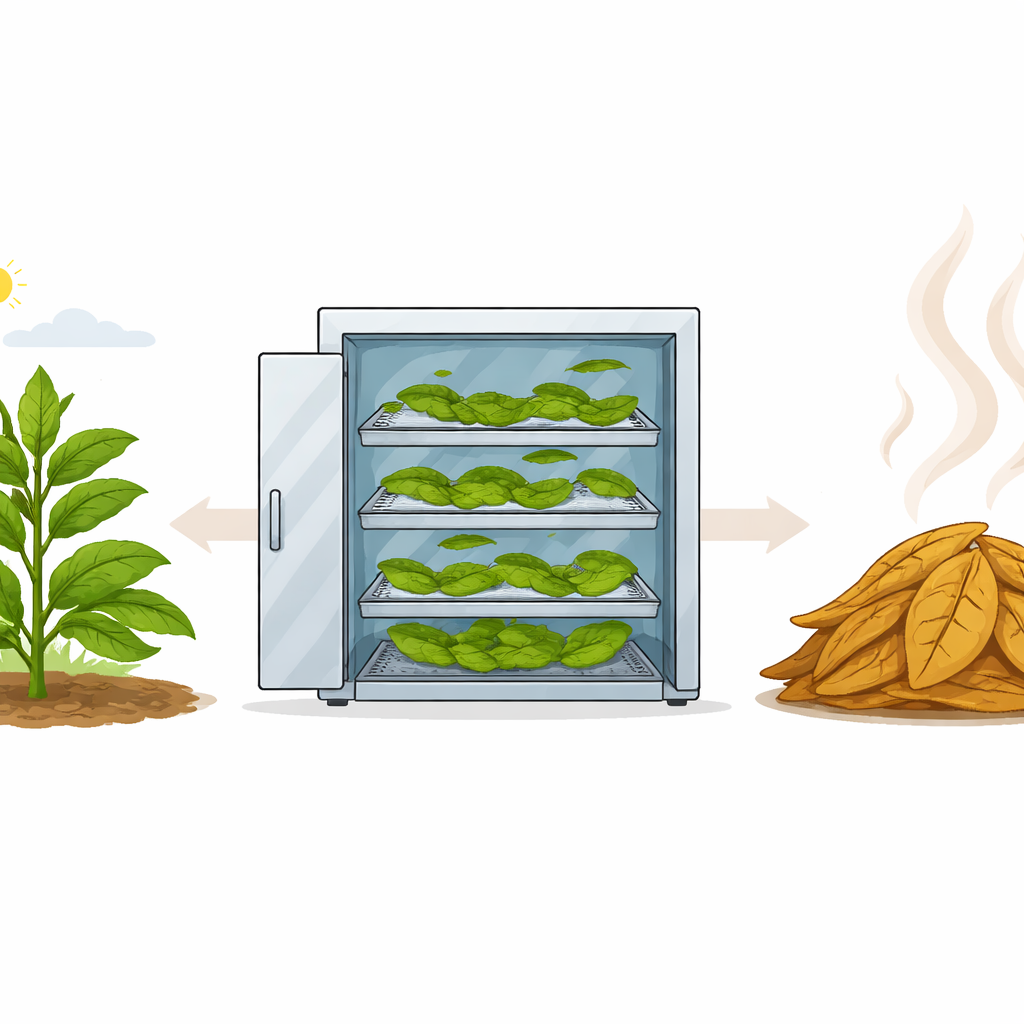
Traditional tobacco curing mostly relies on managing temperature and humidity as leaves dry, which means the final flavor is largely at the mercy of the raw leaf. The team wondered whether a method from oolong tea—where leaves are repeatedly shaken and rested to build complex aromas—could unlock new flavor possibilities in tobacco. They compared standard flue-curing with a “shaking-withering” process applied to the same tobacco variety (Yunyan 87). Leaves were first partially dried, then repeatedly tumbled and spread out in a climate-controlled room, followed by a warm, humid period to let enzymes work, and finally high-temperature drying. By varying how hard and how long the leaves were shaken and withered, they created a series of treatments with different “stress intensities.”
How Gentle Stress Rewires Leaf Chemistry
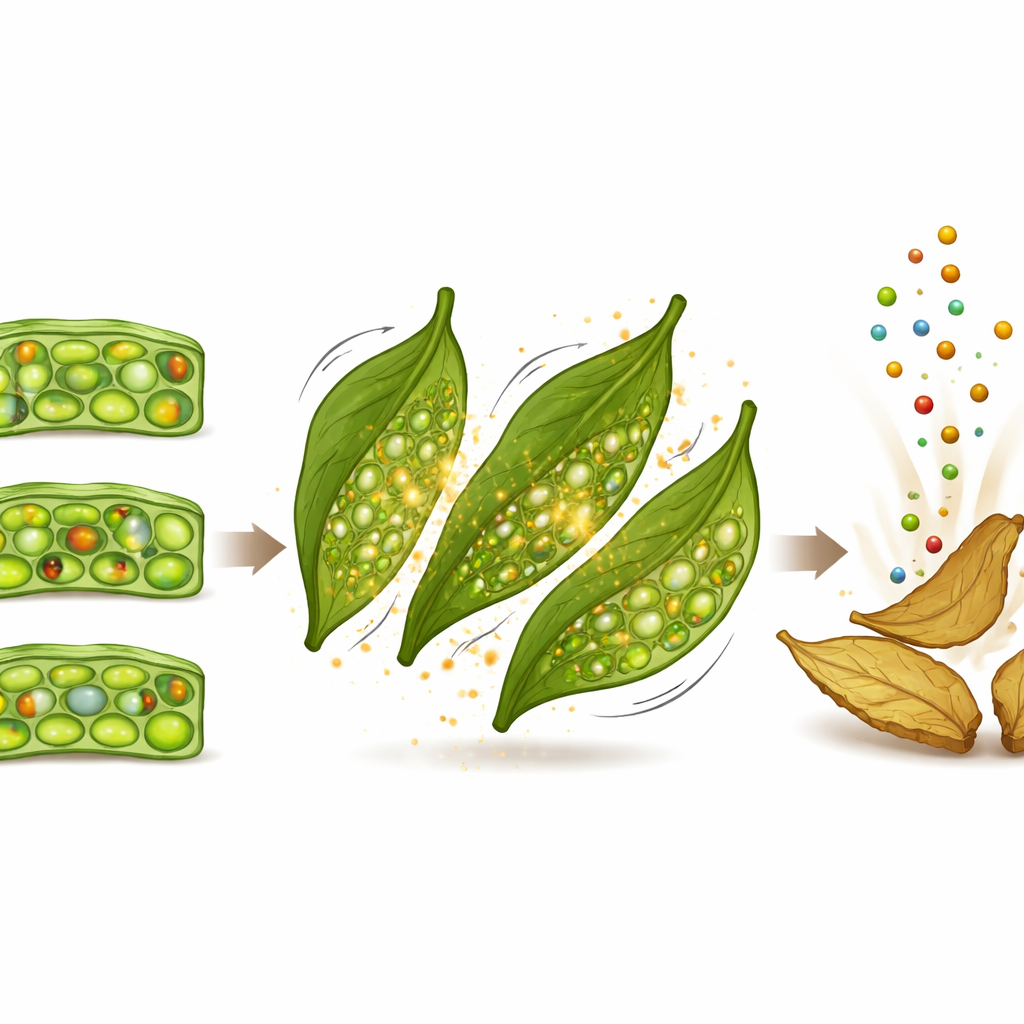
The shaking-withering treatment acted like a carefully applied wound. Mechanical jostling and exposure to oxygen triggered stress responses inside the leaves, diverting sugars and other building blocks into new pathways. Compared with conventionally cured leaves, treated tobacco showed more balanced ratios of sugars and nitrogen-containing compounds—features associated with smoother smoke. Key protective pigments, such as chlorophylls and carotenoids, and certain polyphenols were broken down more strongly, especially at an intermediate shaking intensity. While this might sound like damage, the breakdown products of these molecules are exactly the kinds of reactive fragments that later become flavorful aroma compounds.
From Hidden Precursors to Caramel and Nuts
To see what this stress actually produced, the researchers used sensitive instruments to trap and identify dozens of volatile molecules released from the cured tobacco. Shaking-withering generated a richer and more varied bouquet than standard curing, with clear increases in alcohols and terpenes—families of compounds known for fruity, floral, and herbal notes. At certain settings, compounds linked to caramel-like and nutty aromas, such as 5-methyl-2-furanmethanol and damascone-like molecules, were especially abundant. At the same time, the levels of some harsher or smoke-heavy components declined. When they mapped these chemical profiles with statistical tools, each processing intensity produced a distinct “fingerprint,” confirming that mechanical and oxidative stress can be used like a dial to steer aroma formation.
What the Tasters Actually Perceived
Chemistry alone isn’t enough; the team also asked expert sensory panelists to smoke test cigarettes made from each batch. The best results came from moderate levels of stress rather than extreme treatment. Samples from these conditions scored higher for overall aroma, aftertaste, sweetness, and a “soft and delicate” feel on the throat. Tasters described stronger roasted, caramelized, and nutty notes, while very long withering times led to flatter, even burnt impressions. When the scientists compared sensory scores with specific aroma molecules, they found tight links: increases in certain stress-derived compounds tracked directly with higher ratings for the desirable caramel and nut tones, providing a clear bridge from leaf handling to the smoker’s experience.
A Tunable Future for Tobacco Flavor
In plain terms, this study shows that how we move and rest tobacco leaves can be just as important as how we heat them. By adapting a tea-maker’s trick, the shaking-withering process turns mechanical stress into a tool for reprogramming leaf chemistry, breaking down pigments and precursors into a broader mix of pleasant volatiles. With carefully chosen intensity and timing, manufacturers can aim for smoother smoke and richer caramel, roasted, and nutty aromas without drastically overhauling their equipment. For an industry seeking more nuanced and diverse products, this work points toward a future where tobacco flavor is not merely inherited from the field but deliberately designed in the barn.
Citation: Li, K., Liu, Y., Wang, D. et al. Shaking and withering intensity from oolong tea processing alters the chemical and sensory quality of tobacco. Sci Rep 16, 11516 (2026). https://doi.org/10.1038/s41598-026-40349-1
Keywords: tobacco curing, shaking-withering, aroma chemistry, plant stress processing, flavor design