Clear Sky Science · en
Decreased potential for lymphatic vessel generation is a hallmark of early diagnosed arterial hypertension and can be reversed by treatment with angiotensin converting enzyme inhibitors
Why this matters for everyday health
High blood pressure is often called the “silent killer” because it quietly harms blood vessels and organs for years before symptoms appear. This study asks a fresh question: what if part of that hidden damage comes from problems in the body’s drainage network—the lymphatic vessels—and what if a common class of blood-pressure drugs can actually help rebuild that system and protect the kidneys?
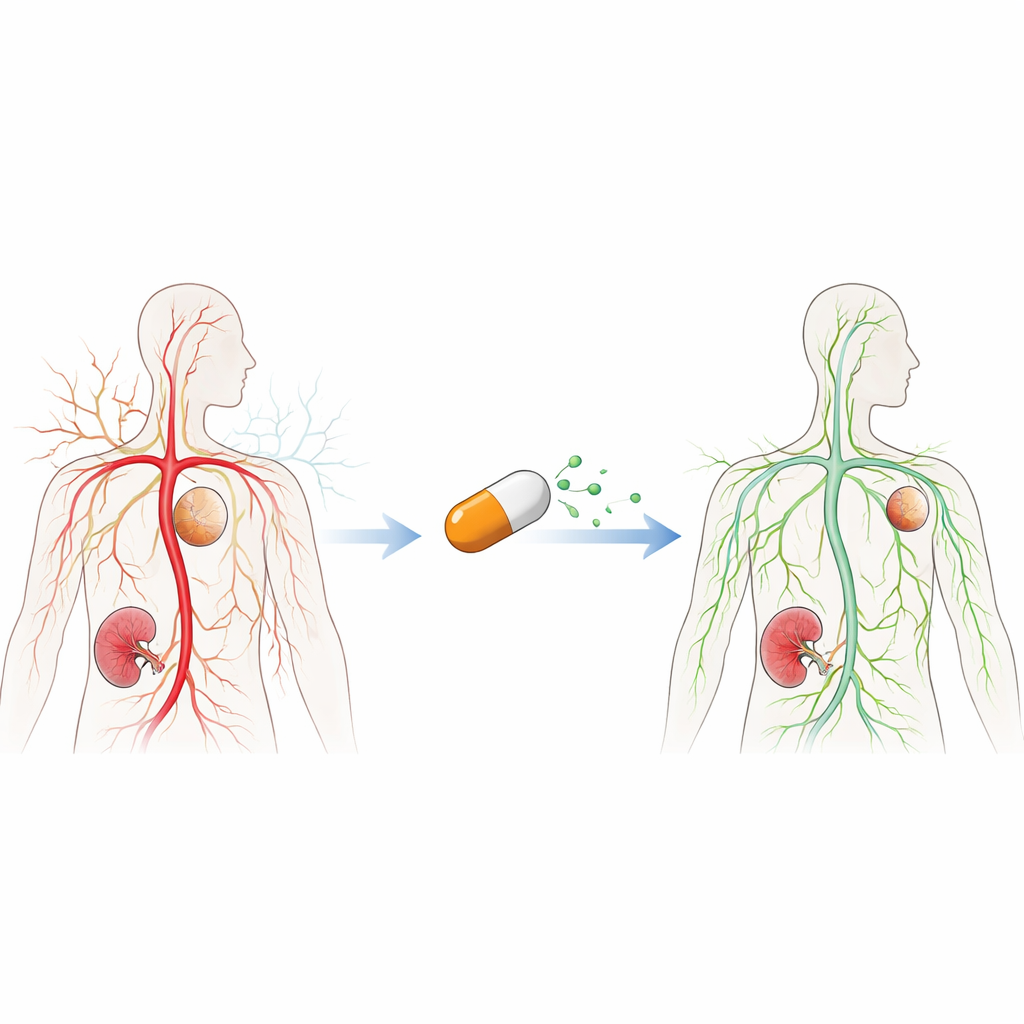
The body’s lesser-known plumbing
Most people know about arteries and veins, but the lymphatic system is an equally important network of tiny vessels that drain excess fluid, remove waste, and help control inflammation. When this drainage is poor, tissues can swell, immune cells behave abnormally, and organs such as the kidneys may be more vulnerable to long-term damage. The authors suspected that in the early stages of arterial hypertension, the body’s ability to grow new lymphatic vessels is already impaired, even before obvious complications appear.
Following patients from diagnosis onward
The research team enrolled sixteen adults who had just been diagnosed with high blood pressure and had not yet started medication, plus fourteen healthy volunteers. Over two years, the patients had detailed heart, kidney, and eye tests, along with round-the-clock blood-pressure monitoring. Blood samples were analyzed for dozens of signaling proteins (cytokines) and for specialized immune cells that both calm inflammation (regulatory T cells) and support new vessel growth. The scientists then used an animal model to test how each person’s blood serum influenced the formation of tiny blood and lymphatic vessels in the skin.
A hidden shortage of new lymph vessels
At diagnosis, serum from people with hypertension was just as capable as healthy serum at stimulating new blood vessels, but it was clearly worse at promoting lymphatic vessels. This suggests that a reduced capacity to grow lymphatic vessels is an early hallmark of high blood pressure, not just a late consequence. Importantly, after two years of treatment, serum from many patients regained its ability to drive lymph vessel growth. This recovery was strongest in those treated with angiotensin-converting enzyme inhibitors (ACE inhibitors), a widely used class of blood-pressure drugs.
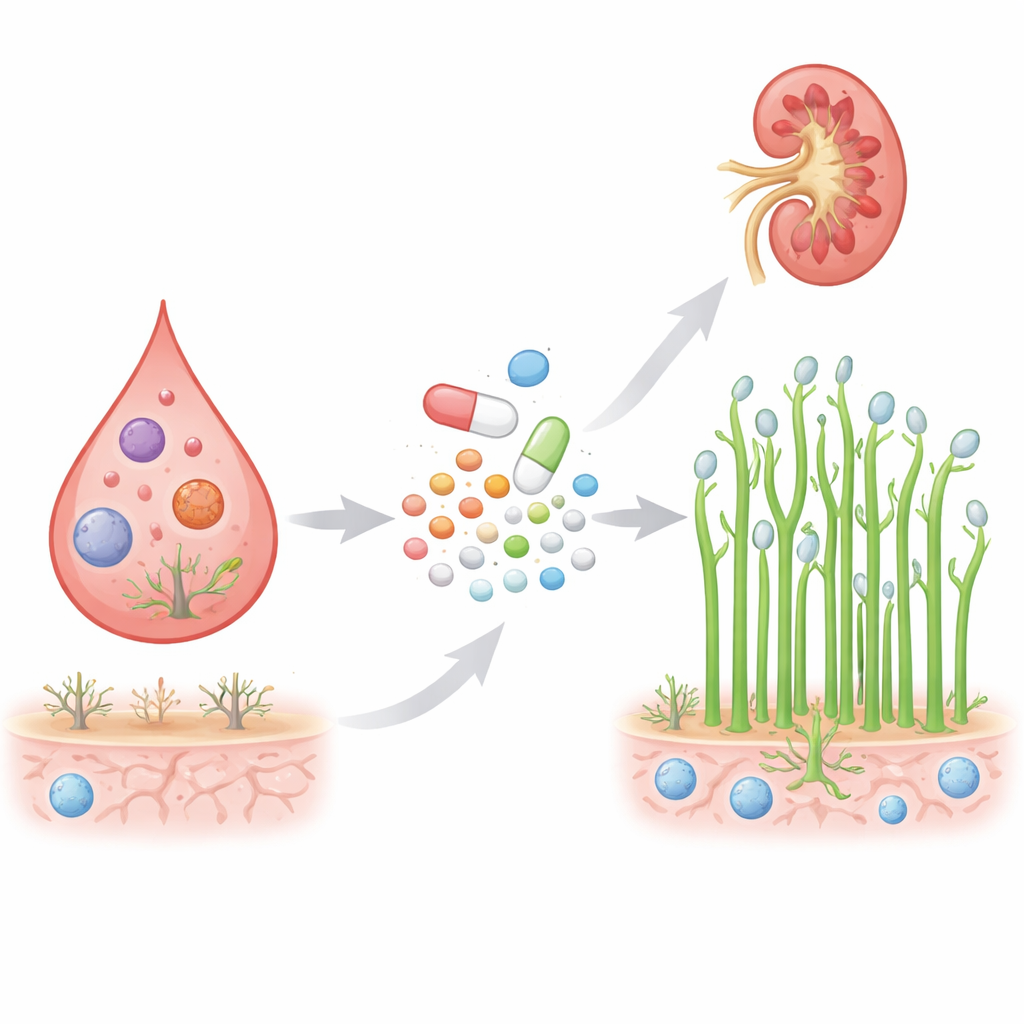
How a blood-pressure drug reshapes immune signals
To understand why ACE inhibitors had this effect, the team looked at the mix of cytokines in the blood. Patients on these drugs developed higher levels of VEGF-C and MDC—signals known to encourage lymphatic vessel growth—and lower levels of inflammatory messengers such as MIP-1α and MIP-1β. At the same time, patients who retained higher numbers of certain “pro-angiogenic” T cells, including a subset of regulatory T cells, tended to have less stiff blood vessels and healthier kidney measures: lower leakage of albumin into the urine, higher filtration rates, and lower blood creatinine. ACE inhibitor therapy helped preserve these protective T-cell populations compared with other blood-pressure treatments.
Early warning signs in the immune system
The study also found that patients whose small-vessel disease progressed more quickly had fewer total regulatory T cells and a shift from long-lived “central memory” cells toward more “effector memory” cells, a pattern linked to chronic low-grade inflammation. This imbalance was tied to higher vessel stiffness and greater kidney stress. Together, these findings suggest that the state of a person’s immune cells and cytokines can act as an early barometer of how their blood vessels and kidneys will fare under the strain of high blood pressure.
What this means for patients with high blood pressure
In plain terms, the work shows that early hypertension comes with a hidden defect in the body’s drainage network, and that this problem is not necessarily permanent. Long-term treatment with ACE inhibitors appears to restore the signals that drive growth of lymphatic vessels, preserve helpful immune cells, and is linked with better kidney health and more flexible blood vessels. While more and larger studies are needed, these results hint that choosing drugs that support the lymphatic and immune systems—rather than just lowering numbers on a blood-pressure cuff—could help prevent or delay the serious complications of hypertension.
Citation: Gliwiński, M., Koliński, T., Urban-Wójciuk, Z. et al. Decreased potential for lymphatic vessel generation is a hallmark of early diagnosed arterial hypertension and can be reversed by treatment with angiotensin converting enzyme inhibitors. Sci Rep 16, 12270 (2026). https://doi.org/10.1038/s41598-026-40323-x
Keywords: arterial hypertension, lymphatic vessels, ACE inhibitors, kidney protection, immune regulation