Clear Sky Science · en
Assessing anaerobe detection in routine sputum analyses from cystic fibrosis patients
Why tiny lung dwellers matter
Cystic fibrosis is best known for its thick mucus and stubborn lung infections, but less obvious are the countless bacteria quietly sharing that sticky environment. Many of these microbes live without oxygen, and scientists are still debating whether they harm or help the lungs. This study asks a practical question with direct impact on patient care: can everyday hospital labs, using standard sputum cultures, reliably detect these oxygen‑shy bacteria, or do they need complex DNA sequencing tests to see them? The answer could change how sputum from people with cystic fibrosis is handled around the world.
Looking closely at the lung community
People with cystic fibrosis (pwCF) carry a distinctive mix of microbes in their airways. Alongside well‑known culprits like Pseudomonas aeruginosa and Staphylococcus aureus, there is a rich cast of lesser‑known anaerobic bacteria that thrive in low‑oxygen nooks of the lungs. Earlier work suggested that some of these anaerobes might worsen disease by helping other germs resist antibiotics or by producing damaging enzymes, while others might calm inflammation and be linked to better lung function. Despite this potential importance, routine hospital tests rarely look for them, and when they do, they often miss species that more advanced DNA‑based methods easily detect.
Designing a real‑world test
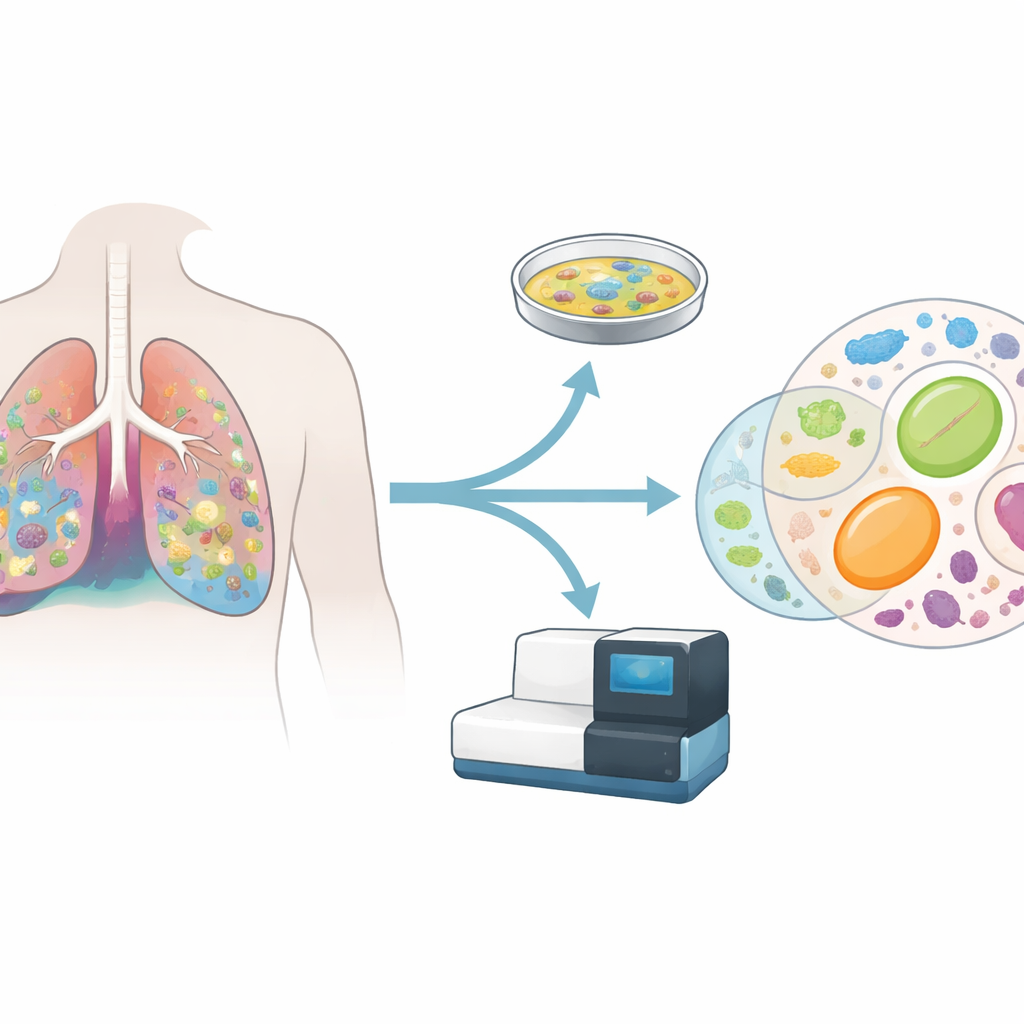
The French ReBAM study set out to mimic what could realistically be done in a standard clinical microbiology laboratory. Sputum samples from 48 people with cystic fibrosis were split in two. One part was handled in normal room air, the other was transported in a sealed low‑oxygen container. Both were then cultured on special plates that support anaerobic growth, and all visible colonies were identified. A portion of each sputum was also frozen and later analyzed using 16S rRNA gene sequencing, a DNA‑based approach that can catalog bacteria whether or not they grow in culture. This setup allowed the team to compare what routine extended culture can see with what sequencing reveals, and to test whether protecting the sample from oxygen during transport changes the result.
What standard culture can and cannot see
Sequencing unsurprisingly painted the richest picture: every patient’s sputum contained anaerobes, with an average of about 43 different strict anaerobic species per sample and more than 100 species in total across the group. By contrast, culture detected anaerobes in almost all patients too—about 96 percent—but found far fewer, averaging around three species per sample and 23 species in total. Importantly, the cultured bacteria included key genera such as Prevotella and Veillonella, long thought to be central players in the cystic fibrosis lung community and potentially involved in both protection and harm. In other words, while culture misses a large fraction of the hidden diversity that sequencing uncovers, it still captures many of the most common and clinically interesting anaerobes.

Does transport in low oxygen really matter?
One concern is that strict anaerobes might die if sputum spends hours exposed to oxygen on its way from the clinic to the lab. To test this, the researchers compared the two halves of each sample—one carried in regular air, the other in an oxygen‑free pouch. They found very similar numbers of anaerobic colonies and species with both approaches. There were some subtle differences in diversity measures and in the frequency of certain groups, such as Prevotella being somewhat more common when oxygen was excluded, but the overall ability to find anaerobes changed little. This suggests that, for most practical purposes, extra transport devices to keep sputum completely oxygen‑free may not be essential.
What this means for care
For patients and clinicians, the take‑home message is that everyday laboratory methods, with modest extensions, can already detect many of the important anaerobic bacteria in cystic fibrosis sputum, without relying on expensive and slow DNA sequencing. Sequencing remains invaluable for research and for mapping the full depth of the lung ecosystem, but routine cultures can still reveal the main anaerobic players that may influence inflammation, antibiotic response, and disease course. If confirmed in larger and longer‑term studies, these findings support adding targeted anaerobic cultures to standard sputum analysis, helping doctors better monitor the complex microbial communities that shape lung health in cystic fibrosis.
Citation: Clarenne, A., Suarez, L.V., Muggeo, A. et al. Assessing anaerobe detection in routine sputum analyses from cystic fibrosis patients. Sci Rep 16, 10031 (2026). https://doi.org/10.1038/s41598-026-40314-y
Keywords: cystic fibrosis, lung microbiome, anaerobic bacteria, sputum culture, 16S rRNA sequencing