Clear Sky Science · en
Industrial extraction of lithium from Urmia Lake using precipitation and evaporation methods
Why this salty lake matters for batteries
Lithium is the light metal that powers today’s phones, laptops, and electric cars. As demand soars, mining it only from a few rich deposits is risky and environmentally costly. This study asks a timely question: can we turn a shrinking salt lake in Iran, Urmia Lake, into a new source of battery-grade lithium using relatively simple, industry-ready steps involving settling of minerals and evaporation of water? The answer could help diversify global lithium supplies while making use of a resource that is currently underused.
Turning lake water into a workable starting point
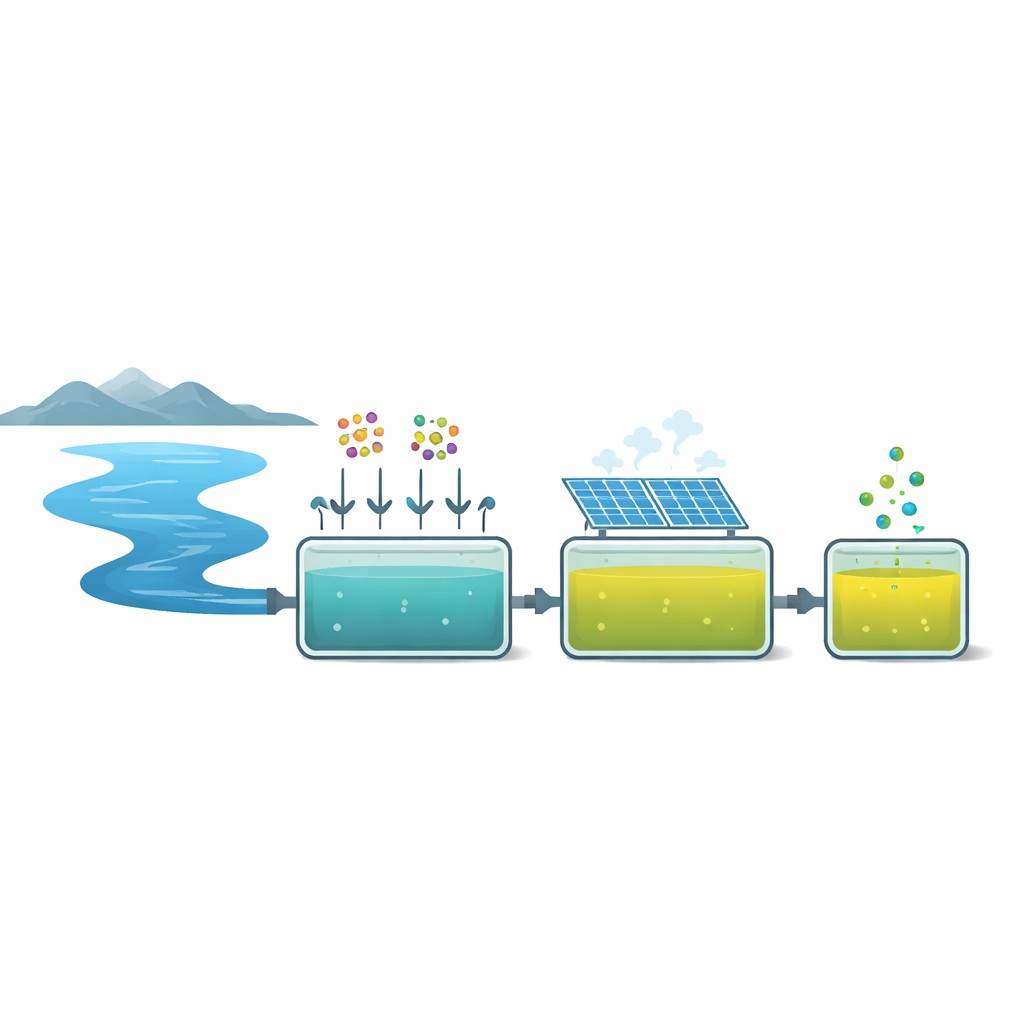
The researchers began by sampling brine—very salty water—from two parts of Urmia Lake and measuring the dissolved elements. One site, Jazireh Eslami, looked more promising because it held more lithium and less sodium, which later competes with lithium during recovery. The catch was that this brine also contained enormous amounts of magnesium, about 440 times more than lithium by mass. Such a skewed mix makes direct recovery difficult, so the team designed a step-by-step treatment to strip away troublesome elements while keeping as much lithium in solution as possible.
Cleaning out unwanted minerals at low cost
The first hurdle was magnesium, which interferes strongly with lithium separation. The team compared two cheap bases—sodium hydroxide and calcium hydroxide—to force magnesium to form a solid that can be filtered out. Sodium hydroxide worked fast and almost completely removed magnesium, but it flooded the brine with extra sodium, which would later crowd out lithium. Calcium hydroxide acted more slowly but still removed 99.5% of magnesium. It also introduced calcium into the water, which the researchers then pulled out by adding sulfuric acid, causing calcium sulfate (gypsum) crystals to form and settle. A final pH adjustment with sodium hydroxide brought the solution back to a neutral state. This three-step sequence sacrificed about 18% of the original lithium but cut chemical costs by roughly 44% compared with using sodium hydroxide alone.
Using the sun and air to concentrate lithium
Once the brine was cleaned, the next task was to raise the lithium level high enough for practical recovery. The team evaporated water in a controlled way, measuring how the lithium concentration rose and how much of it was accidentally trapped in other salts that crystallized out. At modest concentration, lithium in the liquid increased to more than double its original level. But pushing evaporation too far caused lithium to leave the liquid along with common table salt and similar minerals. The researchers chose a middle ground where the brine was concentrated about three and a half times, lithium reached 382 parts per million, and the added loss from this step was limited to about one third of what remained.
Trying different ways to capture lithium
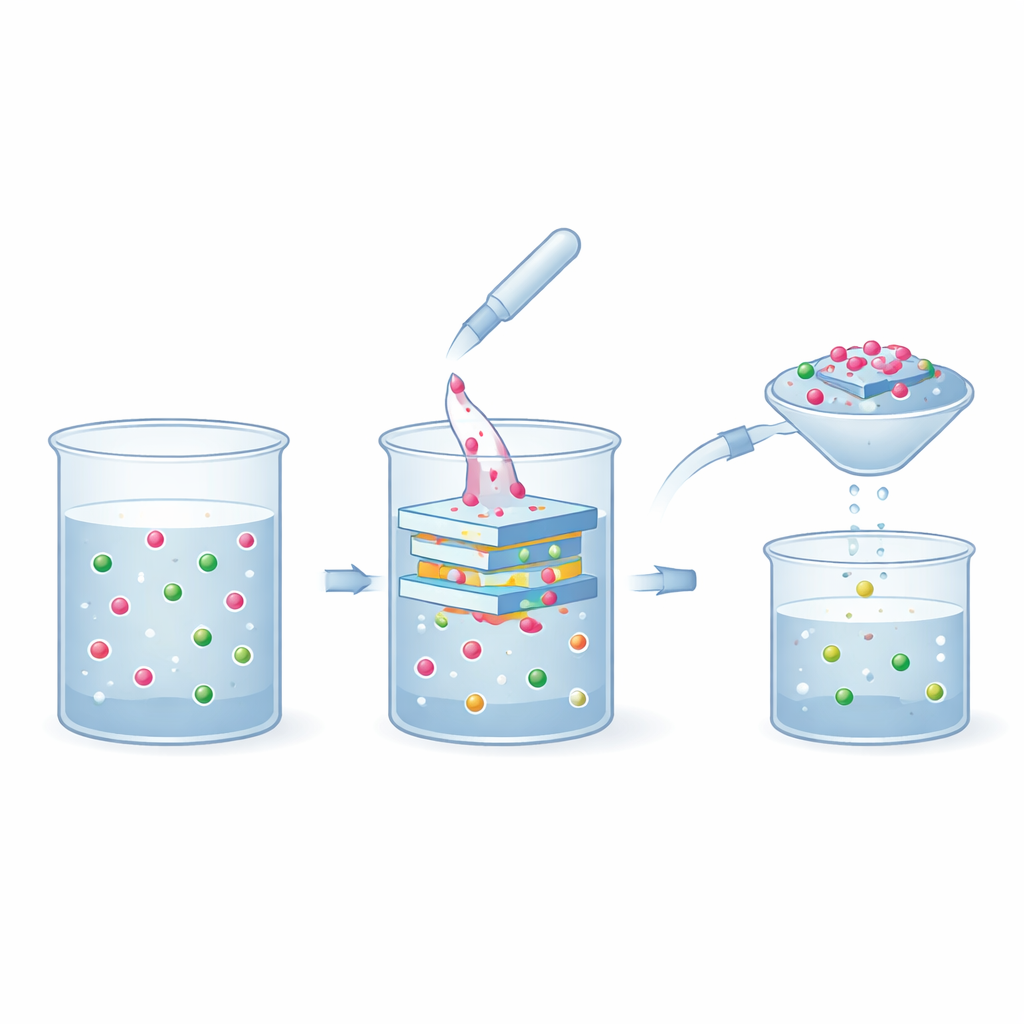
With a concentrated, purified brine in hand, the team tested three routes to pull lithium out as a solid. Turning it into lithium carbonate, the form used in many battery factories, proved impractical: the lithium level in the brine was simply too low for this relatively soluble compound to fall out in useful amounts. A second route relied on forming lithium phosphate, which dissolves much less readily. By chilling the mixture and carefully tuning how much phosphate they added, the researchers managed to recover about one fifth of the lithium that survived earlier steps. However, the resulting solid was dominated by sodium and potassium salts; lithium was only a minor ingredient, meaning extra refining would be needed. The most promising approach used a more modern trick: encouraging lithium to slip into the layers of a specially formed material called a layered double hydroxide, built from aluminum and other ions. Under optimized conditions and a three-hour reaction time, this pathway captured about 43% of the remaining lithium, though the solid still contained a lot of ordinary salt and some side minerals.
What this means for future lithium from lakes
Overall, the proposed treatment chain—cleaning, moderate evaporation, and reaction with layered materials—shows that even a very magnesium-rich lake like Urmia can yield lithium at efficiencies comparable to the best reported for similar brines worldwide. Yet the final recovery for the most successful route still falls short of what industry would like, mainly because lithium is lost during heavy salt formation and through unwanted side reactions at long reaction times. For a layperson, the takeaway is that we can indeed tap difficult salt lakes for battery metals using relatively straightforward chemistry, but careful fine-tuning is still needed. Improvements that reduce lithium losses during evaporation and steer reactions more cleanly toward the desired lithium-rich solids could turn lakes such as Urmia into reliable, economically viable contributors to the global battery supply chain.
Citation: Oskouei, A.E., Asgharzadeh, H., Shekaari, H. et al. Industrial extraction of lithium from Urmia Lake using precipitation and evaporation methods. Sci Rep 16, 9893 (2026). https://doi.org/10.1038/s41598-026-40309-9
Keywords: lithium brine, Urmia Lake, battery materials, salt lake extraction, layered double hydroxide