Clear Sky Science · en
Time to first birth and its determinants among female youths in Ethiopia using accelerated failure time shared frailty models
Why the First Baby Comes So Early
Becoming a mother at a young age can change the course of a girl’s life, affecting her health, education, and future earnings. In Ethiopia, many young women still have their first child in their teens or very early twenties, despite national efforts to promote later childbearing. This study looks closely at when Ethiopian girls and young women have their first baby, and which everyday factors—such as where they live, how much schooling they get, how poor or rich their families are, and whether they know about contraception—push that first birth earlier or help delay it.
Taking a National Look at Young Women’s Lives
The researchers analyzed data from the 2019 Ethiopia Mini Demographic and Health Survey, a nationwide household survey that asked women about their births, schooling, family situation, and use of health services. From nearly 9,000 women interviewed, the study focused on 3,691 females aged 15 to 24. Some had already had their first child; many had not. Using a type of time-to-event analysis often used in medical research, the team calculated how long, on average, young women remained childless and then examined which personal and household characteristics were linked to earlier or later first births.
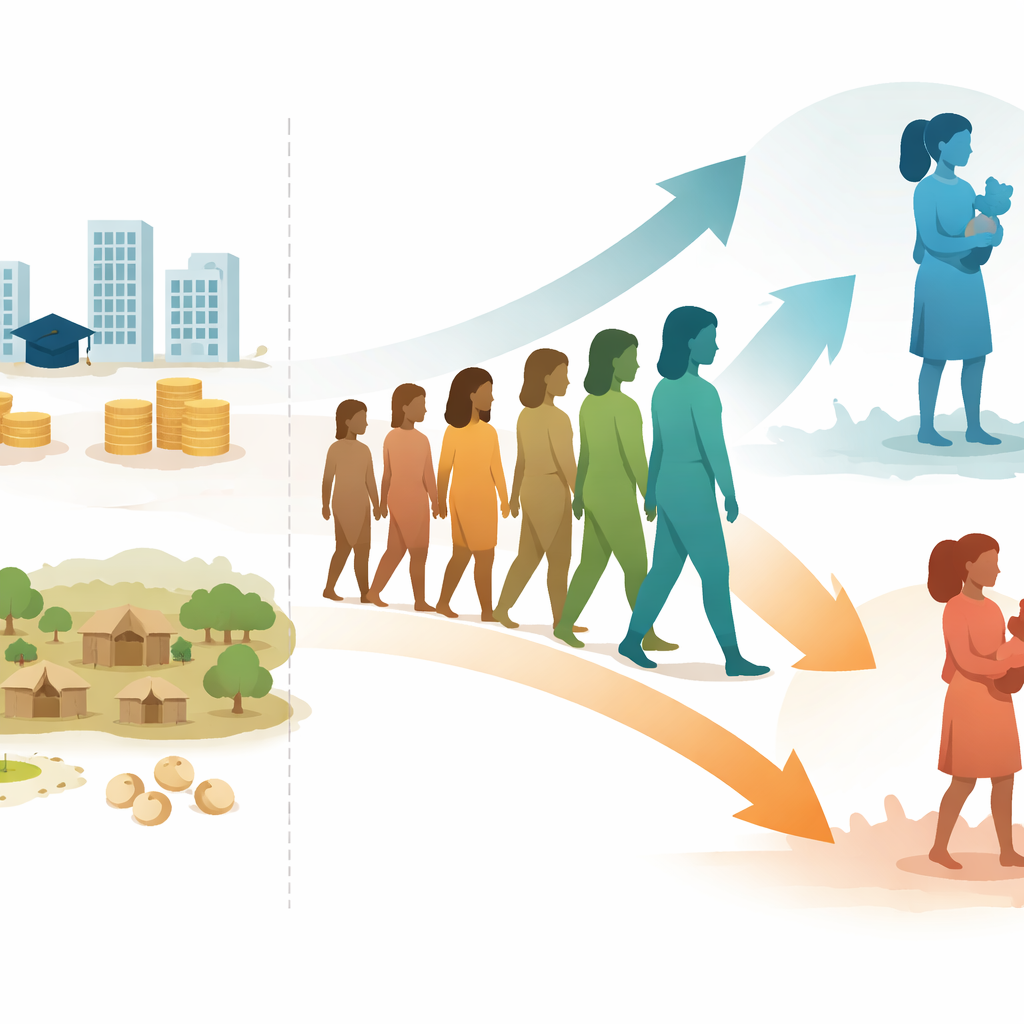
How Early Motherhood Shapes Futures
The study found that the typical Ethiopian young woman has her first baby at age 20: half of women aged 15–24 had become mothers by this age, and half had not. This is several years earlier than what many health experts consider the safest and most advantageous age for childbearing, usually the late twenties. Early motherhood can interrupt schooling, reduce job prospects, and is associated with higher risks of complications during pregnancy and birth. It can also affect children, who are more likely to be born too small or too soon, and to struggle later with learning and development. These findings suggest that a large share of Ethiopian girls become mothers at an age when they are still building their own health, skills, and independence.
Money, School, and Place Make a Big Difference
Not all young women in Ethiopia face the same likelihood of early motherhood. Those from the richest households tended to postpone their first child longer than those from the poorest households. Wealthier families are more able to keep daughters in school, and schooling itself opens doors to further education, jobs, and better knowledge of reproductive health, all of which support later childbearing. Education on its own also mattered: girls who completed secondary or higher education delayed their first birth compared with peers who had no formal schooling. In contrast, girls living in rural areas became mothers earlier than those in cities, reflecting differences in access to schools, health services, and social expectations around early marriage and childbearing.
Power of Knowledge and Access to Contraception
Knowing about and using contraception strongly shaped when young women had their first child. Most young women in the survey had at least heard of a modern contraceptive method, but those who lacked this basic knowledge were more likely to become mothers earlier. Young women who actually used contraception waited much longer before their first birth than non-users. This gap highlights both the promise and the current limits of Ethiopia’s family planning efforts. While health extension workers, clinics, and some youth-friendly services have helped spread information, many girls—especially in rural, poorer communities—still face barriers such as distance to clinics, cost, stigma, or family disapproval when they try to obtain and use contraception.
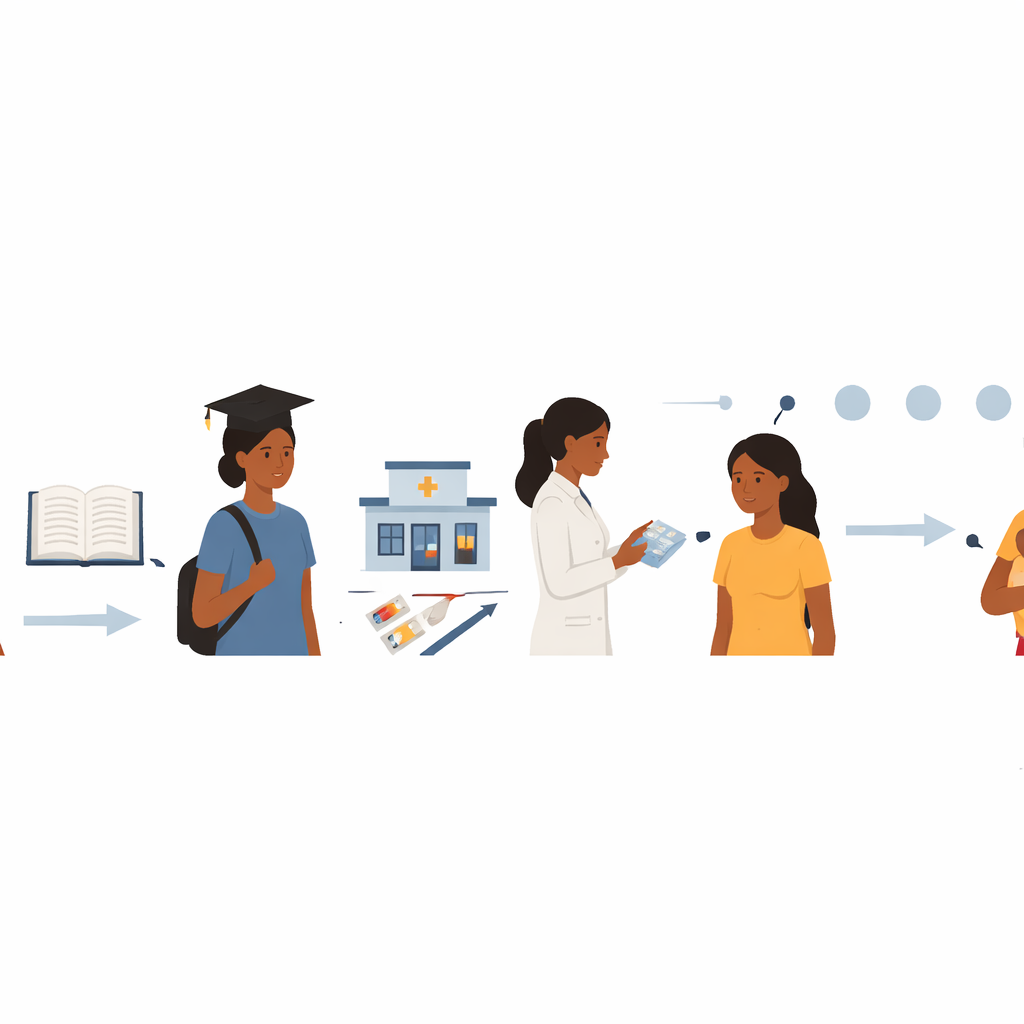
What These Findings Mean for Young Women’s Futures
Altogether, the study shows that early motherhood among Ethiopian youths is not simply a matter of personal choice; it is closely tied to poverty, living in rural areas, incomplete schooling, and lack of real access to contraception. When families are better off, when girls stay in school through at least secondary level, and when they can easily learn about and use contraceptives, they are far more likely to delay their first birth. For a layperson, the takeaway is straightforward: helping girls avoid very early motherhood—by investing in education, youth-friendly health services, and economic support for poor and rural families—can protect their health, keep them in school, and give them a stronger start in adult life.
Citation: Melak, E.G., Kebede, H.A., Endawkie, A. et al. Time to first birth and its determinants among female youths in Ethiopia using accelerated failure time shared frailty models. Sci Rep 16, 10048 (2026). https://doi.org/10.1038/s41598-026-40293-0
Keywords: early childbearing, Ethiopian youth, first birth timing, girls education, family planning