Clear Sky Science · en
Investigating the impact of carbamazepine on tomato plant metabolism using genome-scale metabolic modelling
Why medicine in water matters for your salad
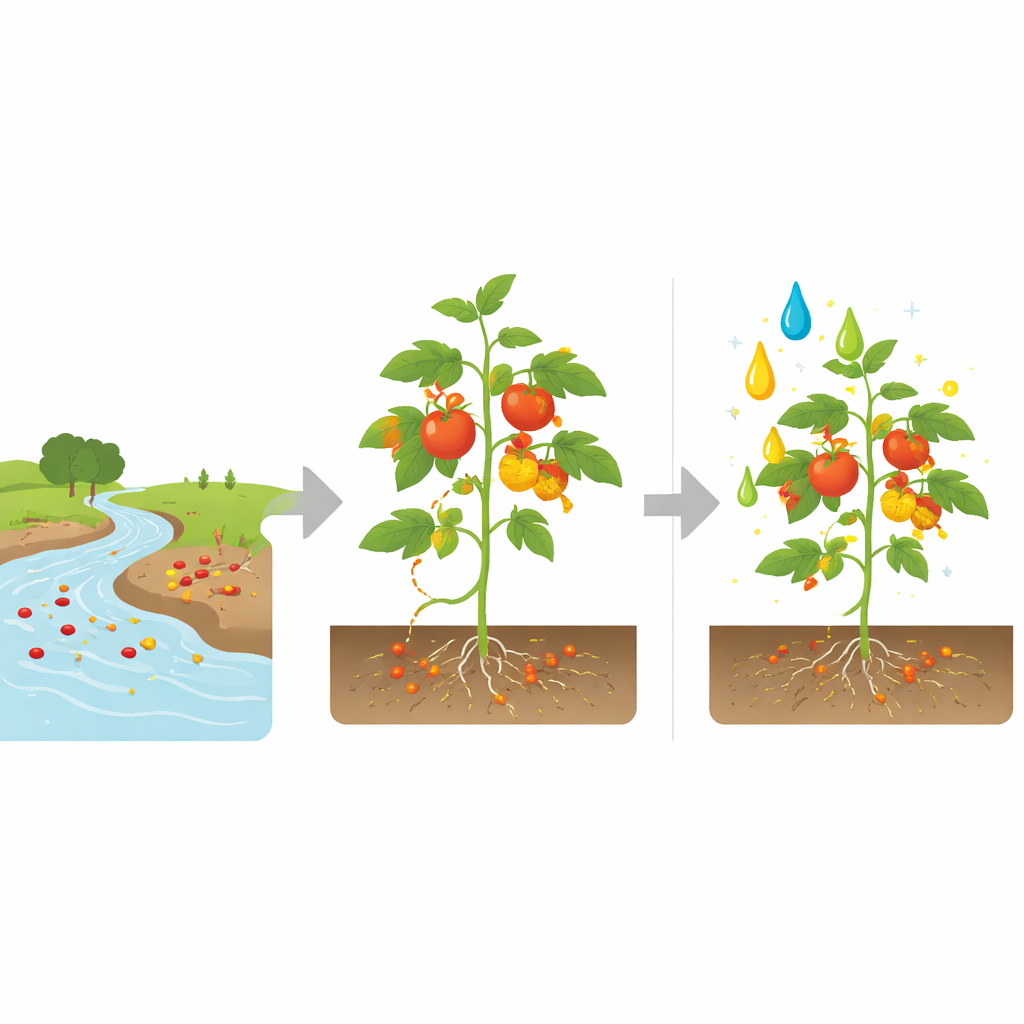
As cities reuse more treated wastewater for irrigation, traces of human medicines are increasingly ending up in farm fields. One such drug, the epilepsy medicine carbamazepine, is remarkably hard to remove from water and is readily taken up by crops like tomatoes. This study asks a simple but important question: what does that hidden dose of medicine do inside a tomato plant, and can we help the plant cope without sacrificing yield?
Tracking a stubborn drug inside a tomato leaf
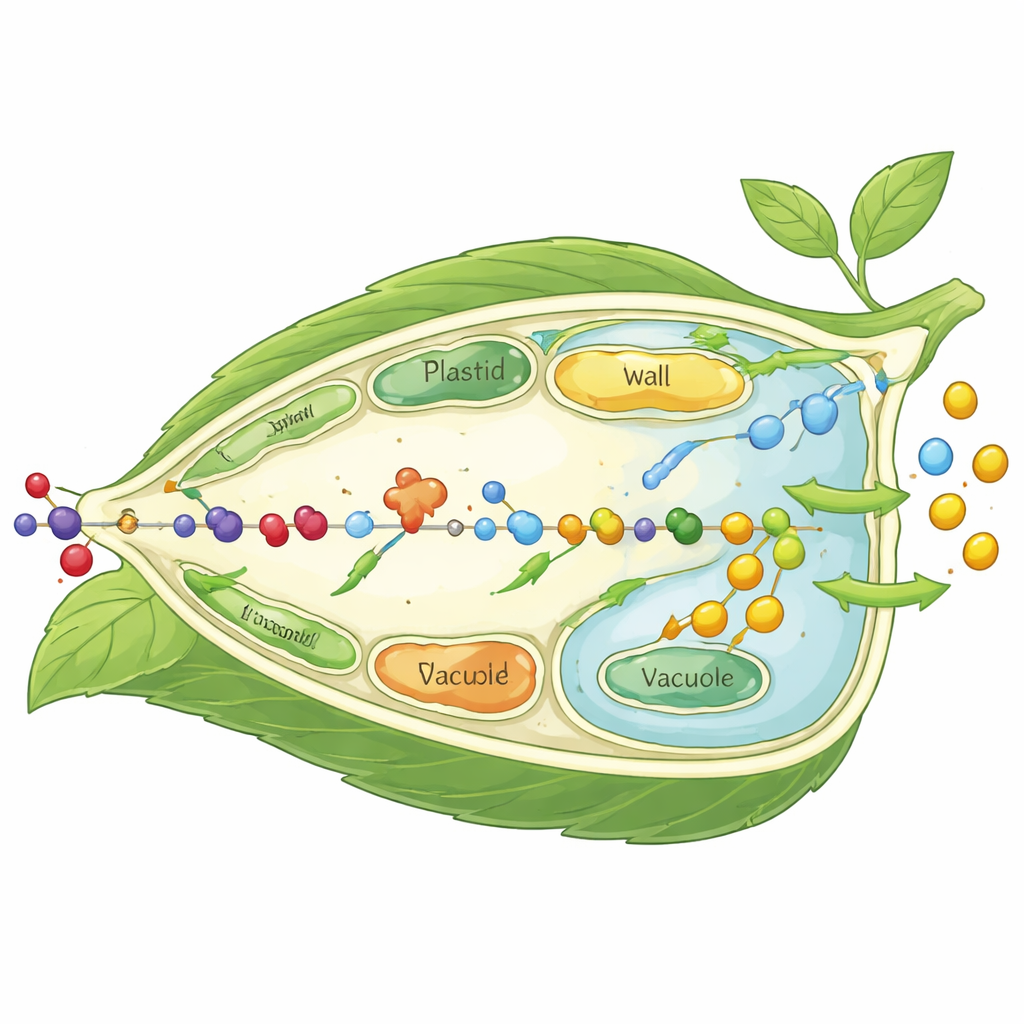
The researchers focused on carbamazepine because it is widespread, slow to break down, and known to cause stress in plants. Rather than running years of trial-and-error experiments, they built a detailed computer model of tomato leaf metabolism. This model represents thousands of chemical reactions that power photosynthesis, growth, and defense. They expanded it with a “green liver” module—a concept that treats plants as having liver-like abilities to detoxify foreign chemicals. Using data from animal toxicology and plant studies, they mapped how carbamazepine is taken up, chemically transformed into more water-loving forms, and finally stored or expelled by the plant.
How detoxing a pollutant drains plant energy
When the team forced the model plant to absorb increasing amounts of carbamazepine, simulated growth dropped sharply. The reason was not direct poisoning of one key enzyme, but a drain on the plant’s energy and helper molecules. Detoxifying the drug consumed crucial resources such as reducing power, high-energy phosphate bonds, and small protective molecules like glutathione. As these were diverted toward cleansing the intruder, fewer remained for building leaf biomass. The model predicted that 154 metabolic reactions changed so much under carbamazepine stress that their normal activity ranges no longer overlapped with the unstressed state, revealing a deep reprogramming of the plant’s internal chemistry.
Hidden reshuffling of core plant chemistry
Diving into those altered reactions, the study found that carbamazepine stress ripples through many essential pathways. The simulated tomato leaf showed changes in photosynthesis, the pentose phosphate pathway that supplies both energy and building blocks, the network that handles folate (a vitamin-like cofactor), and the production of amino acids and nucleotides—the basic units of proteins and DNA. Even though the model does not explicitly list every secondary compound a tomato can make, it flagged shifts in the precursors for pigments, flavors, and defensive molecules, such as carotenoids and alkaloids. Many of these predictions match independent experiments in real plants exposed to carbamazepine, lending credibility to the virtual approach while also pointing out gaps where future models need better coverage or regulatory detail.
Giving plants a boost with simple helpers
The authors then asked whether adding simple “biostimulants” could help tomatoes tolerate the drug. They tested four common small molecules—proline, spermine, ethanol, and glycerol—by allowing the virtual plant to take them up through leaf-like inputs. In the simulations, all four improved growth under carbamazepine stress and were not harmful in clean conditions. At modest doses, they restored the plant’s ability to produce many biomass components and, strikingly, increased the flow of carbamazepine into its safer, later-stage detoxified forms. Proline stood out, apparently by boosting the plant’s capacity to generate sugar- and sulfur-containing helpers needed for the final detox steps. Most of the metabolic reactions that carbamazepine had pushed into a stressed state were partially or fully “pulled back” toward normal when any of the biostimulants were supplied.
From computer predictions to safer harvests
For non-specialists, the main message is that a medicine dissolved in irrigation water does not simply disappear once it enters a tomato plant; it forces the plant to spend precious energy on cleanup, slowing growth and reshaping its internal chemistry. This study shows that with a sophisticated metabolic model, scientists can trace that impact in silico and test potential remedies before going to the field. The work suggests that carefully chosen biostimulants might help crops stay productive even when irrigated with water containing persistent pharmaceuticals. More broadly, the framework offers a way to screen other drugs and nutrients, guiding smarter strategies to protect both food security and environmental health as wastewater reuse becomes more widespread.
Citation: Srinivasan, S., Raman, K. & Srivastava, S. Investigating the impact of carbamazepine on tomato plant metabolism using genome-scale metabolic modelling. Sci Rep 16, 12801 (2026). https://doi.org/10.1038/s41598-026-40259-2
Keywords: wastewater irrigation, pharmaceutical pollutants, tomato metabolism, plant stress, biostimulants