Clear Sky Science · en
Innovative fuzzy reinforcement learning based energy management for smart homes through optimization of renewable energy resources with starfish optimization algorithm
Smarter Homes for a Changing Energy World
Keeping the lights on cheaply and cleanly is getting harder as our homes plug in more devices and the power grid adds more solar panels and wind turbines. This paper explores a new way for smart homes to juggle electricity from rooftop solar, small wind turbines, home batteries, and electric cars while still relying on the grid when needed. By teaching a home energy “brain” to learn from experience and handle uncertainty in sunshine, wind, and prices, the authors show that households can cut bills, use far more renewable energy, and reduce pollution without sacrificing comfort.
How a Smart Home Can Think About Power
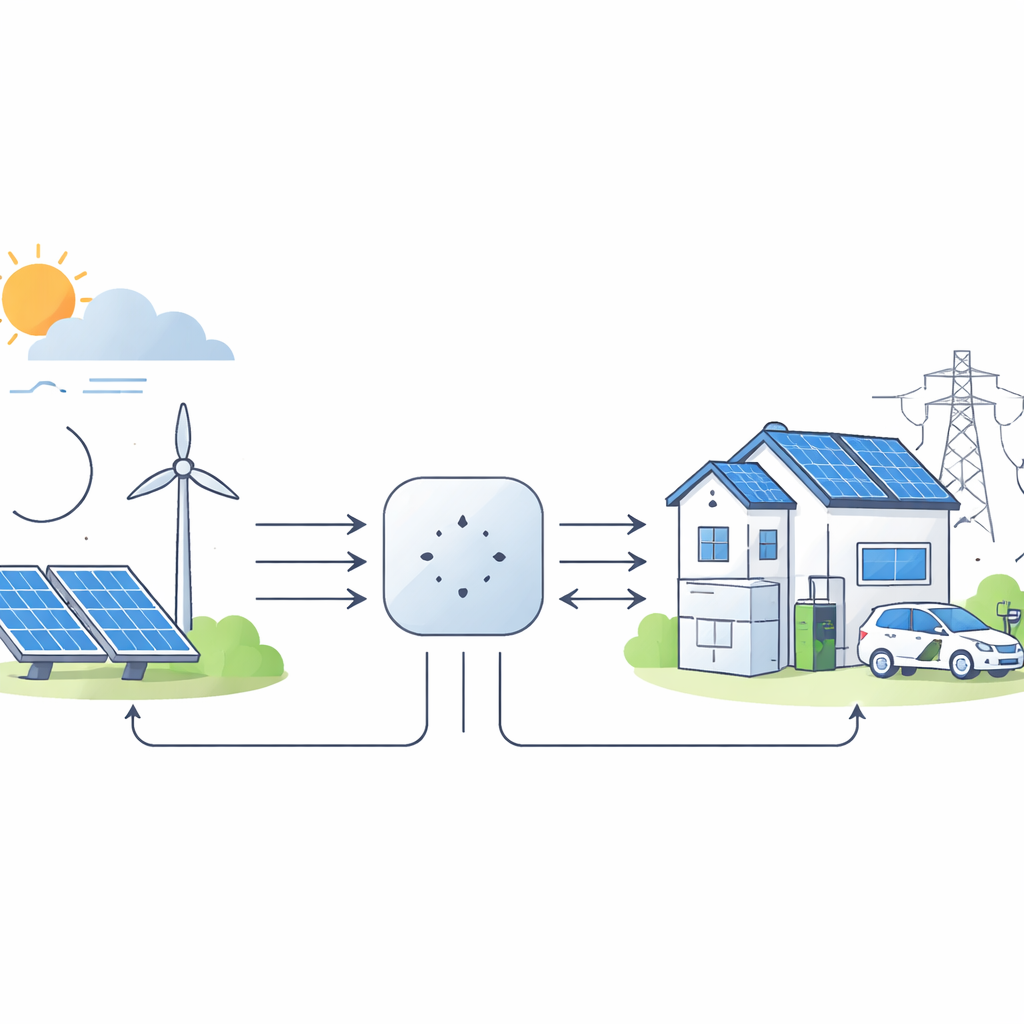
The study imagines a modern home connected to several energy sources: solar panels on the roof, a small wind turbine, a battery in the house, and an electric vehicle that can both charge and, at times, feed power back. The home is also tied to the wider power grid, which buys and sells electricity at prices that change by the hour. Instead of simply using grid power whenever something is turned on, the proposed management system constantly decides, every hour, whether to draw energy from the grid, store excess solar or wind in the battery or car, or even sell spare energy back. The main goals are straightforward: keep the residents comfortable, minimize the total cost over the day, and squeeze as much useful work as possible out of local renewable sources.
A Soft but Clever Control Strategy
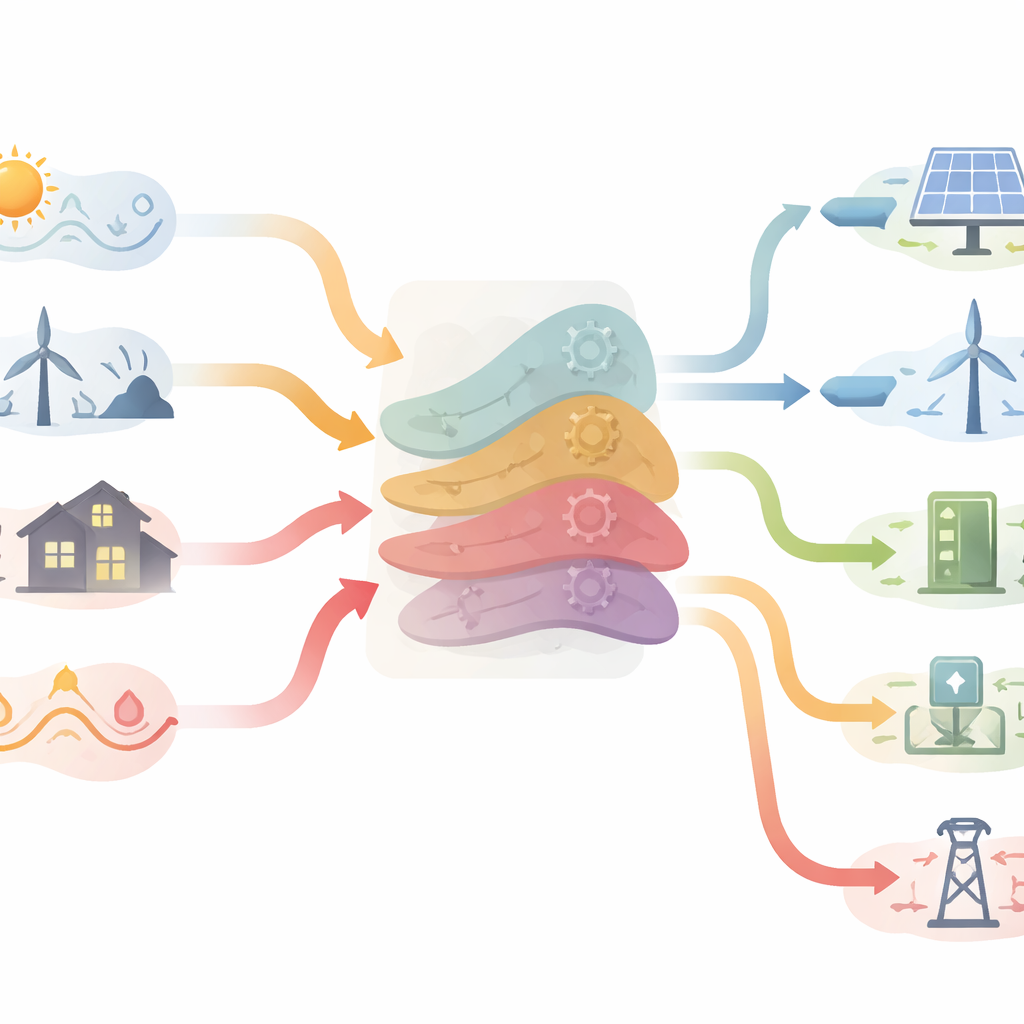
At the heart of the system is a decision engine that blends two ideas: fuzzy logic and reinforcement learning. Fuzzy logic is a way for machines to handle imprecise notions such as “high demand,” “medium sunlight,” or “low battery level” rather than sharp on–off rules. Reinforcement learning, by contrast, is a trial‑and‑error approach in which the controller is rewarded when it lowers costs and increases renewable use, and penalized when it wastes energy or stresses the battery. The authors build a controller with four main inputs—solar power, wind power, home demand, and electricity price—and four outputs that act like switches for solar, wind, the house battery, and the electric vehicle. These outputs decide whether each source is off, feeding the house, or charging or discharging storage.
Teaching the Home to Learn
Training this controller is not trivial, because sunshine, wind, and human behavior all fluctuate in complicated ways. To cope with this, the authors generate many possible “days” using statistical models: solar intensity and household demand follow beta distributions, while wind speed and patterns of electric‑vehicle use follow normal and related distributions. Across these scenarios, the controller is tuned using a nature‑inspired search method called the starfish optimization algorithm, which explores many combinations of fuzzy rules and gradually homes in on those that give the lowest cost and highest renewable share. After this training stage, the rule set is frozen, and the system can make live decisions very quickly—on the order of a thousandth of a second per step—fast enough for real‑time use in a home energy hub.
What the Simulated Home Achieves
Using detailed computer simulations for a full day with ten different uncertainty scenarios, the researchers compare their smart controller against more conventional approaches, including simpler fuzzy systems and methods that rely on diesel backup or less flexible scheduling. Under three common types of pricing—fixed tariffs, real‑time prices that fluctuate through the day, and day‑ahead prices set in advance—the new system cuts daily electricity costs by 35.2%, 23.8%, and 26.43%, respectively. At the same time, it boosts the share of demand met by solar and wind up to about 70% during key hours, while keeping battery and vehicle charge levels within safe bounds. Over a 20‑year period, the design reaches a competitive cost of electricity and lowers operating expenses and carbon emissions by roughly 12–19% when compared with diesel‑based options of similar size.
Why This Matters for Everyday Life
For a non‑specialist, the main message is that combining home solar, small‑scale wind, batteries, and electric cars with a smart, learning‑based controller can make a household both cheaper to run and kinder to the environment. Instead of forcing people to manually time their appliance use or guess when to charge their car, the proposed system automatically juggles all resources to follow changing prices, weather, and habits. Although the work is based on simulations and still needs real‑world testing, it suggests a practical path toward homes—and even clinics or small businesses—that act as mini power plants, cutting bills and emissions while staying comfortably powered around the clock.
Citation: Hamedani, M.M.K., Jahangiri, A., Mehri, R. et al. Innovative fuzzy reinforcement learning based energy management for smart homes through optimization of renewable energy resources with starfish optimization algorithm. Sci Rep 16, 11131 (2026). https://doi.org/10.1038/s41598-026-40247-6
Keywords: smart home energy management, renewable energy integration, battery and electric vehicle storage, fuzzy reinforcement learning control, dynamic electricity pricing