Clear Sky Science · en
Exposure-associated health implications of potentially toxic elements in maternal and umbilical cord blood at Ishaka adventist hospital, Bushenyi District, Uganda
Why this story matters for mothers and babies
Across the world, babies begin life already exposed to pollution that their mothers breathe, drink, or eat. This study from southwestern Uganda looks closely at how tiny amounts of metals from the environment can reach unborn babies through their mothers’ blood. The work matters not only for families in Uganda, but for many communities in low- and middle-income countries where farming, mining, and weak pollution control may quietly shape a child’s health from the very start.
Everyday life in a polluted landscape
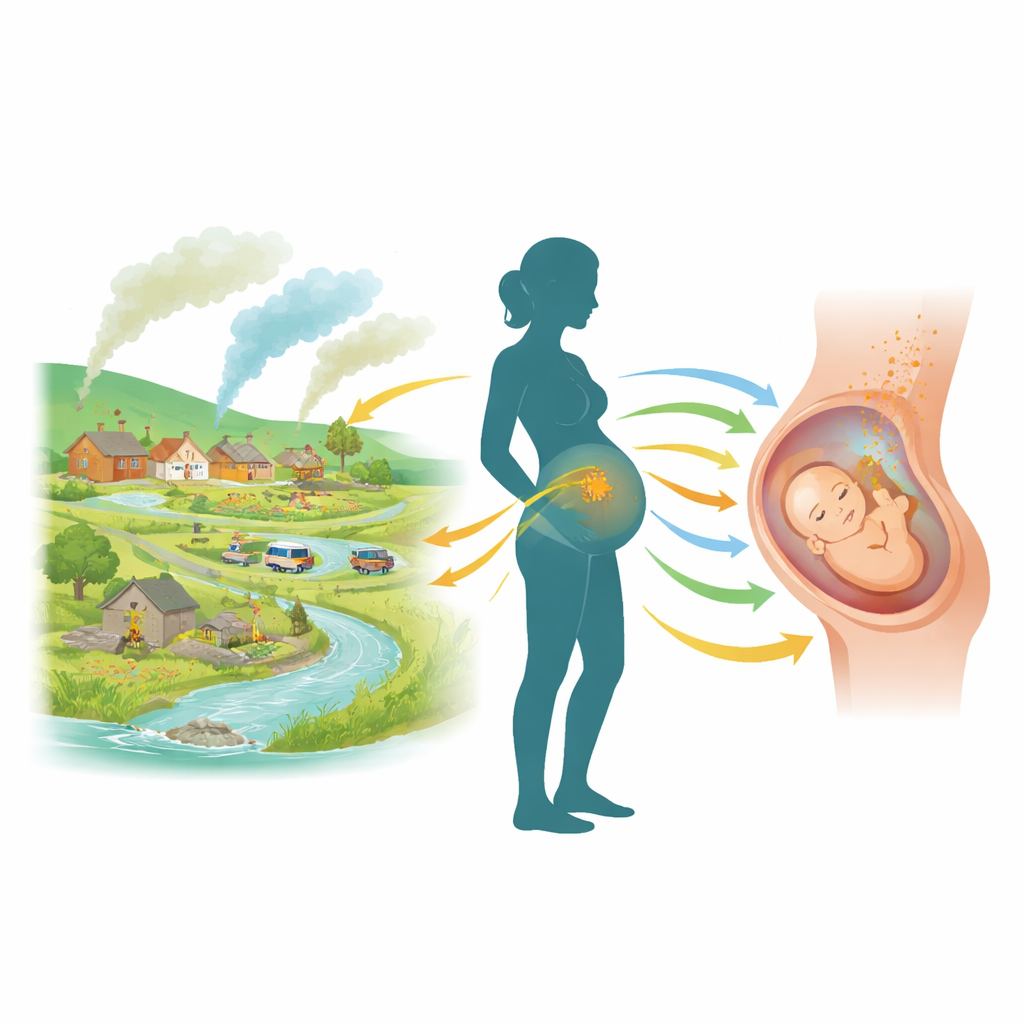
The research took place around Ishaka Adventist Hospital in Bushenyi District, a largely farming region surrounded by tea, coffee, and banana fields, small-scale mining, busy roads, and homes that depend on firewood for cooking. All 32 women in the study cooked with wood, most lived near main roads, and many used mosquito coils or ate soil and clay (a practice called earth-eating) during pregnancy. These common habits and surroundings can release metals such as lead, arsenic, chromium, and nickel into air, soil, food, and household dust, turning ordinary daily life into a slow and mostly invisible source of exposure.
What the scientists measured in mothers and babies
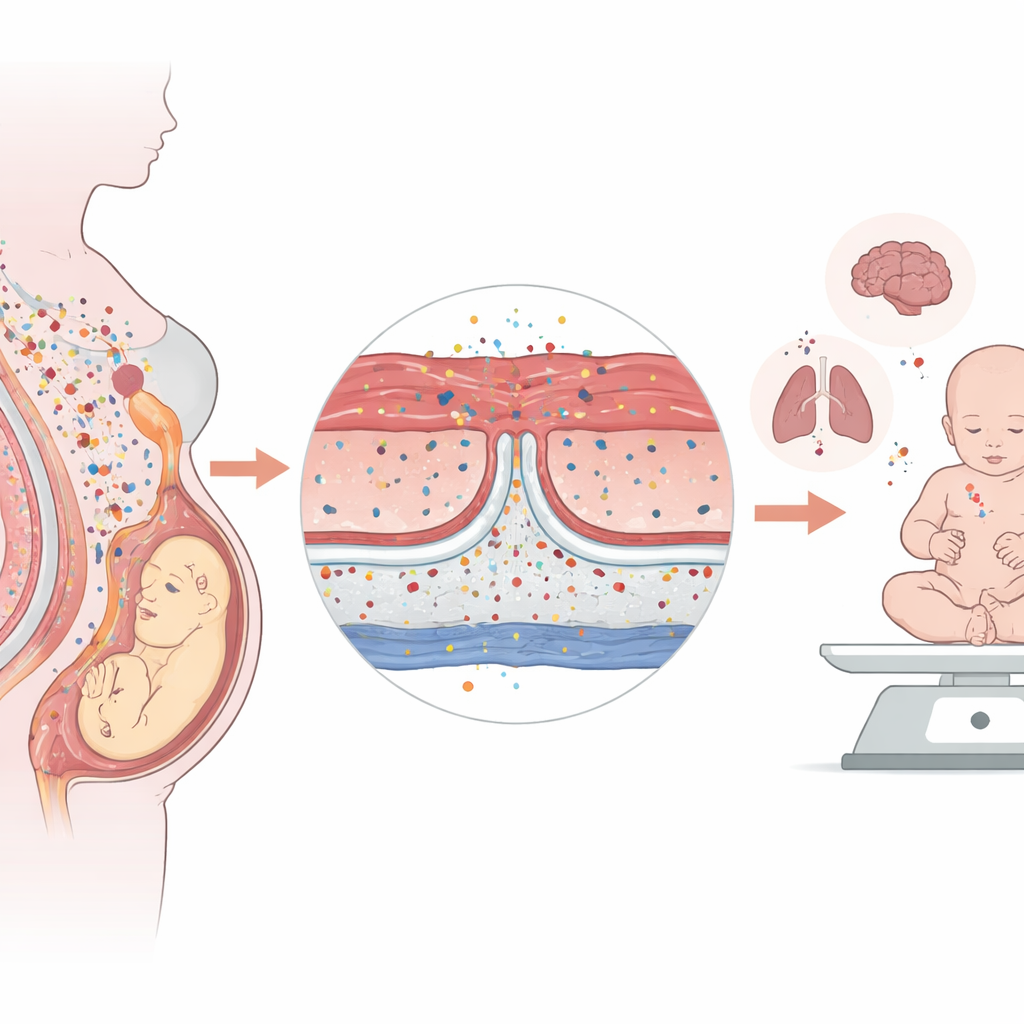
To see how far these metals travel into the body, the team collected blood from each mother just before delivery and from the umbilical cord just after birth, giving a direct snapshot of what was reaching the fetus. Using a sensitive laboratory method, they looked for several metal “ingredients”: arsenic, lead, chromium, nickel, copper, zinc, and iron. Cadmium, another worrying metal, was below the level their instruments could reliably detect. Overall, mothers had higher metal levels than their babies, suggesting that the placenta filters out part of the exposure. Even so, between about one tenth and one half of the mother’s load for most metals was found on the baby’s side of the cord, with lead crossing the barrier particularly well.
Hidden risks for small babies and sick mothers
Numbers alone do not tell the full story, so the researchers combined metal levels into a single “weighted risk score” that reflects both how much of each metal was present and how harmful it is considered to be. Most mothers and an even larger share of newborns fell into the moderate or high exposure groups, with arsenic, lead, and chromium driving much of the risk. When the team compared these exposures with health reports, worrying patterns emerged. Higher metal levels and certain habits—such as breathing tobacco smoke, using firewood and mosquito coils, or eating soil—were linked with high blood pressure, stomach troubles, breathing problems, and pregnancy diabetes in mothers. Babies whose mothers were older, exposed to smoke, or practised earth-eating were more likely to be born underweight, and cord blood metals like lead and chromium were tied to these lower birth weights.
What this means for families and communities
Although the study involved only 32 mother–baby pairs, it is the first of its kind in Uganda and offers a rare window into life in the womb in a setting with multiple pollution sources and limited oversight. The finding that toxic metals consistently appear in cord blood—and often above international reference levels—shows that unborn children are sharing in environmental burdens they did nothing to create. The results also highlight that the placenta, while protective, cannot completely block these substances. Common practices such as cooking with wood, relying on mosquito coils, or eating soil can be important, and sometimes underestimated, pathways by which pollution ends up in a baby’s bloodstream.
Steps toward safer beginnings
For non-specialists, the main message is clear: even low, everyday exposures to toxic metals can reach the fetus and may contribute to low birth weight and other health problems later in life. The authors argue that routine checks for such pollutants during pregnancy, better control of emissions from farming and small mines, safer cooking and pest-control methods, and simple measures like adequate calcium in late pregnancy could all help reduce risks. While the work focuses on one Ugandan district, many communities across Africa, Asia, and Latin America face similar conditions. Protecting pregnant women from environmental contaminants is therefore not only a local challenge but a global priority for giving children a healthier start in life.
Citation: Udom, G.J., Aziakpono, O.M., Obot, D.N. et al. Exposure-associated health implications of potentially toxic elements in maternal and umbilical cord blood at Ishaka adventist hospital, Bushenyi District, Uganda. Sci Rep 16, 10252 (2026). https://doi.org/10.1038/s41598-026-40241-y
Keywords: prenatal metal exposure, umbilical cord blood, Uganda environmental health, low birth weight, maternal pollution risk