Clear Sky Science · en
Parental reporting of activities relevant for young children’s soil/dust ingestion
Why the dust under the couch matters
Many parents worry about what their young children eat, but fewer think about what kids swallow without realizing it: the thin film of dust and bits of soil that cling to toys, pacifiers, blankets, and little fingers. This study looks closely at how everyday habits of children from 6 months to 6 years old—such as mouthing objects, using pacifiers, cuddling blankets, and washing hands—shape how much dust and soil they are likely to ingest. By understanding these routines across different families and cities, researchers hope to improve estimates of children’s exposure to household contaminants and, ultimately, sharpen public health protections.
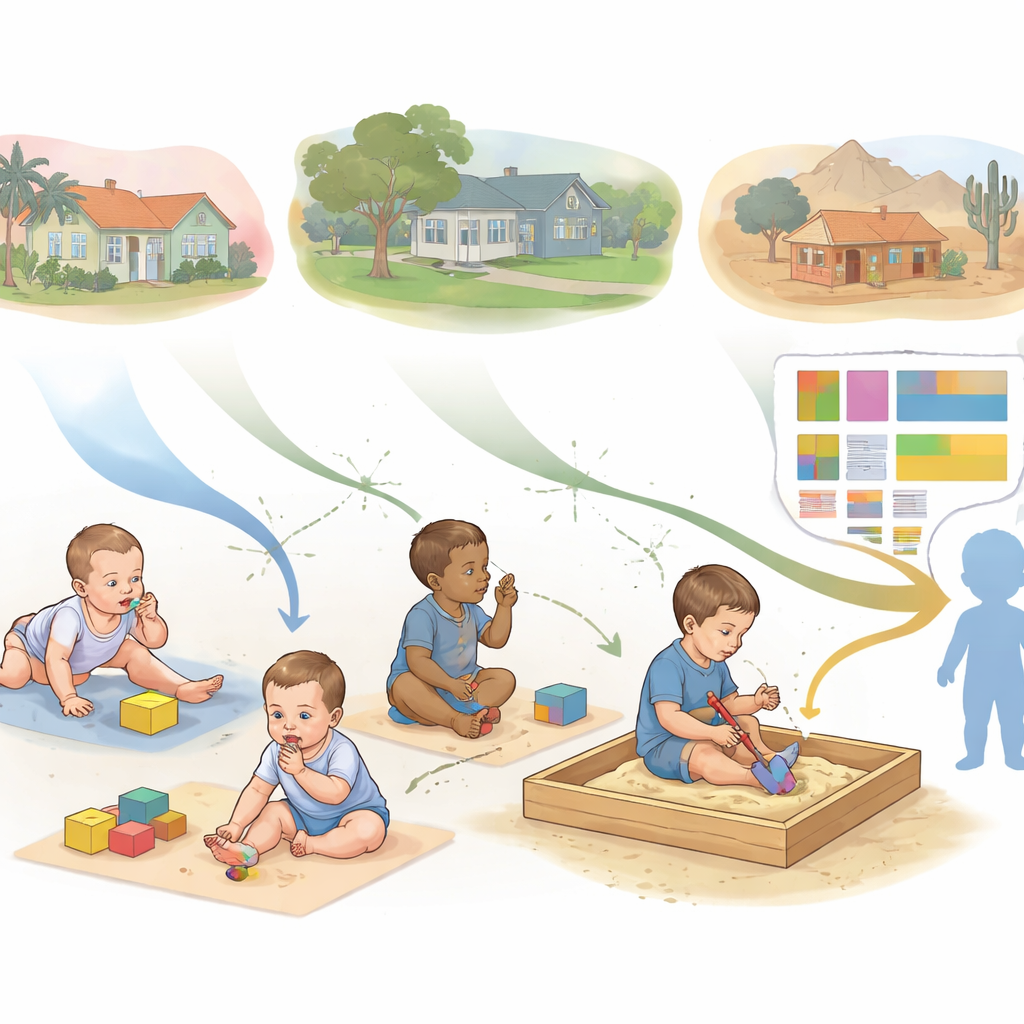
Looking into homes across three cities
The research team surveyed 449 households in and around Miami, Greensboro, and Tucson between 2022 and 2023, collecting information on 540 children aged 6 months to just under 6 years. Parents or guardians answered detailed questions about their child’s daily activities, including what they put in their mouths, how often they used and washed pacifiers, blankets, or stuffed animals, how frequently hands were washed before meals, and how much time children spent indoors, outdoors, and away from home. The survey also captured 12 demographic factors—such as the child’s age and race, the parents’ education, income, and work status, and whether the household had one or two parents—to see which characteristics best predicted behaviors that bring dust and soil to the mouth.
Connecting everyday habits to hidden exposures
Most parents (about 72%) reported that their child put non-food items in their mouth, with toys being by far the most common item, followed by shoes, jewelry, and dirt. These behaviors matter because dust and soil can harbor metals, pesticide residues, and other chemicals. To find out which families’ routines were most strongly linked to these behaviors, the researchers used a statistical approach that pairs each behavior with each demographic factor and then scores how closely they are related. The clearest pattern that emerged was age: younger children mouthed objects more often, used pacifiers and favorite blankets more frequently, sucked their fingers and toes more, and had pacifiers washed more often. As children grew older, these behaviors typically faded, while attachment to stuffed animals and toys tended to increase.
What varies from family to family
Beyond age, only a handful of demographic factors showed notable connections to dust-related behaviors, and even these links were generally modest. Race played a role in where and how children played outdoors: Black children in this sample were reported to play at parks less often than White children, and children in Miami and Tucson used parks more than those in Greensboro. Access to sandboxes at home varied by city and was most common in Tucson. Household income and parents’ work status influenced how often children attended daycare and how many hours they spent away from home on weekdays. Higher-income parents were more likely to say their child’s hands were always washed before meals, and single parents tended to wash pacifiers more frequently. Still, compared with the powerful effect of age, differences by race, income, or parental education were relatively small.
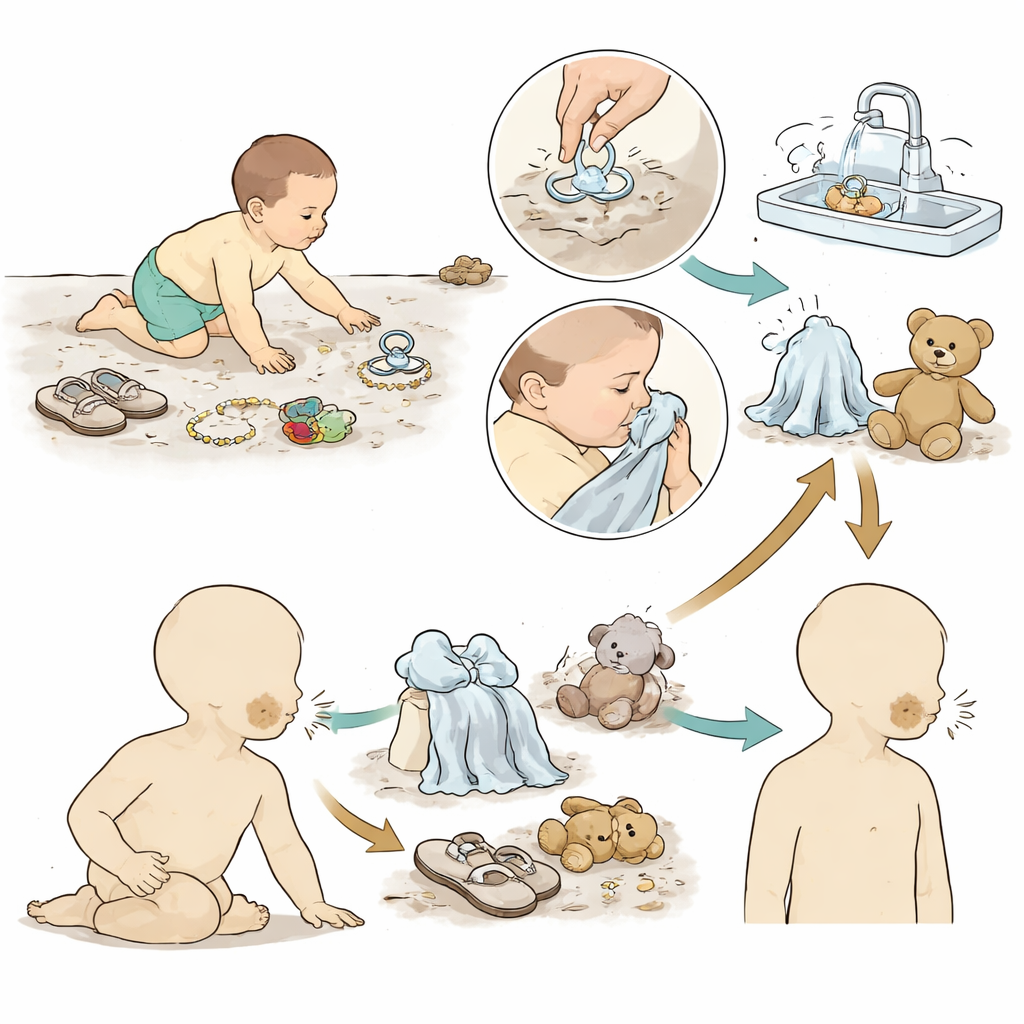
From survey answers to better risk estimates
These survey results provide what scientists call macro- and meso-level activity patterns: broad information on where children spend their time and which objects they commonly mouth, rather than second-by-second video counts. The team is combining this survey with more detailed observations and measurements of dust and soil collected in and around homes for a subset of the children. By feeding all of these data into exposure models, they can better estimate how much dust and soil children of different ages and backgrounds actually ingest and which specific behaviors—such as dropping a pacifier on the floor, chewing a favorite toy, or rarely washing hands—contribute the most. This knowledge can guide practical steps, from focusing cleaning and washing on high-contact items to tailoring guidance and regulations that protect the youngest and most vulnerable children from unseen contaminants in their everyday environments.
What this means for parents and health officials
In plain terms, the study finds that age is the single strongest driver of how kids interact with dusty surfaces and objects: babies and toddlers explore the world with their mouths, while older preschoolers gradually grow out of these habits. Other factors like race, income, and city do influence behavior, but to a lesser extent. By mapping which routines are most closely tied to dust and soil ingestion, the research helps health agencies refine their estimates of children’s exposure and design more targeted advice and protections. For families, the message is straightforward: paying attention to mouthing behaviors, regularly washing pacifiers, blankets, stuffed toys, and little hands—especially in the earliest years—can meaningfully reduce the invisible dust and soil that young children swallow.
Citation: Ferguson, A., Hasan, A., Adelabu, F. et al. Parental reporting of activities relevant for young children’s soil/dust ingestion. Sci Rep 16, 12500 (2026). https://doi.org/10.1038/s41598-026-40220-3
Keywords: children, household dust, soil ingestion, mouthing behavior, handwashing