Clear Sky Science · en
Assessing factors of COVID-19 outcomes in the United States based on the ecological framework of population health
Why this matters for everyday life
The COVID-19 pandemic did not hit every part of the United States equally. Some counties saw far more deaths and cases than others, even though everyone was facing the same virus. This study asks a simple but vital question: what is it about where we live—our local culture, politics, economy, and health habits—that helps explain those stark differences? Understanding these patterns can help communities prepare better for future health crises and reduce preventable loss of life.
Looking at health as more than personal choice
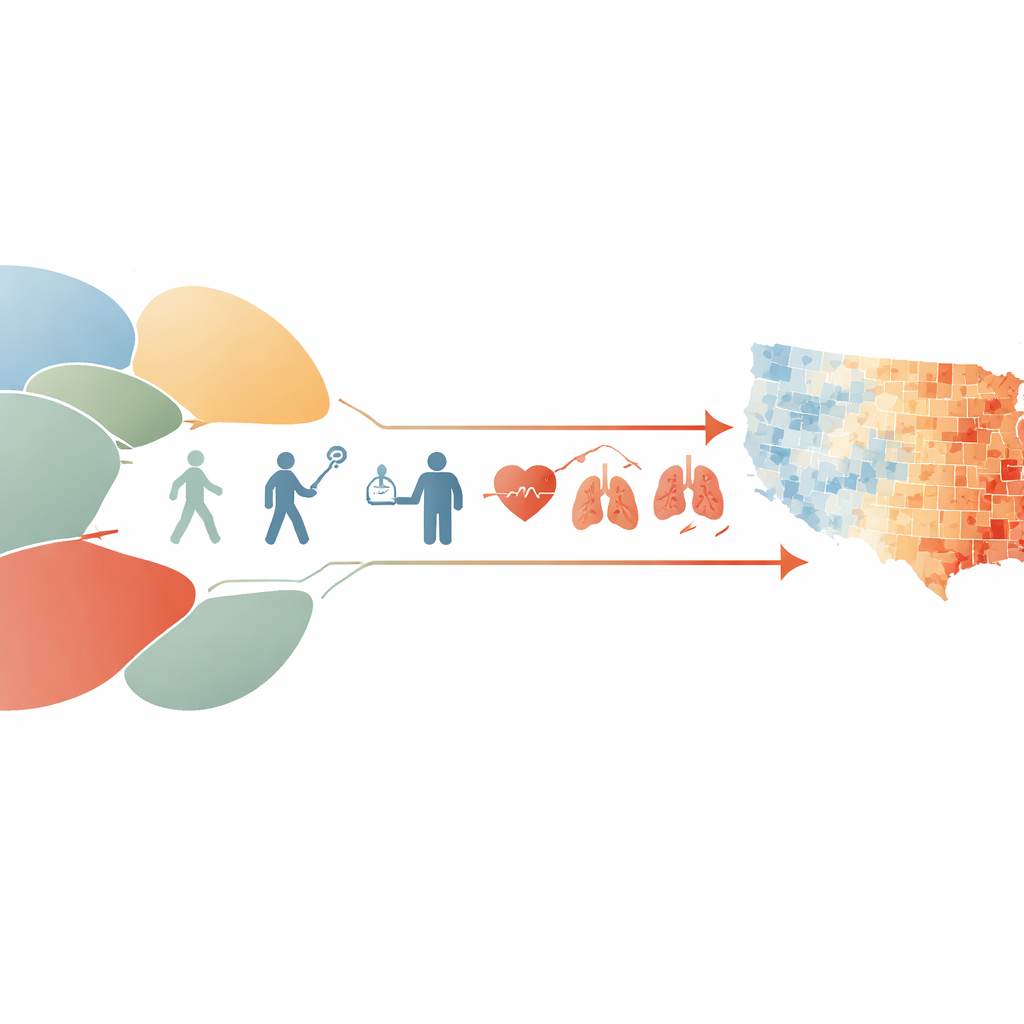
The researchers use an "ecological" view of health, which treats our well-being as the end result of many layers of influence. In this view, regional culture, political leanings, public policies, and the social and economic conditions in a county all help shape how people live, which chronic illnesses they develop, and ultimately how they fare during events like a pandemic. Instead of focusing on any single factor—such as obesity, age, or income—the team combines more than 30 county-level measures, from smoking and physical activity to social vulnerability, voting patterns, and vaccine uptake or hesitancy.
Using smart algorithms to read a complex picture
To untangle these overlapping influences, the team turned to a machine-learning method called an "extra trees" model, a type of artificial intelligence that is good at finding patterns in large, messy datasets. They assembled data for nearly 3,000 U.S. counties, pairing COVID-19 deaths and cases per 100,000 residents with detailed information about local health behaviors, rates of chronic disease, cultural regions, political ideology, economic indicators, and vaccination patterns. The model was trained on most of the counties and then tested on the remainder to see how well it could predict which places had higher or lower COVID-19 death and infection rates.
What mattered most for deaths and infections
The model performed better at predicting deaths than infections, but in both cases accuracy improved when all major categories of factors were included. In other words, no single dimension—such as behavior or income—was enough on its own. For deaths, the most important predictors included smoking, lack of leisure-time physical activity, and chronic lung and heart conditions, together with a measure of local political ideology. For infections, the picture shifted somewhat: census participation, cultural region, mental health, and joint disease played larger roles. Across both outcomes, vaccine-related measures—how many people had at least one dose, how many completed their primary series, how hesitant people were, and how difficult the vaccine rollout was expected to be—consistently improved the model’s predictions, underscoring how strongly vaccination patterns shaped county-level outcomes.
How place, health habits, and politics combine
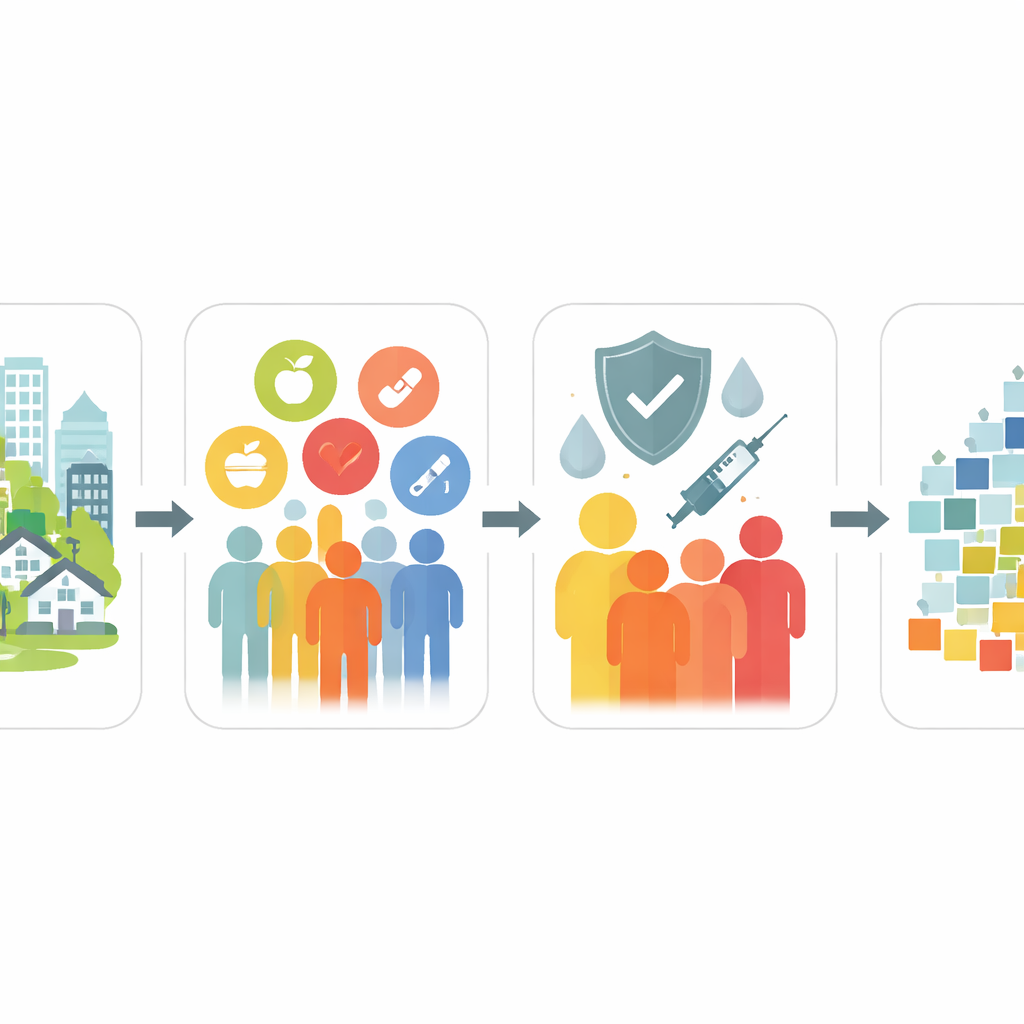
The findings support the idea that certain regions of the country entered the pandemic in a particularly vulnerable state. Many of these areas already struggled with high rates of inactivity, obesity, smoking, and chronic disease. At the same time, the local culture and politics in these regions tended to align with greater skepticism toward public health recommendations, especially COVID-19 vaccination and federal guidance. The study suggests that these long-standing health problems and cultural patterns reinforced one another during the pandemic, leading to more severe cases, higher death rates, and a heavier burden on hospitals in specific parts of the U.S.
Turning hard lessons into future protection
For a layperson, the central message is that COVID-19 outcomes were not just about individual decisions; they were shaped by the broader environments in which those decisions were made. Counties with sicker populations and lower trust in vaccines paid a higher price. The authors argue that this ecological framework can help identify high-risk regions before the next crisis and guide more tailored public health strategies—ones that respect local values while clearly communicating the stakes. Rather than using these patterns to assign blame, they call for using them to build fairer, more responsive systems that make healthy choices easier and protect communities when new threats emerge.
Citation: Arena, R., Wang, S., Pronk, N.P. et al. Assessing factors of COVID-19 outcomes in the United States based on the ecological framework of population health. Sci Rep 16, 10026 (2026). https://doi.org/10.1038/s41598-026-40216-z
Keywords: COVID-19 outcomes, population health, vaccine hesitancy, chronic disease, health disparities