Clear Sky Science · en
Blockchain-enabled traceability evaluation framework for mineral resource development and utilization: a fuzzy comprehensive assessment approach
Why following a rock from mine to market matters
Most of the products we use every day—from smartphones to solar panels—depend on metals dug out of the ground. Yet it is surprisingly hard to prove where these minerals came from, how they were handled, or whether rules on safety and the environment were really followed. This study explores how a digital technology best known from cryptocurrencies, blockchain, can be combined with careful measurement methods to make mineral supply chains more transparent, trustworthy, and efficient.
Today's blind spots in mineral supply chains
Mineral resources travel a long and complicated path: exploration, mining, processing, transport, and finally sale. Along the way, information is often scattered across paper forms, isolated computer systems, and different countries. The authors describe how this creates gaps that allow false production numbers, missing environmental records, and questionable origin claims to slip through. Regulators, companies, and consumers all face information asymmetry—they cannot easily check whether the story told about a particular batch of ore or metal matches reality. Traditional monitoring, based on manual inspections and centralized databases, struggles to keep up with increasingly complex and globalized supply chains.
A digital backbone built on shared records
To tackle these problems, the paper proposes a four-layer digital framework centered on blockchain. At the base, a data acquisition layer uses sensors, tracking devices, and structured manual inputs to capture information on quantities, locations, environmental conditions, and custody changes. Above this, a blockchain storage layer records this stream of events in a shared ledger that many authorized parties maintain together, making past entries extremely difficult to alter without detection. An analysis processing layer then sifts through the accumulated records to spot patterns and compute performance measures. Finally, an evaluation application layer presents the results to managers, regulators, and other stakeholders in the form of dashboards and scores that are easier to interpret than raw data. 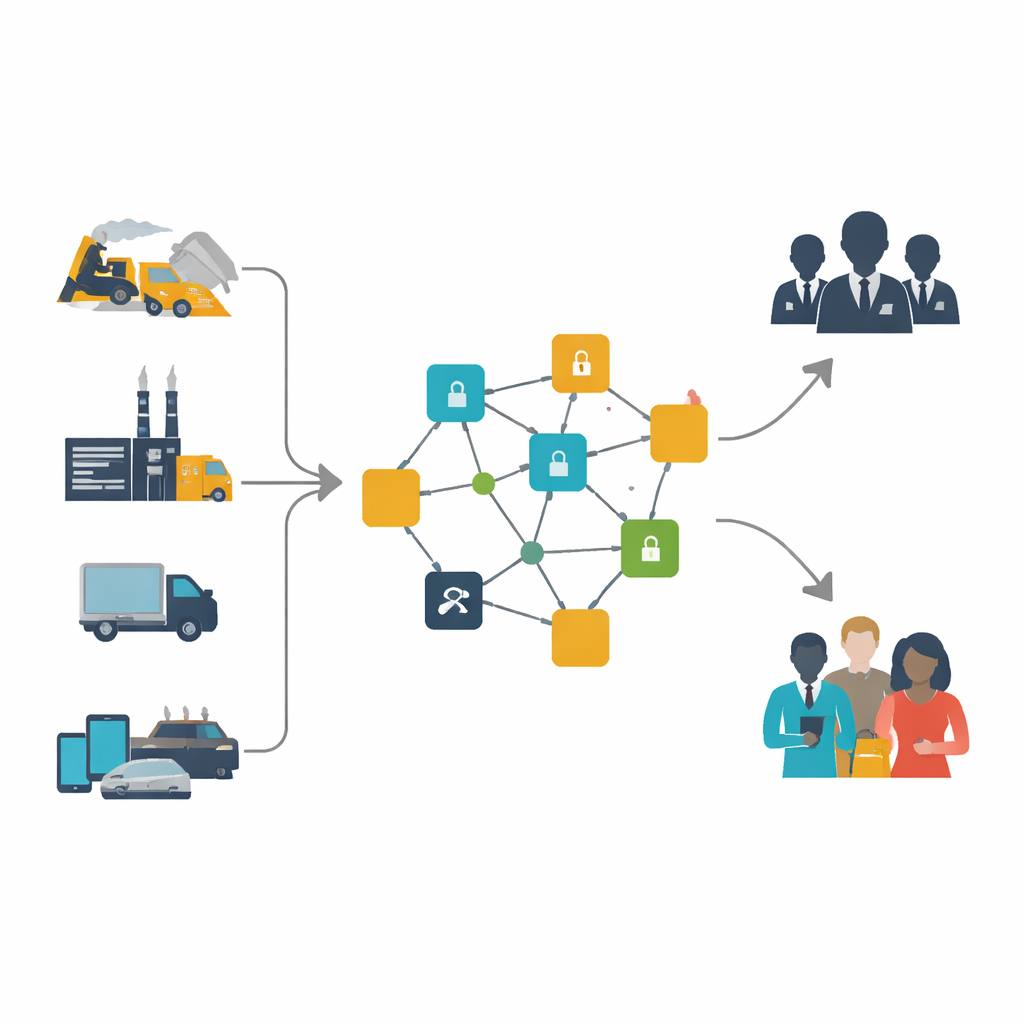
Measuring how well traceability really works
Recording data is not enough; the system itself must be judged. The authors therefore build an evaluation toolkit that looks at five plain-language dimensions of traceability performance. Breadth asks how many stages and actors in the value chain are actually covered. Depth examines how detailed the recorded information is. Precision focuses on how accurate measurements such as location and quantity are. Timeliness considers how quickly records are updated and retrieved when questions arise. Finally, credibility reflects how trustworthy the data is, including how often it passes verification checks and how much of it is protected by blockchain. Each dimension is broken into concrete indicators, and a structured expert method is used to weigh their importance. Because many of these aspects are not sharply defined, the team relies on a fuzzy scoring approach that can handle shades of gray rather than forcing all results into rigid categories.
Putting the framework to the test in a real mine
To see how this works outside theory, the researchers partnered with Huaxin Mining Group, a large Chinese company that mines and processes several metals. Over 18 months, they rolled out a consortium blockchain network linking mines, processing plants, logistics providers, and offices, then collected a year of operational data. Applying their evaluation framework, they found that Huaxin’s traceability performance reached a score of 81.2 out of 100, which they classify as a “good” level. The strongest results came in data credibility and speed: nearly all records were verified, and tracing a batch of material back to its origin took only a few minutes. The weakest area was precision, especially pinpointing locations in difficult terrain and integrating smaller subcontractors who lacked digital tools. 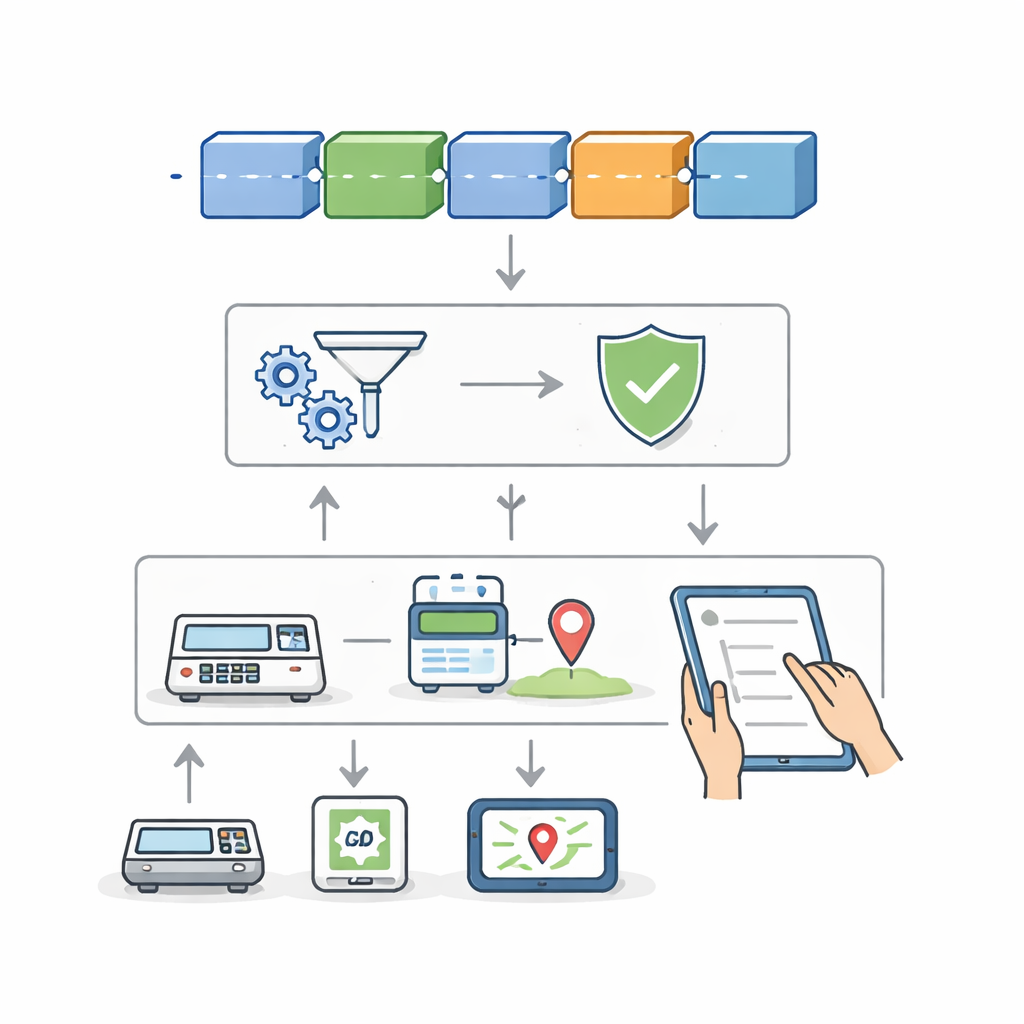
How much better is blockchain than business as usual?
The team then compared Huaxin’s blockchain-based system with a similar mining company that still relies on traditional methods. The differences were stark. Data accuracy in the blockchain case reached 96.8 percent, compared with 82.4 percent in the conventional setup. Trace-back time shrank from more than two hours to under five minutes, and the variability in response time dropped sharply, making the system more predictable for inspections and problem-solving. A simple economic analysis suggested that, despite significant upfront investment, the blockchain system should pay off over a decade through reduced errors, lower dispute and compliance costs, and smoother operations.
What this means for cleaner, fairer minerals
For non-specialists, the key message is that following a rock from mine to market can become far more reliable when secure shared ledgers and smart evaluation tools are combined. The proposed framework does not magically solve every problem—especially the risk that someone might manipulate data before it ever enters the system—but it provides a structured way to see where traceability is strong, where it is weak, and how much blockchain helps. In the case studied, nearly half of the potential improvement over traditional practice was linked to the new technology. As more mines, regulators, and buyers adopt similar systems and refine the methods, consumers may one day be able to trust that the metals in their phones and cars were produced with greater respect for laws, communities, and the environment.
Citation: Ma, G., Bai, H., Zhao, W. et al. Blockchain-enabled traceability evaluation framework for mineral resource development and utilization: a fuzzy comprehensive assessment approach. Sci Rep 16, 11567 (2026). https://doi.org/10.1038/s41598-026-40195-1
Keywords: blockchain traceability, mineral supply chains, resource governance, smart contracts, data transparency