Clear Sky Science · en
Studies on intellectual disability identify variants in established genes as well as confirm candidature of new genes
Why this research matters to families
Intellectual disability affects millions of people worldwide, yet for many families the underlying cause remains a mystery. This study looks closely at families from Balochistan, a region of Pakistan where marriages between relatives are common, to uncover hidden genetic changes that can impair brain development. By pinpointing specific genes linked to learning and thinking problems, the work brings families closer to answers, improves diagnosis, and highlights new biological pathways that might be targeted in future treatments.

Families that hold important clues
The researchers focused on four large families in which several children had intellectual disability, sometimes accompanied by epilepsy but without major physical malformations. Because the parents were related and themselves unaffected, the team suspected recessive genetic causes: harmful changes that only cause disease when inherited from both parents. These kinds of families are especially powerful for gene discovery, because affected children are more likely to share the same segment of DNA from a common ancestor. Careful clinical evaluations showed a spectrum of difficulties, from mild to severe problems with learning and daily living skills, and helped guide which genetic findings were most likely to be important.
Searching the exome for rare changes
To find the responsible genes, the team used exome sequencing, a technology that reads all the protein-coding portions of the genome. They filtered the data to keep only very rare variants and then looked for changes that fit the expected inheritance pattern within each family. In one family, they confirmed a previously known change in a gene called UFSP2, already linked to intellectual disability and seizures. In the other three families, they uncovered four new, very rare variants in genes called ATP13A2, QPCTL, WDR62, and FMO4. Most of these changes are predicted to truncate the protein or severely disrupt its function, making them strong candidates for causing disease.
Old genes with new roles
Several of the identified genes were already known for other brain-related conditions, but not always for intellectual disability alone. ATP13A2 helps control the content and health of cell compartments called lysosomes and has been associated with forms of early-onset Parkinson’s disease. Here, a frameshift change in this gene was found in one child with intellectual disability, broadening the known range of ATP13A2-linked disorders. WDR62, another gene with a new frameshift variant in this study, is crucial for the proper division of brain precursor cells; defects in it are a common cause of abnormally small head size and severe developmental problems. FMO4 belongs to a family of enzymes that process many chemicals in the body and appears to be the main member active in the brain. The study reports only the second family worldwide with a damaging FMO4 variant that tracks perfectly with intellectual disability, further strengthening the case that this gene is vital for normal brain function.
A new candidate for brain development
One of the most intriguing findings involves QPCTL, a gene not yet firmly tied to human disease. QPCTL helps modify other proteins after they are made, protecting them from breakdown and influencing how long they remain active in cells. The researchers discovered a nonsense change that likely destroys QPCTL’s catalytic center in a girl with intellectual disability, whereas her affected sibling had a different genetic cause. Experiments in mice showed that the Qpctl counterpart is active in several brain regions, supporting the idea that it could play a key role in nerve cell communication. While more cases and laboratory work are needed, this study highlights QPCTL as a promising new candidate gene in the biology of intellectual disability.
What this means for diagnosis and the future
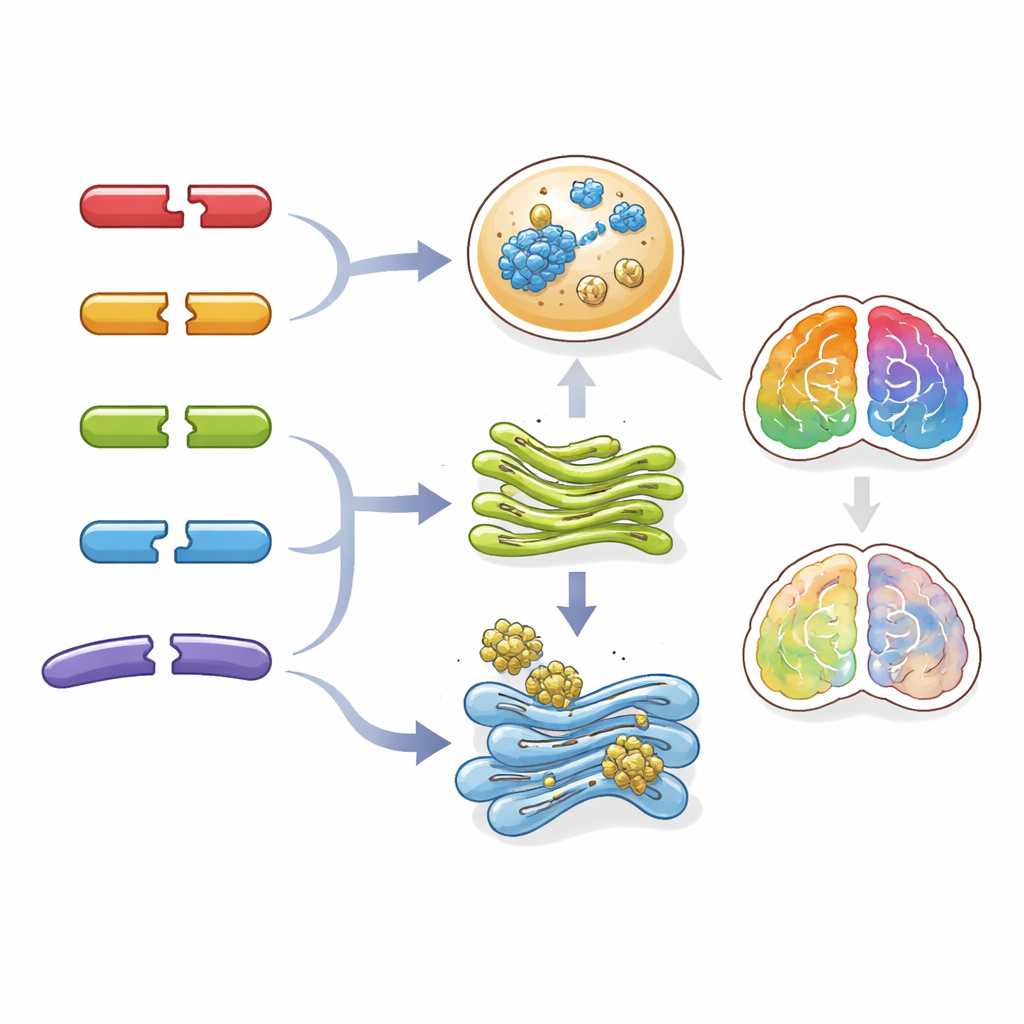
Taken together, the results show that even within a single family, different children with similar symptoms may have different genetic causes. This genetic diversity helps explain why it can be so difficult to secure a clear diagnosis and why comprehensive sequencing is so valuable. By confirming the importance of UFSP2, ATP13A2, WDR62, and FMO4, and by raising QPCTL as a new contender, the study expands the catalog of genes that doctors can test when evaluating children with developmental difficulties. Over time, such discoveries will sharpen genetic counseling for families, guide more accurate prognoses, and lay the groundwork for therapies tailored to the specific molecular pathways involved in each person’s condition.
Citation: Butt, A.I., Bazai, F.K., Kakar, K. et al. Studies on intellectual disability identify variants in established genes as well as confirm candidature of new genes. Sci Rep 16, 9844 (2026). https://doi.org/10.1038/s41598-026-40182-6
Keywords: intellectual disability, neurodevelopmental genes, exome sequencing, consanguineous families, genetic variants