Clear Sky Science · en
Rescue of the traditional song culture of a critically endangered songbird
Songs on the Brink
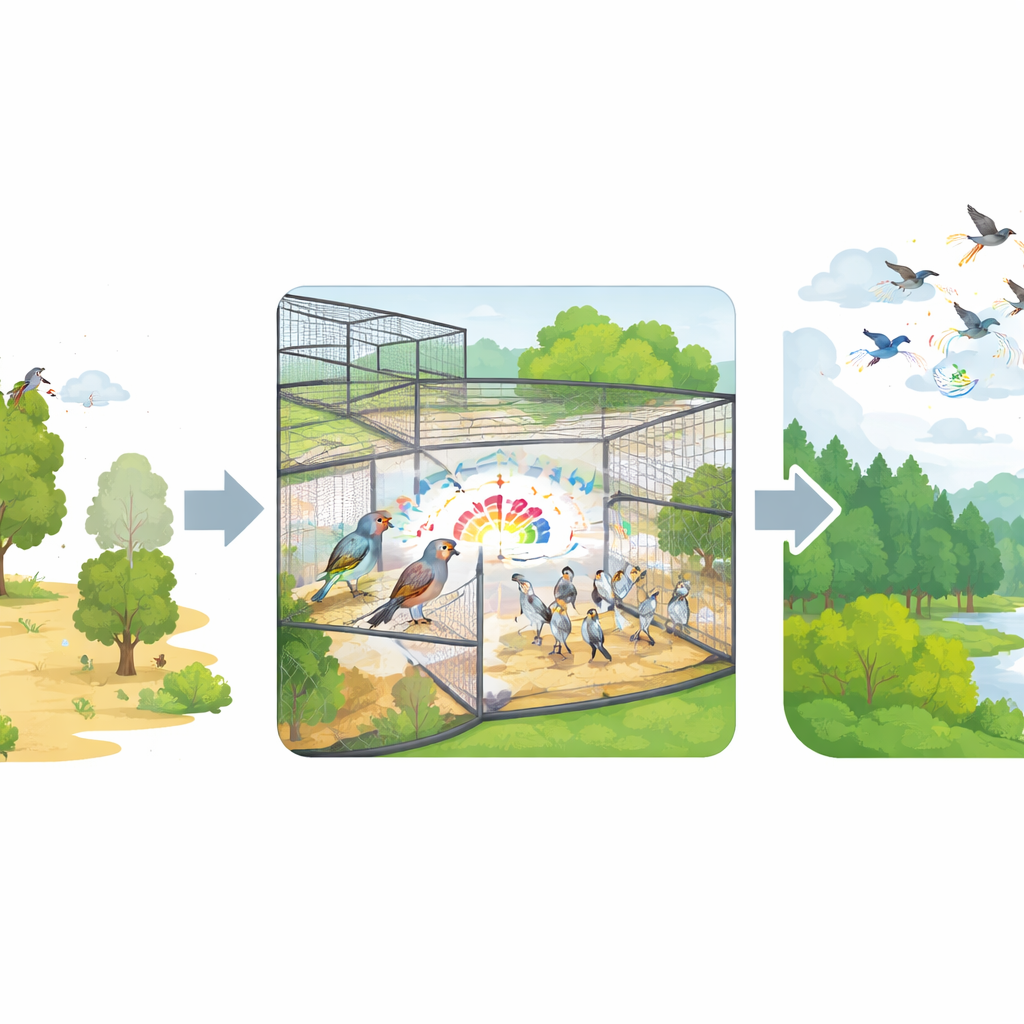
Most of us think of saving endangered species in terms of protecting genes or habitats. But for many animals, survival also depends on something less tangible: culture. This study follows the fate of the regent honeyeater, a striking Australian songbird whose traditional courtship song is vanishing as the species nears extinction. The researchers asked whether we can deliberately teach birds their own lost song, and in doing so, rescue not just a species, but a piece of its cultural heritage.
Why Bird Songs Matter
In animals, culture means learned behaviors passed from one generation to the next—much like human traditions. For songbirds, song is a key part of that culture. Young males normally learn complex tunes from older males, and these songs help them attract mates, defend territories, and recognize their own kind. When populations crash, birds may no longer encounter enough experienced singers, and the cultural chain breaks: songs become simpler, drift toward the calls of other species, or disappear altogether. Such cultural loss can further reduce breeding success, pushing small populations even closer to extinction.
A Bird on the Edge of Silence
The regent honeyeater now numbers fewer than 250 individuals in the wild, largely due to habitat loss and environmental change. In the dwindling wild flocks, many young males no longer sing the full traditional "Typical Blue Mountains" song. Some copy other species, others sing an abbreviated version with only half the usual notes. At the same time, zoo-bred birds—raised together without adult tutors—have developed their own odd song, quite unlike any wild version. This mismatch appears to create a social and romantic barrier: released zoo-bred males rarely pair or breed with wild females, and even zoo-bred females prefer the familiar, but abnormal, zoo song over the wild one.
Teaching a Lost Tune
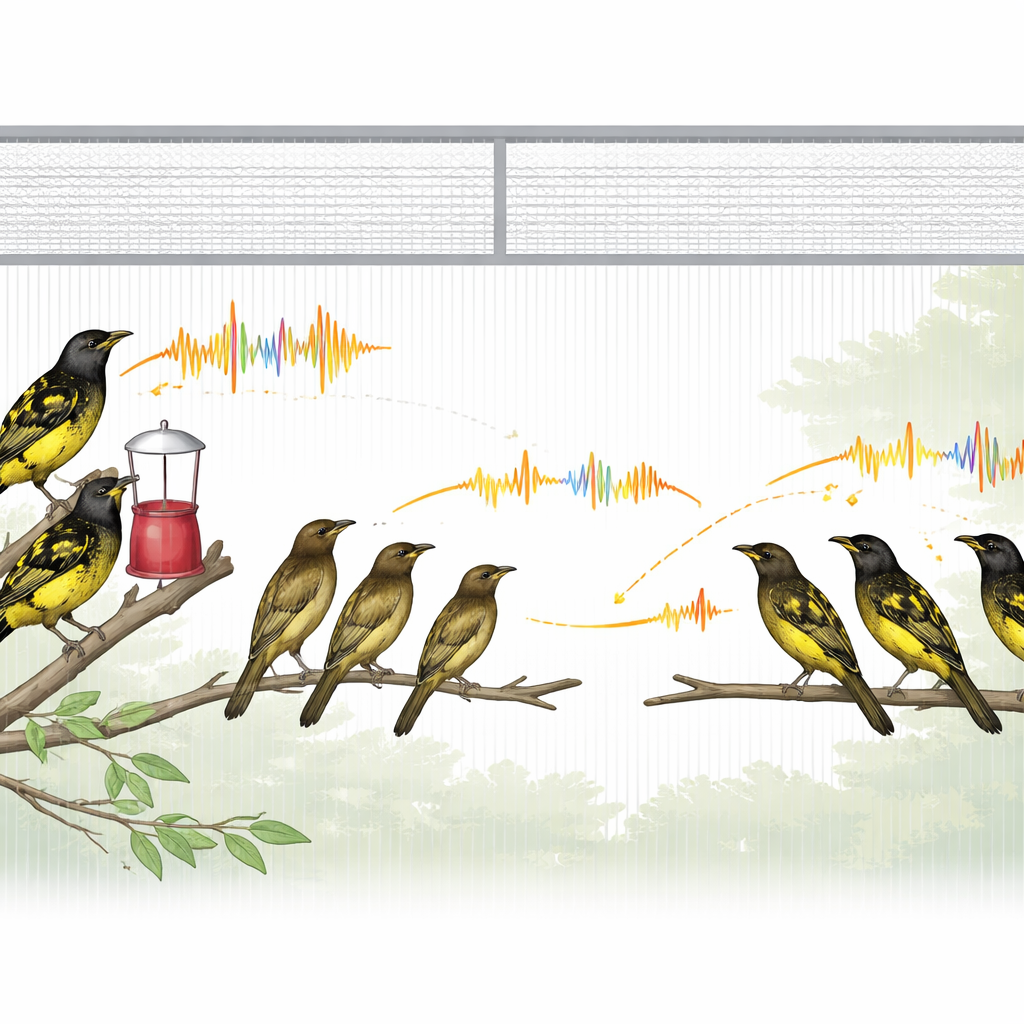
To bridge this cultural divide, the team ran a three-year tutoring program in two Australian zoos. They used just two wild-origin males that still sang the full traditional song, supported in some groups by high-quality audio recordings from wild birds. Juvenile males, moved into special aviaries soon after fledging, experienced different treatments: some only heard speakers playing the wild song, some shared an aviary with a live tutor, and some had both live tutor and playback. The researchers then recorded the juveniles’ songs and used detailed acoustic analyses to measure how closely each one matched the wild reference song.
What Worked and What Failed
The results were striking. Purely recorded playback, whether in large or small groups, failed to produce truly wild-like songs. A single live tutor in a large group helped somewhat, but the juveniles’ songs still differed from the wild standard. The real breakthrough came in small groups with at least one live adult tutor, either alone or supplemented by playback: these juveniles learned songs that were statistically indistinguishable from the traditional wild song. By the end of the third breeding season, 32 zoo-bred males—about 42% of the male captive population—were singing culturally authentic regent honeyeater songs. Those successful pupils then became tutors themselves, allowing the traditional song to spread and persist in captivity.
Culture as a Conservation Tool
Ironically, while the scientists were restoring the song in captivity, the full traditional version disappeared from the wild, replaced by a simplified form. That means the zoo population now holds the only complete record of the species’ historic song culture. The authors argue that, even if wild birds currently sing a reduced tune, teaching released birds the richer traditional song may help reverse this erosion over the long term and support healthier social interactions and mating systems. Their work shows that with small, low-cost changes to husbandry—such as arranging small cohorts and ensuring access to live tutors—conservation programs can deliberately preserve and even restore animal cultures. In saving the regent honeyeater’s song, they demonstrate that protecting biodiversity also means protecting the shared behaviors and traditions that make each species unique.
Citation: Appleby, D., Langmore, N.E., Pitcher, B. et al. Rescue of the traditional song culture of a critically endangered songbird. Sci Rep 16, 11058 (2026). https://doi.org/10.1038/s41598-026-40115-3
Keywords: regent honeyeater, birdsong, animal culture, captive breeding, reintroduction