Clear Sky Science · en
Comprehensive analysis of 73 Aconitum chloroplast genomes reveals their structure, codon usage bias, and phylogenetic relationships within family Ranunculaceae
Poisonous herbs with a double life
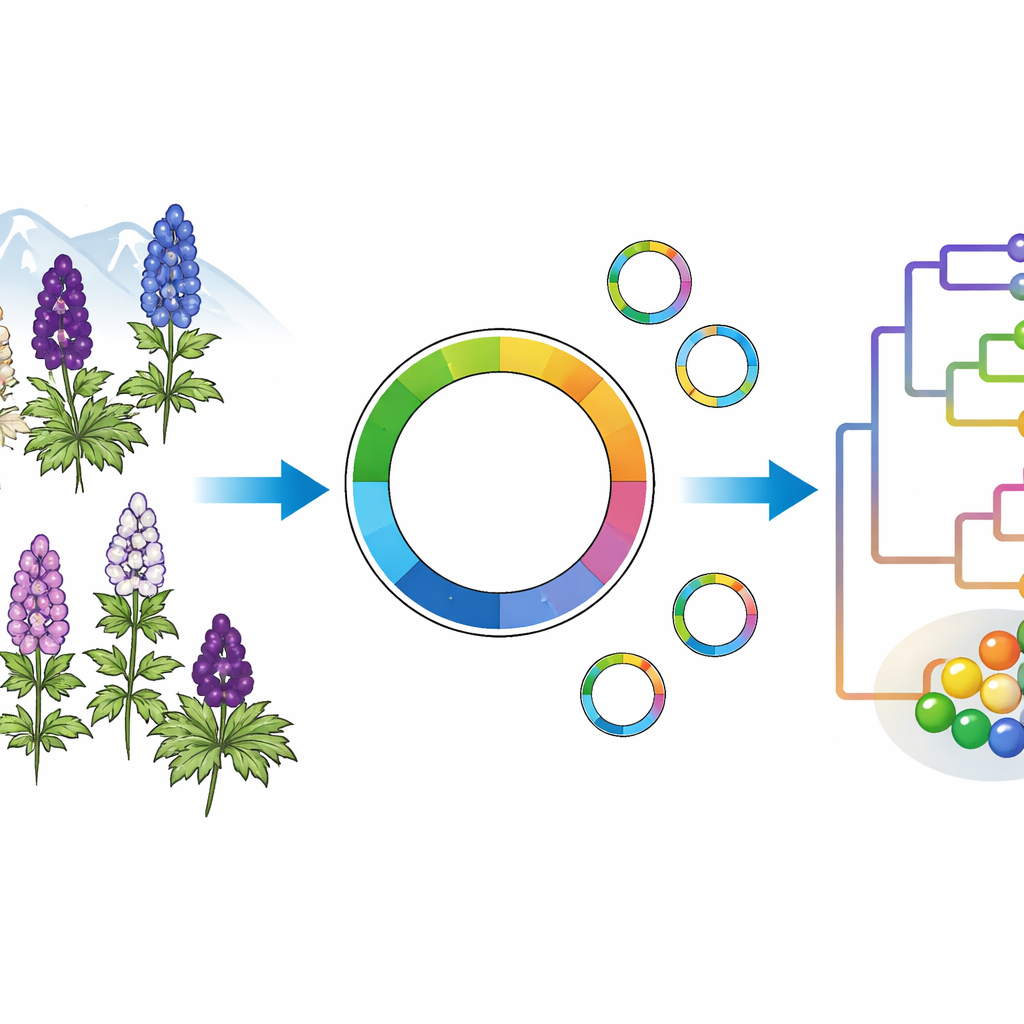
Some of the world’s most famous healing herbs are also among its deadliest. The monkshoods and wolfsbanes of the genus Aconitum have long been used in Indian and Chinese medicine, yet they contain powerful nerve poisons. Safely harnessing their benefits depends on knowing exactly which species we are dealing with. This study dives into the tiny green energy factories inside plant cells—the chloroplasts—of 73 Aconitum samples to see how their DNA is built, how it varies, and what that reveals about the tangled family tree of these risky but valuable plants.
A closer look inside plant green “batteries”
The researchers focused on chloroplast genomes, small circular DNA molecules that sit inside the cell structures where photosynthesis happens. These genomes tend to change slowly and keep a similar layout across related plants, making them useful for tracking evolution and for species identification. By collecting 74 chloroplast genomes (73 Aconitum and one close relative used as an external reference), the team could compare their sizes, gene content, and overall architecture. Every Aconitum chloroplast shared the same four-part plan: one large stretch of unique DNA, one smaller stretch, and two mirrored repeat regions. The overall base composition was also nearly identical among species, indicating a very stable blueprint.
Shared core, flexible extras
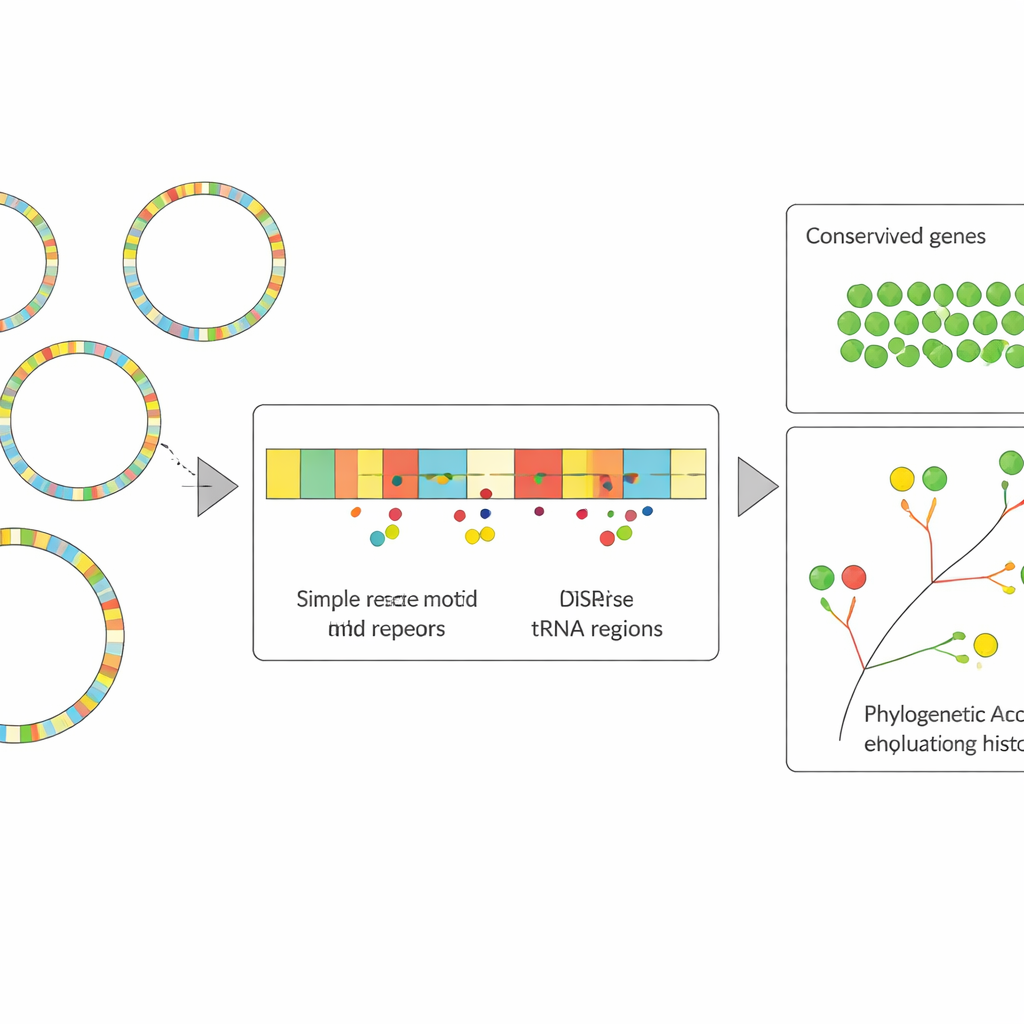
To see which genes are universal and which vary, the authors built a “pan-plastome,” essentially the full catalog of all chloroplast genes detected across the dataset. They identified 72 core genes present in every sample and nine accessory genes that appeared to be missing in some. Yet deeper sequence comparisons showed that even these “missing” genes have similar stretches hiding in all genomes, suggesting that many absences are due to inconsistent computer annotation rather than true gene loss. The chloroplast gene order was strikingly conserved, and the genes linked to photosynthesis were all part of the stable core set. In contrast, several genes involved in building the cell’s protein-making machinery were among the more variable, hinting that some of their functions may have shifted to the plant’s main, nuclear genome.
Small repeats and tiny RNAs as hidden signposts
Beyond whole genes, the team examined short repeated DNA motifs known as simple sequence repeats and small transfer RNA (tRNA) genes, both of which can change rapidly and serve as genetic signposts. They found that the number and pattern of these repeats differed not only among species but sometimes between different samples labeled as the same species, although many species showed highly consistent patterns. When they measured how much each part of the genome varied at the single-letter level, the most changeable spots were often tRNA genes housed in the repeated regions of the genome, plus a few specific noncoding stretches. These “hotspots” of variation look promising as future markers for telling closely related Aconitum species or lineages apart.
Subtle code preferences and strong genetic housekeeping
The authors also explored how the chloroplast genes spell out proteins, asking which three-letter DNA “words” (codons) the plants prefer when several choices code for the same amino acid. Across the board, the chloroplasts favored codons ending in A or T over those ending in G or C, and overall bias was mild but consistent. A few genes, such as those central to photosynthesis, showed particularly strong preferences, hinting at fine-tuned evolutionary pressures on how efficiently their proteins are made. When the team compared mutations that do change amino acids with those that do not, they found that almost all genes are under purifying selection—natural selection is actively removing harmful changes to keep these chloroplast machines running smoothly. Only a handful of genes showed hints of relaxed or unusual evolutionary pressure.
A family tree with neat branches and tangled twigs
Using both the full chloroplast genomes and the shared core genes, the researchers reconstructed evolutionary trees for the group. At the broadest level, the trees agreed with traditional divisions of Aconitum into two major subgenera, supporting much of the existing classification. But at finer scales, the picture grew messy. Samples from the same named species or series did not always cluster together; some grouped more closely with different species, and a few accessions fell in unexpected places. In at least one case, a sample named Aconitum flavum sat with members of the “wrong” subgenus and showed unusually large genetic distances from its namesakes, raising the possibility of mislabeling, past hybridization, or hidden species. Similar mismatches elsewhere in the tree point to a history shaped by crossing between species, movement of chloroplasts across lineages, and occasional taxonomic errors.
Why this work matters for medicine and conservation
For a lay reader, the main message is that the chloroplast genomes of Aconitum are both reassuringly stable and intriguingly variable. Their overall structure and core genes barely change, reflecting the vital role they play in plant life. Yet certain small regions—short repeats, tRNAs, and a few protein genes—carry enough differences to help tell lineages apart and flag odd samples. The study supports the broad outline of how these poisonous medicinal plants are classified, while spotlighting specific species and samples that deserve re-examination with more data from the nuclear genome and from plant form and chemistry. In practical terms, this kind of work lays the groundwork for safer identification of herbal ingredients and for better targeting of conservation efforts toward truly distinct, and often endangered, members of this remarkable genus.
Citation: Kakkar, R.A., Sharma, G. Comprehensive analysis of 73 Aconitum chloroplast genomes reveals their structure, codon usage bias, and phylogenetic relationships within family Ranunculaceae. Sci Rep 16, 11988 (2026). https://doi.org/10.1038/s41598-026-40105-5
Keywords: Aconitum chloroplast genomes, medicinal plant evolution, plant DNA barcoding, phylogenomics, plastome diversity
See more on the researcher's website: https://sites.google.com/view/sharmaglab/publications