Clear Sky Science · en
Influence of radiation on green-synthesized AgNPs and their role in enhancing fluoride stress tolerance in rice
Why cleaner rice fields matter
In many farming regions, the same fluoride that hardens our teeth can quietly poison the soil, weaken crops, and threaten food supplies. This study explores an inventive, plant‑based way to shield rice—the staple food for billions—from fluoride‑contaminated soils using tiny particles of silver made with a common medicinal plant. By showing that these eco‑friendly nanoparticles can help rice stay greener, grow better, and yield more grain under harsh conditions, the work points to new tools for sustainable agriculture in stressed landscapes.
Hidden trouble in farm soils
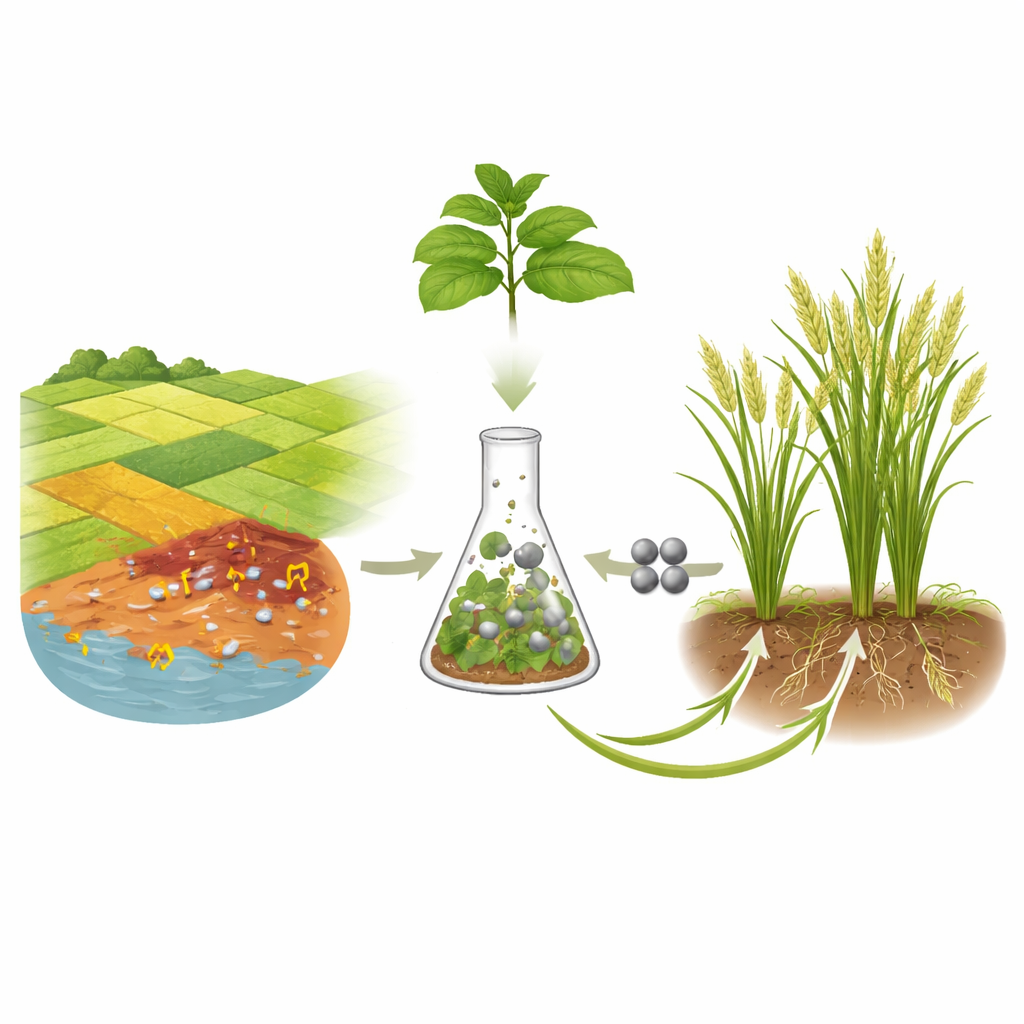
The research begins in the Nalgonda region of Telangana, India, an area known for high fluoride levels in groundwater and soils. When fluoride builds up around plant roots and leaves, it can bleach foliage, stunt growth, and reduce harvests. The team analysed surface soils from ten locations, measuring pH, salts, organic matter, major nutrients, and trace metals. They found fluoride levels well above typical background values, along with shortages of key nutrients such as nitrogen, phosphorus, potassium, zinc, copper, manganese, calcium, magnesium, and iron. The soils were slightly alkaline and nutrient‑poor, a combination that makes it harder for plants to access what they need and more vulnerable to additional stress from fluoride.
Turning a healing plant into a tiny helper
To tackle this stress, the researchers turned to Bryophyllum pinnatum, a plant long used in traditional remedies. Instead of using harsh chemicals, they boiled its leaves in water to make an extract and then mixed this with a silver salt solution. Under light and dark incubation, the mixture changed colour as the plant compounds converted silver ions into silver nanoparticles. These particles were carefully checked with a suite of tools that revealed they were mostly spherical, around 90 nanometres across, and coated with natural plant molecules that help keep them stable in water. The team also used radiation‑physics software to compare how the raw plant extract and the finished nanoparticles interact with beta and gamma radiation. The extract absorbed more energy than the particles, suggesting that once silver is locked into nanoparticles, it forms a robust, relatively radiation‑resistant material—an advantage for use in real‑world environments.
Helping rice cope with fluoride
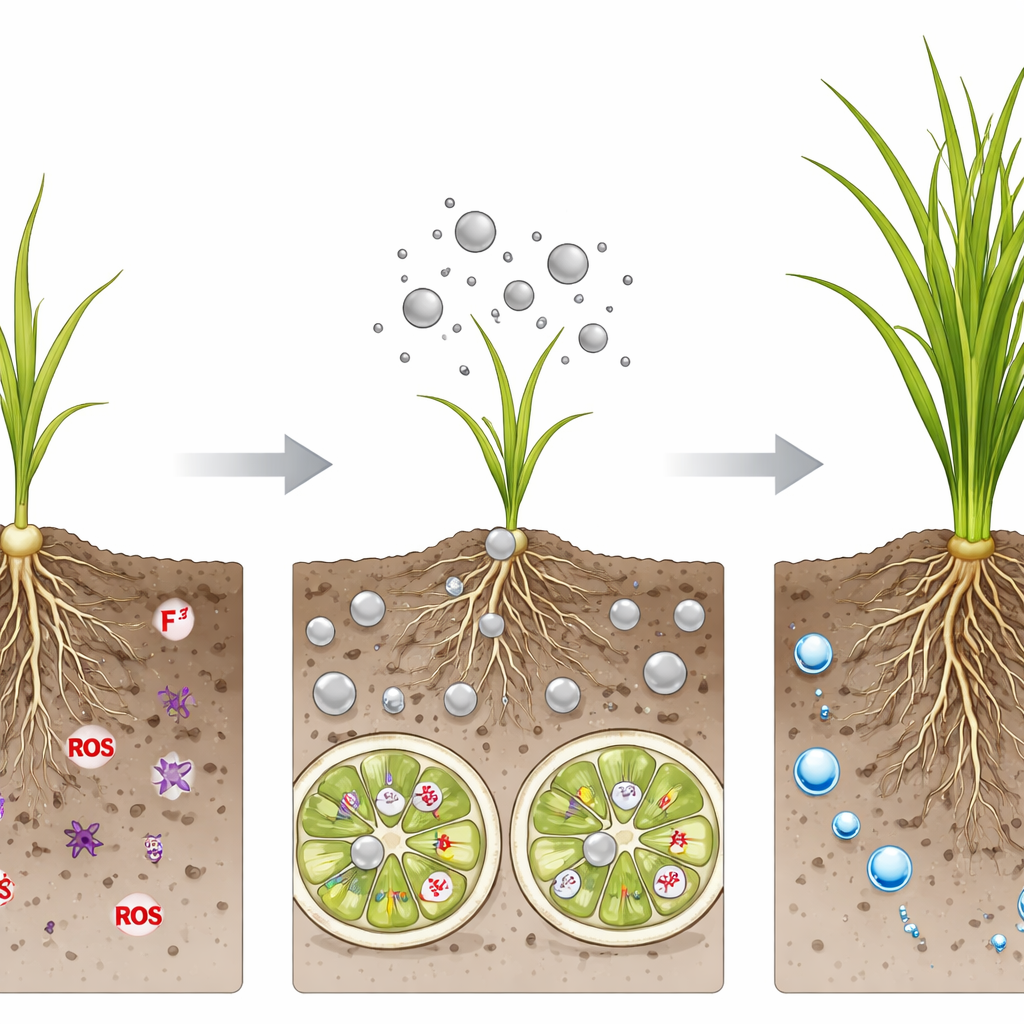
The heart of the study tested whether these green‑made silver nanoparticles could actually help rice tolerate fluoride. Seeds of a fluoride‑sensitive rice variety were either left untreated, coated with conventional fertilizer, or primed with a dilute suspension of the nanoparticles, then grown in both normal and fluoride‑rich soils. The team tracked how many seeds sprouted, how long roots and shoots grew, and a seedling vigour index that combines these measures. In fluoride‑contaminated soil, untreated plants showed poorer germination, shorter roots and shoots, and visible leaf rolling and withering. In contrast, nanoparticle‑primed seeds produced stronger seedlings with better root and shoot growth, indicating that early exposure to the particles helped rice establish itself even in hostile soil.
Keeping leaves green and stress in check
Beyond simple growth, the researchers looked inside the plants at pigments and natural defence systems. Fluoride stress normally drains chlorophyll, the green pigment that powers photosynthesis, and drives up damaging reactive oxygen species that attack membranes and proteins. Rice grown in fluoride soils indeed lost chlorophyll and built up signs of oxidative damage. However, plants from nanoparticle‑primed seeds maintained higher levels of chlorophyll a, chlorophyll b, and total chlorophyll than untreated plants, similar to those given standard fertilizer. At the same time, key antioxidant enzymes—superoxide dismutase, catalase, and peroxidase—were more active, and the leaves accumulated more protective phenolic compounds. Markers of stress, such as the amino acid proline and the lipid‑damage product malonaldehyde, fell in nanoparticle‑treated plants compared with stressed controls. Together, these shifts show that the silver nanoparticles helped rice fine‑tune its internal chemistry, limiting damage while keeping photosynthesis running.
More grain from stressed fields
Ultimately, farmers care about yield. When the plants matured, the team counted tillers (stems), panicles (flowering heads), spikelets (individual grain sites), and total rice yield per pot. In fluoride soils, seeds primed with silver nanoparticles produced more tillers, more panicles, more spikelets, and nearly 9% higher grain yield than untreated plants. These benefits also appeared, though more modestly, in normal soil, suggesting that the nanoparticles not only buffer stress but also subtly enhance growth. By supporting deeper root systems, greener leaves, and stronger antioxidant defences, the particles appear to reprogram how rice responds to fluoride, shifting it toward resilience rather than injury.
A promising path to tougher crops
This work shows that tiny, plant‑made silver particles can act as powerful allies for rice grown in fluoride‑contaminated soils. Priming seeds with these nanoparticles helped seedlings get started, protected their green pigments, boosted their natural detox systems, and ultimately increased grain yield under conditions that normally sap productivity. While further studies are needed to assess long‑term safety in fields and food chains, the findings highlight a promising, low‑dose strategy to turn a traditional medicinal plant and nanotechnology into a practical tool for making crops more tolerant to hidden chemical stresses.
Citation: Kazmi, S., Neelapu, N.R.R., Ch, R.K. et al. Influence of radiation on green-synthesized AgNPs and their role in enhancing fluoride stress tolerance in rice. Sci Rep 16, 11503 (2026). https://doi.org/10.1038/s41598-026-40077-6
Keywords: fluoride stress, silver nanoparticles, rice agriculture, green nanotechnology, plant stress tolerance