Clear Sky Science · en
Real-time detection of WeChat moments interface blocking behavior and generation of generational user personas based on YOLOv5
Why your social feed’s privacy settings matter
On apps like WeChat, a few taps decide who can see your photos, jokes, and personal news. These tiny choices add up to a powerful form of self‑protection—but today’s systems mostly treat them as simple on–off switches. This study shows how combining phone‑side artificial intelligence with behavioral analysis can watch those taps in real time, understand what different age groups are trying to do, and quietly tune privacy tools so they are faster, smarter, and better matched to each generation’s habits.
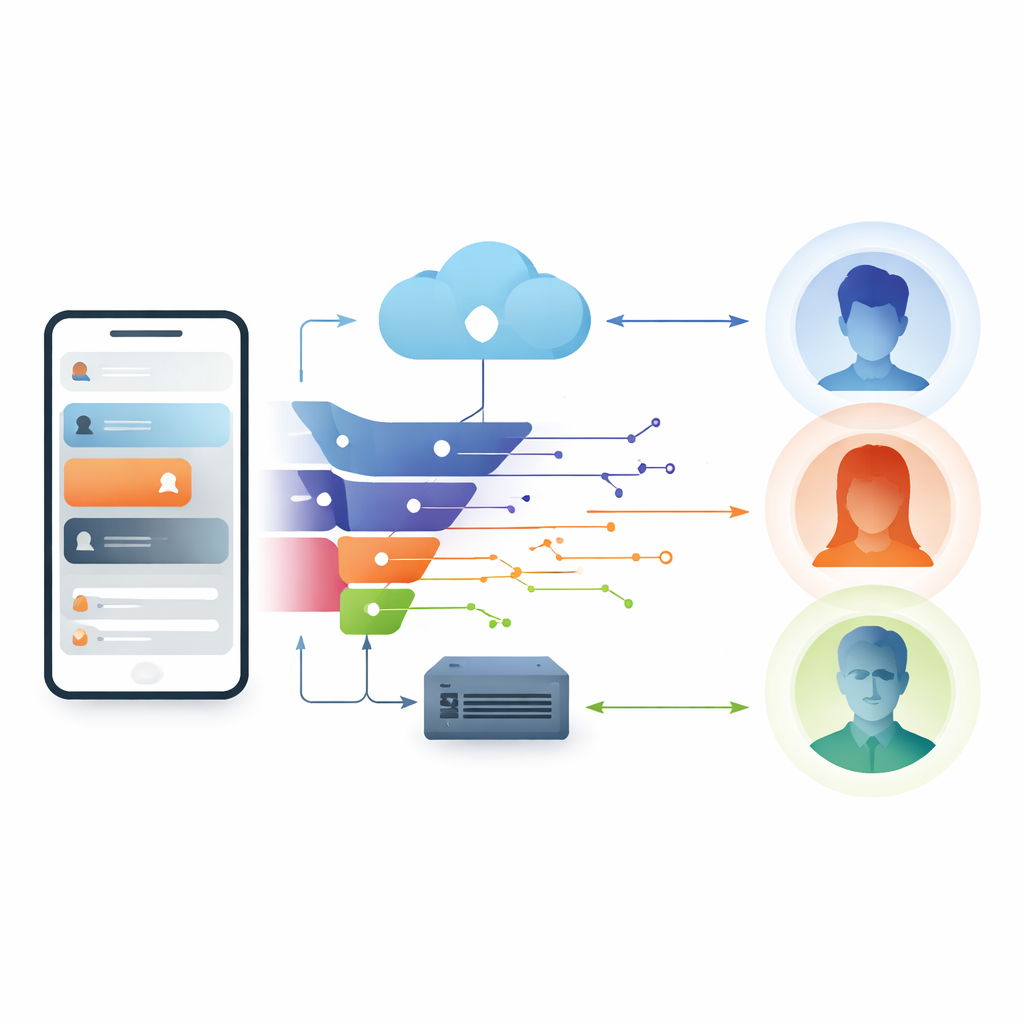
Watching tiny gestures on a crowded screen
The authors focus on WeChat Moments, a hugely popular social feed in China where users often block certain contacts, share only with select groups, or hide posts after a while. Existing research typically analyzes logs or surveys after the fact, which misses split‑second actions like a quick long‑press on a mute button. The team instead turns the phone’s screen into a rich visual signal: a lightweight vision model running directly on the device watches interface elements—buttons, pop‑ups, and scrolling content—and spots when a blocking action is starting. This is challenging because the targets are tiny, often blurred by fast swipes, and mixed with text, images, and video all at once.
A three‑layer "nervous system" from phone to cloud
To keep up with real use, the researchers build a three‑step pipeline. On the phone, a trimmed‑down version of a popular object‑detection model (based on YOLOv5 and GhostNet) picks out small details like text strokes and tiny icons without draining the battery. It uses a special way of looking at the screen at several scales at once, so it can catch both big picture cards and small buttons. These preliminary detections travel to nearby edge servers, which examine how events unfold over time—are there rapid repeated taps, a long press, or a canceled action? Finally, cloud services look across many users, learning long‑term patterns and feeding improved settings back down so that phones and edge servers adapt as the app evolves.
Deciding what is a real block and what is a slip
Recognizing a tap is easy; knowing whether it reflects a deliberate privacy move is harder. The study introduces a dynamic threshold method that widens or narrows its “attention window” depending on how busy a user is. When events come thick and fast, the window expands to see the whole sequence; when activity is light, it shrinks to react more quickly. A dual decay scheme gives more weight to recent behavior while still remembering older habits, helping the system avoid both jumpy over‑reactions and sluggish delays. In tests, this cut false triggers—cases where a simple scroll was mistaken for blocking—to about four to five percent while keeping response times near a tenth of a second.
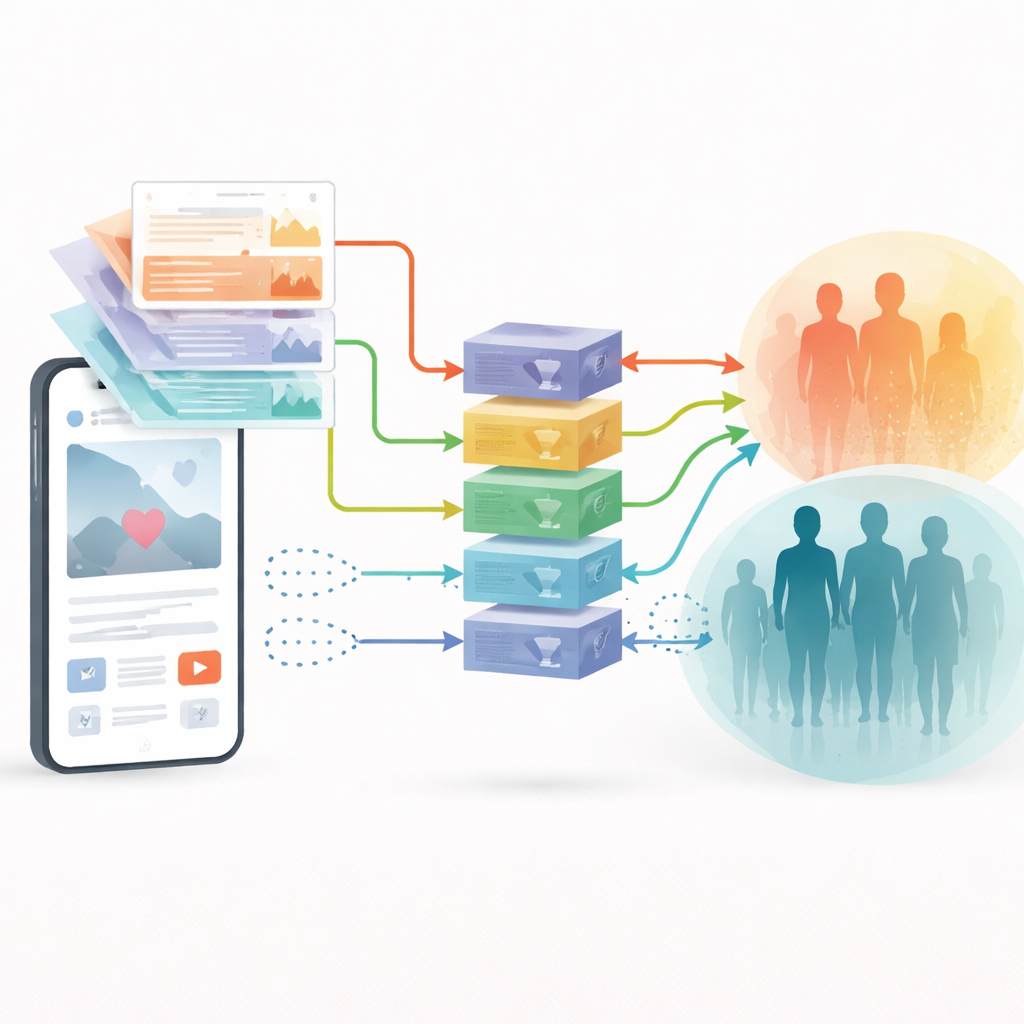
Seeing how generations shape their digital walls
With cleaner signals from the interface, the authors then ask: how do different age groups actually use blocking tools? They fuse visual traces (what happened on screen) with text and video context into a shared representation while deliberately stripping out redundant overlaps between these sources. Using this fused view, they cluster users into generational “fingerprints.” Younger users (Generation Z) are more likely to fine‑tune who sees what—often choosing partial visibility and finishing operations in roughly one and a half seconds. Middle‑aged users (Generation X) more often rely on straightforward, all‑or‑nothing blocks, with slower, more step‑by‑step paths. Millennials and older Baby Boomers fall in between, forming a spectrum from detailed control to simple, stable routines.
Building friendlier, fairer privacy tools
The study shows that by blending real‑time screen understanding with long‑term behavior patterns, social apps can better respect users’ privacy intentions while staying responsive on ordinary phones. The proposed system not only detects blocking actions more accurately than standard models, it also uncovers clear generational styles in how people manage their audience. In everyday terms, that means a future where your feed can quietly adapt—offering quicker shortcuts for younger users who tweak settings often, clearer and simpler options for older users who prefer whole‑feed blocks, and robust protection even when the network is slow or the interface changes. Instead of one‑size‑fits‑all privacy, the authors point toward personalized, age‑aware protection built into the fabric of social platforms.
Citation: Yu, Y., Wang, Y. & Liu, R. Real-time detection of WeChat moments interface blocking behavior and generation of generational user personas based on YOLOv5. Sci Rep 16, 9961 (2026). https://doi.org/10.1038/s41598-026-40060-1
Keywords: social media privacy, WeChat Moments, real-time behavior detection, generational user behavior, lightweight computer vision