Clear Sky Science · en
Physiological and biochemical modulation of flax (Linum usitatissimum L.) under drought stress using salicylic acid, indole acetic acid and moringa leaf extract
Why this matters for food and fiber
Flax, also known as linseed, is prized both as a health food rich in omega‑3 oils and as a source of strong natural fiber for textiles. Yet this useful crop suffers badly when water is scarce, a growing concern as droughts become more frequent. This study asks a practical question with global relevance: can simple, affordable plant-based sprays help flax stay healthy and productive when rainfall fails? 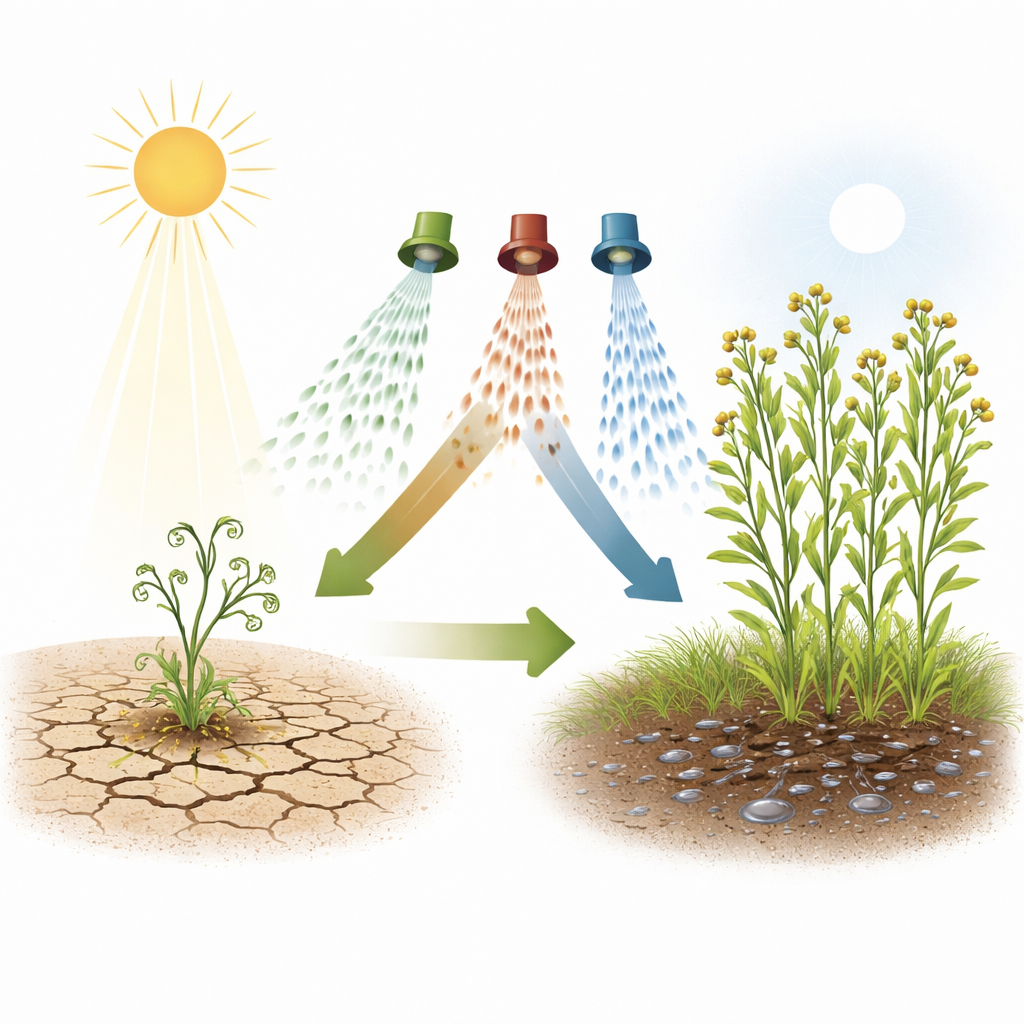
A thirsty crop under growing pressure
Flax has long been valued for its nutritious seeds and tough fibers. Its seeds contain high levels of beneficial fats, proteins, and plant compounds that support heart health and may help protect against cancer and inflammation. At the same time, its fibers are used to make linen fabrics that are stronger than cotton. Despite these advantages, flax is notably sensitive to drought. When soil dries out, flax plants become shorter, grow fewer leaves, and produce far fewer seed capsules, sharply reducing farmers’ returns. With climate change expected to bring hotter, drier conditions to many flax-growing regions, there is an urgent need for low-cost ways to help the crop cope with water stress.
Testing natural helpers for stressed plants
The researchers grew flax plants in pots under two water regimes: well-watered and drought, the latter with soil moisture held to about half of normal. They then sprayed the leaves with three types of natural or naturally inspired helpers, used either alone or in combination. Salicylic acid is a plant hormone related to the active ingredient in aspirin and is known to help plants tolerate stress. Indole-3-acetic acid is a common growth hormone (an auxin) that shapes roots and shoots. Moringa leaf extract, made from the nutritious leaves of the moringa tree, is rich in vitamins, minerals, natural hormones, amino acids, and antioxidants. Eleven different spray treatments, plus two control groups, were applied at key stages of flax development to see which mixtures best protected growth and yield under drought.
Growth and harvest: who came out ahead
Drought alone, without any sprays, stunted the plants and slashed their yield. Stressed flax had much shorter shoots and roots, fewer leaves, and much lower water content in their leaves than well-watered plants. Seed production plummeted: the number of seed capsules and total seed weight dropped dramatically. By contrast, several spray treatments helped droughted plants perform almost as well as, or even better than, their well-watered counterparts. The strongest results came from combinations that included moringa leaf extract. For example, pairing 3% moringa extract with a modest dose of the growth hormone IAA produced the tallest shoots and some of the highest seed yields under drought. Another mix of moringa extract with a higher IAA dose gave plants the best leaf water status and very high seed numbers. Moringa combined with salicylic acid boosted leaf numbers and seed weight, showing that these substances can work together to offset water shortages.
Hidden chemistry inside the leaves
Drought did not just change what the plants looked like above ground; it also reshaped their inner chemistry. Stressed plants had lower levels of chlorophyll, the green pigment needed for photosynthesis, and less nitrogen and protein, signs of weakened metabolism. They also accumulated more proline, a small molecule plants often build up under stress, and more defensive phenolic compounds and flavonoids. Sprays shifted this internal balance. A low dose of salicylic acid alone gave the highest chlorophyll, nitrogen, and protein levels, suggesting it helped keep photosynthesis running and nutrients flowing despite limited water. Moringa extract, by itself or in mixes, drove especially strong increases in beneficial phenolic and flavonoid compounds, further arming the plants’ antioxidant defenses. Interestingly, higher proline levels were linked with poorer photosynthetic traits, reinforcing its role as a stress signal rather than a mark of health. 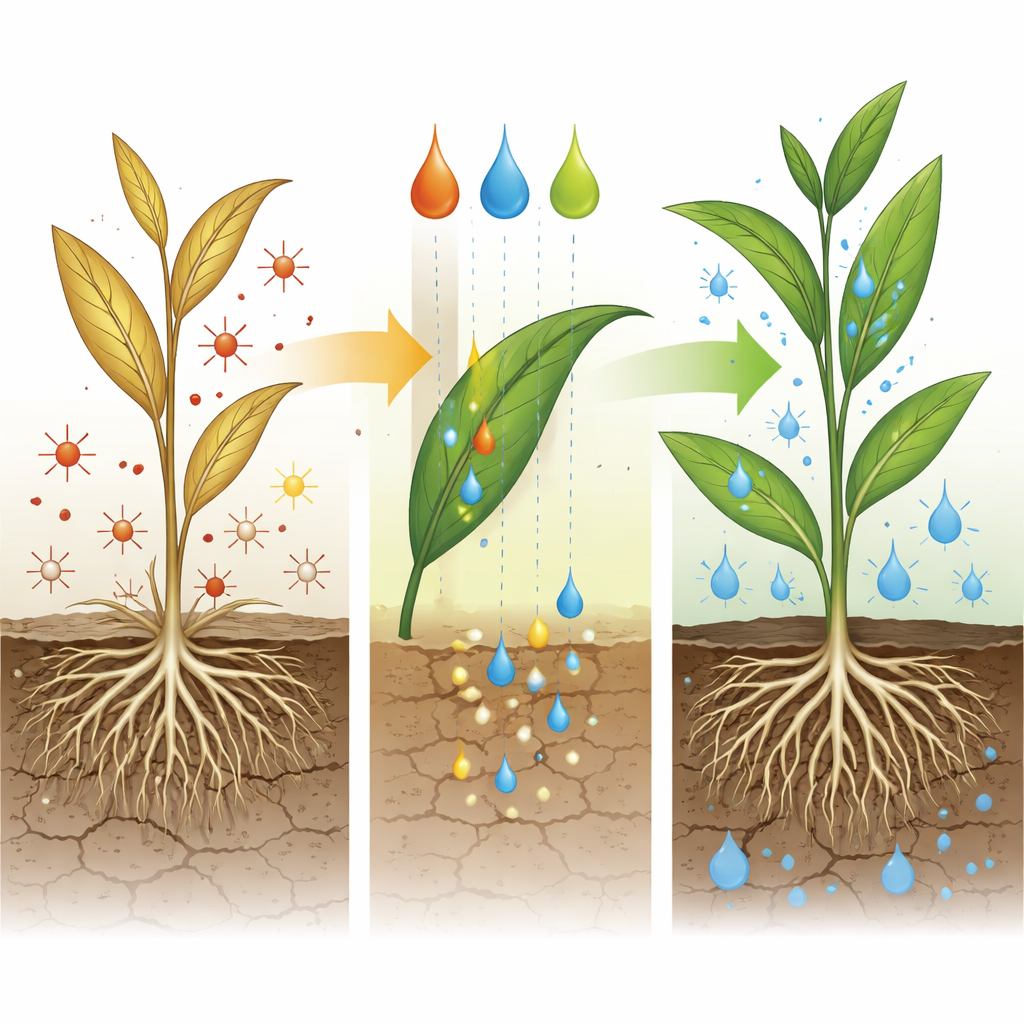
A simple spray with big potential
Overall, the study shows that foliar sprays based on moringa leaf extract, especially when combined with salicylic acid or indole-3-acetic acid, can substantially cushion flax against drought. These treatments helped plants stay taller, hold more water in their leaves, maintain greener foliage, and set more seeds even when soil was very dry. The work suggests that farmers in water-limited regions could use inexpensive plant-based sprays to protect or even improve flax yields without relying on heavy chemical inputs. While the tests were done in pots and results may vary by variety and field conditions, the message is clear for non-specialists: carefully chosen natural growth boosters can help a vulnerable crop keep feeding and clothing us in a warming, drying world.
Citation: Ahsan, U., Sajid, Z.A. Physiological and biochemical modulation of flax (Linum usitatissimum L.) under drought stress using salicylic acid, indole acetic acid and moringa leaf extract. Sci Rep 16, 10050 (2026). https://doi.org/10.1038/s41598-026-40048-x
Keywords: flax drought tolerance, moringa leaf extract, plant growth regulators, salicylic acid, oilseed crop resilience