Clear Sky Science · en
Dynamic evaluation of blood marker changes induced by acute binge drinking in healthy individuals: a randomized controlled trial
Why One Night of Heavy Drinking Matters
Many people think of binge drinking as a harmless weekend habit that the body quickly shakes off. This study asks a simple but important question: what actually happens inside a healthy young person’s body in the first 24 hours after a single night of heavy drinking? By closely tracking changes in blood markers linked to the liver, blood fats, and the heart, the researchers show that even one episode leaves measurable fingerprints on key organs—changes that may hint at how repeated binges could set the stage for future disease.
How the Study Was Set Up
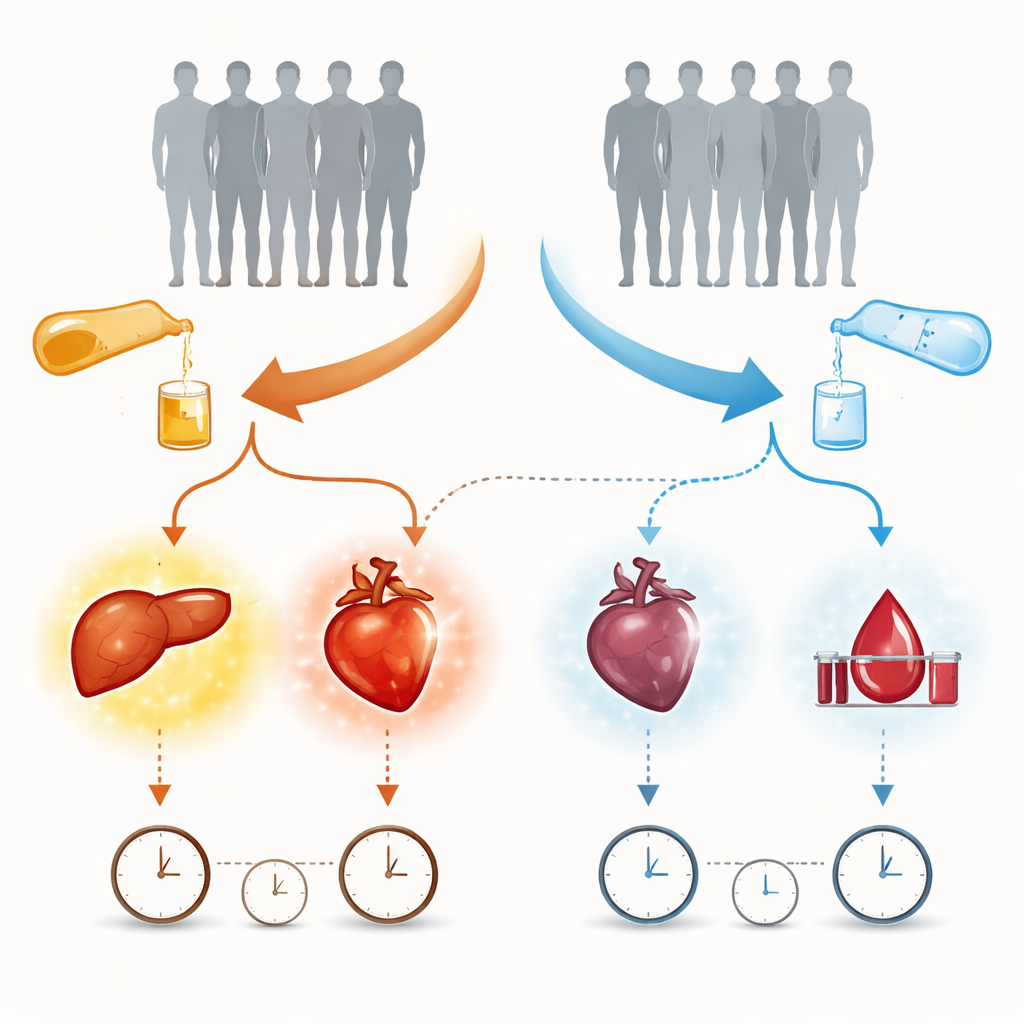
The researchers recruited 45 healthy male university students who already had some experience with binge drinking. They were randomly assigned, in an 8-to-1 ratio, to either an alcohol group or a small control group that drank only water. After an overnight fast and a standard breakfast, the alcohol group consumed a large dose of 40% vodka within 15 minutes, tailored to body size, while controls drank the same volume of water. Over the next 24 hours, the team repeatedly measured blood pressure, heart rate, blood oxygen, breath alcohol, and drew blood at five time points to analyze dozens of biomarkers. This design captured the body’s responses from the first hour through to the next day.
What Happened to the Liver
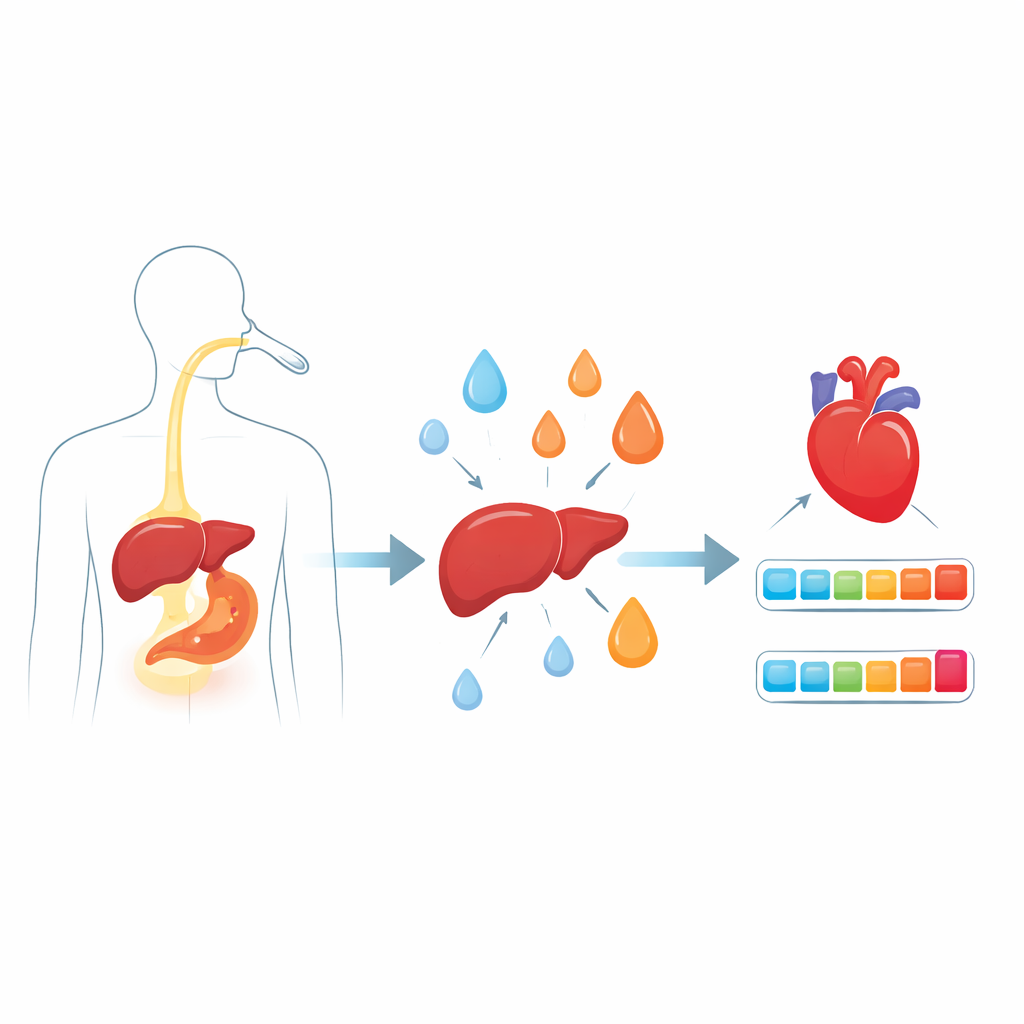
The liver, which has to process nearly all the alcohol, showed clear signs of stress. Several markers that reflect liver function—such as enzymes involved in breaking down complex sugars and proteins, and proteins made by the liver itself—rose significantly in the alcohol group compared with controls. A marker tied to bile flow also increased. At the same time, total bile acids in the blood dropped. Importantly, early indicators of scarring in the liver’s supporting structure, including a component of the collagen “scaffolding” around liver cells, increased after drinking and stayed higher over 24 hours. Classic liver injury enzymes, often checked in routine blood tests, did not change much, suggesting that subtler stress and remodeling in liver tissue can occur even when standard tests still look normal.
Shifts in Blood Fats and Circulation
The study also found that fat metabolism reacted strongly to the alcohol challenge. Levels of triglycerides—the main form of fat the body uses for energy—climbed in the alcohol group, especially around 5 and 12 hours after drinking, and stayed higher overall during the day. A key protein that helps move cholesterol out of tissues and back to the liver also rose, as did the balance between this “cleanup” protein and another linked to cholesterol delivery. These shifts likely reflect the liver temporarily reshuffling fats and cholesterol transport in response to the alcohol load. Blood sugar, in contrast, stayed similar between drinkers and non-drinkers, suggesting that in healthy young men, short-term alcohol intake can disturb fat handling without immediately disrupting glucose levels.
Stress on the Heart and Blood Vessels
The heart and circulation did not escape unscathed. Heart rate climbed after binge drinking, and blood oxygen dipped briefly one hour after alcohol intake. Most strikingly, both upper and lower blood pressure readings were higher in the alcohol group and remained elevated even 24 hours after drinking, indicating a lingering strain on the cardiovascular system. A blood marker released when heart muscle is stressed or mildly injured also rose shortly after drinking, while other heart-related enzymes remained unchanged. Together, these findings suggest that a heavy drinking episode can temporarily push the heart to work harder and alter how blood is pumped and oxygenated, even in otherwise healthy young men.
What It Means for Everyday Drinkers
Overall, this trial shows that a single binge-drinking episode is enough to trigger measurable, short-term changes in markers tied to liver health, blood fats, and heart function. While the participants were young and healthy, and the control group was very small—meaning the results are preliminary and need confirmation in larger, better balanced studies—the pattern is clear: heavy drinking leaves a biological footprint that lasts at least a day. For lay readers, the message is that binge drinking is not just about a temporary buzz or hangover; it briefly pushes key organs into a stressed state. Repeating this pattern over months or years could help explain how “occasional” binges contribute to longer-term risks like liver disease, unhealthy cholesterol levels, and high blood pressure.
Citation: Li, J., Pan, K., Zhang, Y. et al. Dynamic evaluation of blood marker changes induced by acute binge drinking in healthy individuals: a randomized controlled trial. Sci Rep 16, 9999 (2026). https://doi.org/10.1038/s41598-026-40028-1
Keywords: binge drinking, liver health, blood pressure, cholesterol and fats, young adults