Clear Sky Science · en
Combined herbicidal effects of Cynara scolymus and Papaver rhoeas on weed control through phytochemical analysis
Why plants could help replace harsh weed killers
Chemical weed killers have long kept farm fields tidy, but their heavy use has raised serious concerns about health, the environment, and herbicide‑resistant “superweeds.” This study explores a different idea: using natural compounds from common plants — artichoke and the red poppy you might see along roadsides — as a greener way to control troublesome broadleaf weeds. The work asks whether carefully prepared plant extracts can curb weeds in real farm fields as effectively as a standard chemical herbicide.
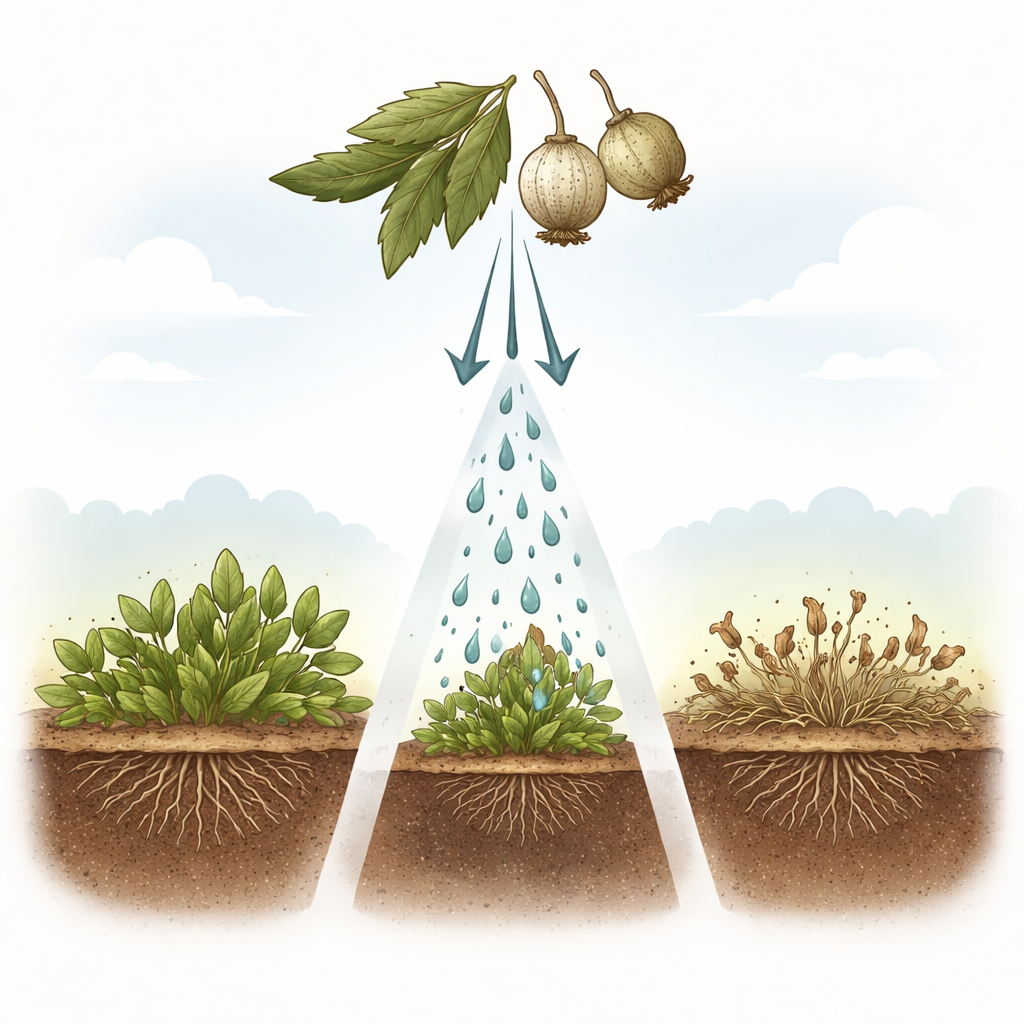
Turning kitchen‑garden plants into weed fighters
The researchers focused on two abundant weeds that compete with crops in western Iran: Chrozophora tinctoria and redroot pigweed (Amaranthus retroflexus). They prepared ethanolic extracts from artichoke leaves and common poppy seed capsules, then sprayed them onto naturally growing weeds in field plots over two growing seasons. Different mixtures were tested, labeled by the amount of each extract in grams per liter — for example, P25A75 contained a low dose of poppy (25) and a high dose of artichoke (75). These plant‑based sprays were directly compared with glyphosate, a widely used synthetic herbicide, and with control sprays containing only ethanol, vinegar, or water.
Peeking inside the plant chemistry
To understand what might make these extracts harmful to weeds, the team analyzed their chemical makeup using high‑performance liquid chromatography, a technique that separates and measures molecules in a mixture. They found that artichoke extract was rich in chlorogenic acid, while poppy extract contained the flavonoid rutin and several well‑known alkaloids such as morphine, codeine, thebaine, noscapine, and papaverine. Many of these compounds belong to groups already known to interfere with plant growth — for example by damaging cell membranes, stressing chloroplasts (the green photosynthetic structures), or disrupting energy flow inside cells.
What happened to weeds in the field
In both years, mixtures of artichoke and poppy extracts sharply reduced weed growth. The standout recipe, P25A75, cut the growth of C. tinctoria by about 80 percent and A. retroflexus by more than 85 percent compared with untreated plots — virtually matching the performance of glyphosate. Other high‑dose combinations, such as P75A75, also strongly reduced fresh and dry weight of both weeds. Visual inspection of treated plants showed clear signs of injury: wilting, yellowing, and stunted growth. In contrast, plots sprayed only with ethanol, vinegar, or water looked similar to untreated controls, confirming that the weed damage came from the plant compounds rather than the helper ingredients in the spray.
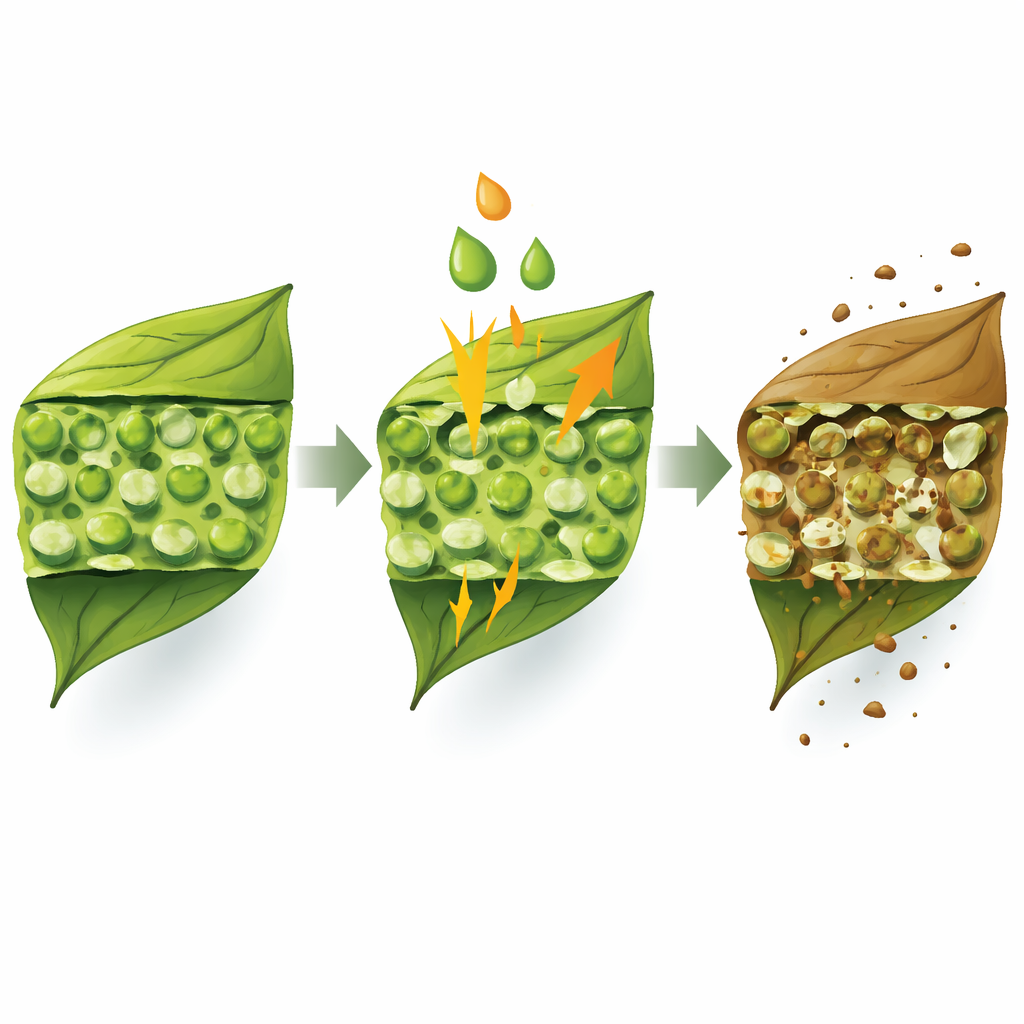
How the natural spray weakens weeds from the inside
To probe how these extracts work, the team measured two simple physiological signals inside the weeds. First, they looked at electrolyte leakage — a sign that cell membranes are damaged and “leaky.” In the best treatments, leakage rose five- to sixfold compared with healthy leaves, showing that the cell walls and membranes were badly compromised. Second, they measured stomatal conductance, which reflects how freely leaves exchange gases with the air. After spraying, this value fell by more than 80 percent in many treatments, similar to glyphosate, indicating that the leaves were effectively shutting down photosynthesis and water loss. Together with the field symptoms of yellowing and tissue collapse, these measurements point to a mode of action in which the extracts disrupt the photosynthetic machinery (especially Photosystem II), promote breakdown of chlorophyll, and destabilize cell membranes, causing the plants to dry out and die.
Promise and hurdles for greener weed control
For a non‑specialist, the takeaway is that concentrated extracts from two familiar plants can act like a contact herbicide, burning back broadleaf weeds nearly as well as a standard chemical product while relying on naturally occurring compounds. The most effective blend, P25A75, comes surprisingly close to glyphosate in the field. However, the study also notes practical challenges: the required doses are high, the extracts may degrade quickly outdoors, and there is still uncertainty about how safe they are for crops and how economical large‑scale production would be. Even so, this work provides a strong proof‑of‑concept that artichoke and poppy could form the basis of future bioherbicides, offering farmers additional tools to reduce dependence on synthetic weed killers.
Citation: Abbasi, B., Bagheri, A., Rahimifard, M. et al. Combined herbicidal effects of Cynara scolymus and Papaver rhoeas on weed control through phytochemical analysis. Sci Rep 16, 11021 (2026). https://doi.org/10.1038/s41598-026-40015-6
Keywords: bioherbicide, artichoke extract, poppy extract, weed control, allelopathy