Clear Sky Science · en
CX3CR1-T280M polymorphism and end-stage renal disease development in chronic kidney disease
Why this matters for everyday health
Many people living with high blood pressure or type 2 diabetes worry about their kidneys, but it can be hard to know who is most at risk of ending up on dialysis. This study looks at whether a tiny difference in a single gene can help predict which patients with chronic kidney disease are more likely to progress to complete kidney failure over time.
A closer look at kidney decline
Chronic kidney disease is becoming one of the fastest rising causes of death worldwide. It usually develops slowly over years, driven by common conditions such as hypertension and diabetes. Doctors know that lifestyle, blood pressure, blood sugar and cholesterol all matter, but they also suspect that inherited factors play a strong role in how fast the kidneys wear out. In particular, low-level, long-lasting inflammation seems to damage the tiny blood vessels and filters inside the kidneys.
The gene under the microscope
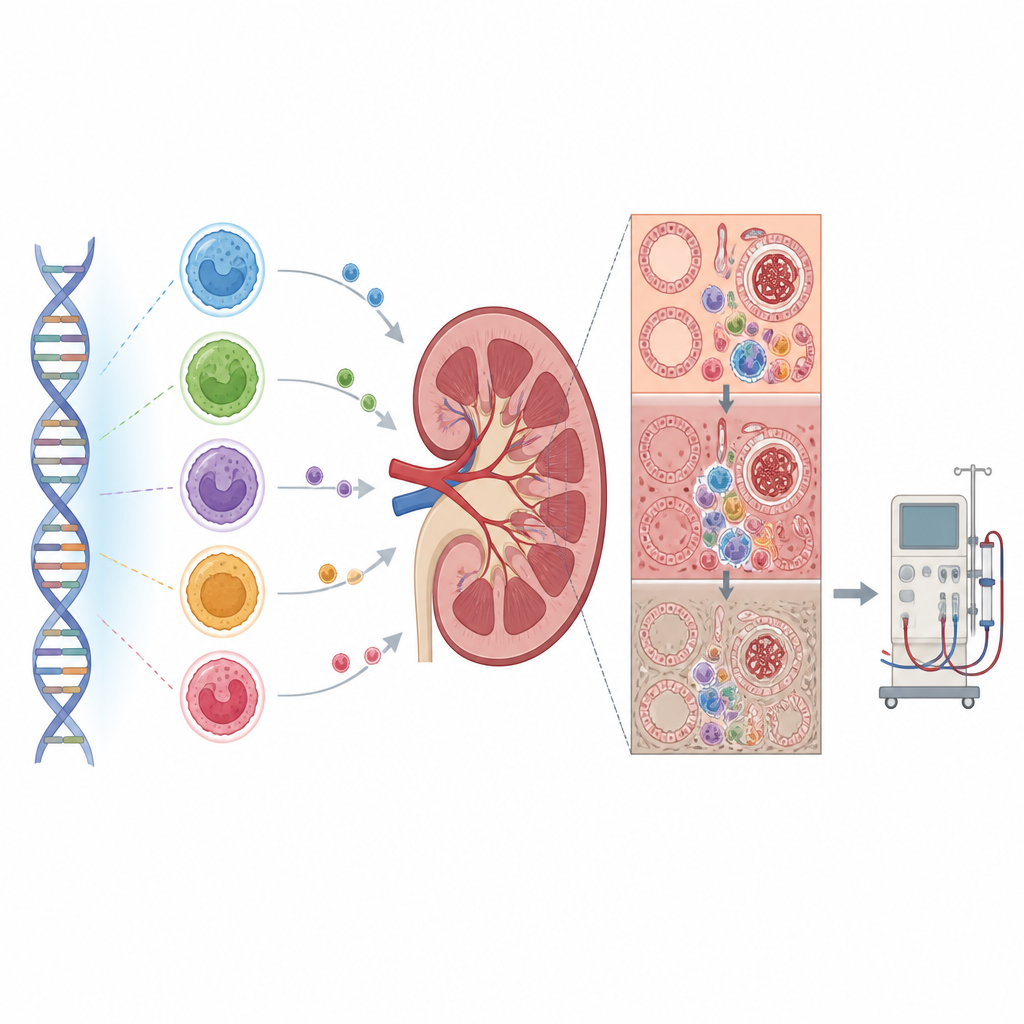
The researchers focused on a gene called CX3CR1, which helps immune cells respond to an inflammatory signal sometimes called fractalkine. A specific small change in this gene, known as T280M, can subtly alter how the receptor works on the surface of immune cells. Earlier, cross-sectional studies hinted that people carrying one version of this change might be more likely to have severe kidney damage, but those studies only offered a snapshot in time. This new work followed patients for many years to see whether this genetic twist actually influenced who progressed to end-stage kidney disease requiring dialysis or a transplant.
Following patients over nearly two decades
The team enrolled 121 adults with mild to severe chronic kidney disease from a clinic in northern Italy. All had kidney problems mainly related to high blood pressure and diabetes, while other causes of kidney damage were carefully excluded. Patients were divided into two groups based on their CX3CR1 T280M status: those with the usual form of the gene and those carrying at least one copy of the altered version. At the start, both groups were similar in age, blood pressure, diabetes and heart disease history, but those with the altered gene already showed slightly worse kidney function, with higher blood creatinine and lower estimated filtration rate.
Who ended up needing dialysis
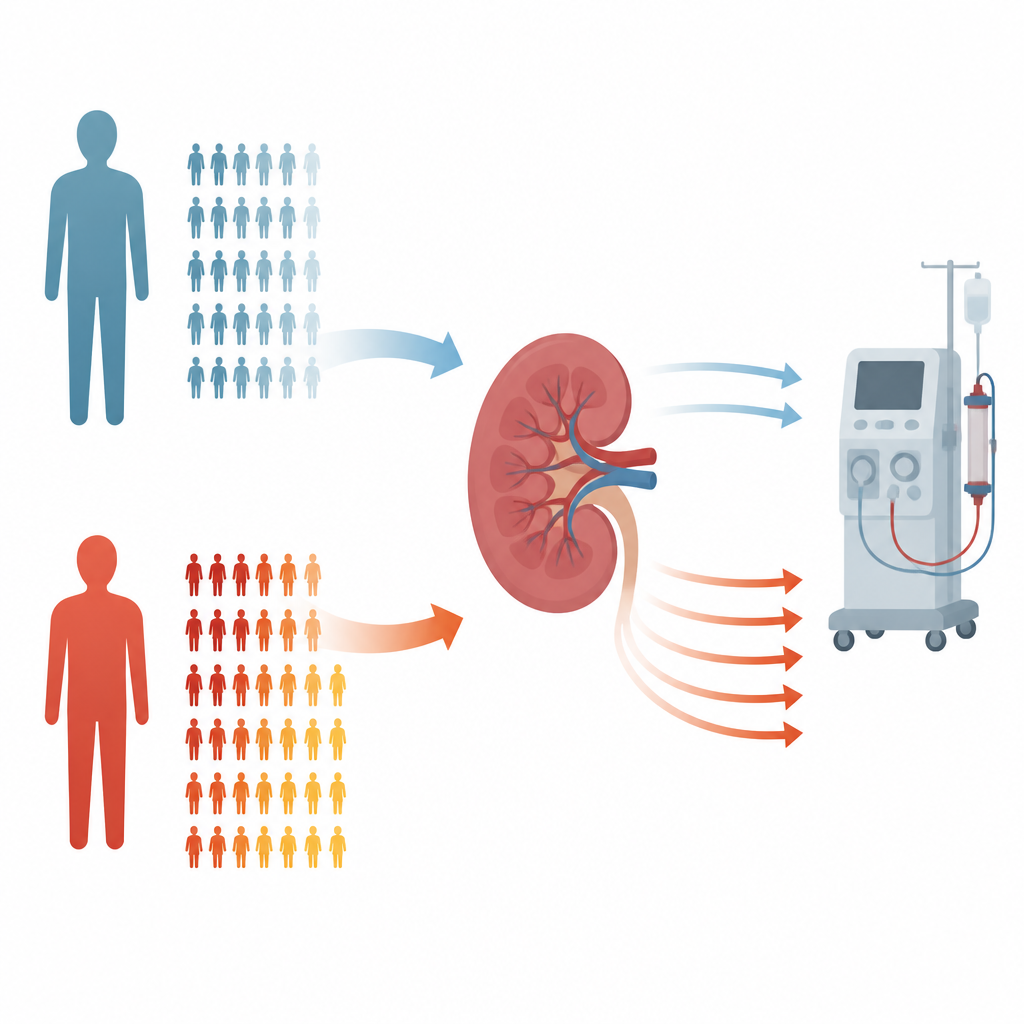
The investigators then tracked who went on to kidney replacement therapy, which means starting dialysis or receiving a kidney transplant. Over an 18 year period, 26 people reached this point. About 17 percent of patients with the usual gene required dialysis or transplant, compared with more than 32 percent of those carrying the altered version. Statistical survival tests showed that carriers of the altered form had roughly double the risk of needing kidney replacement. When the researchers adjusted for age, sex, blood pressure, albumin in the urine, cholesterol levels and starting kidney function, the altered CX3CR1 variant still stood out as an independent predictor of progression, alongside higher urine albumin and higher cholesterol.
What this gene change might be doing
Laboratory work from other groups offers clues about how this genetic difference could speed kidney damage. CX3CR1 sits on certain immune cells that can stick to blood vessel walls and move into tissues. Experimental studies suggest that the altered version can change how these cells survive, migrate and adhere. In the kidney, these immune cells can accumulate, respond to local chemical signals and encourage scarring in the surrounding tissue. The authors also note that in younger patients under 65, those with the altered gene tended to reach dialysis more often across all stages of initial kidney function, hinting that this inherited factor may matter most early in the course of disease.
Limits and next steps
The study has important caveats. The number of participants was modest, so the estimates are less precise than in very large cohorts. Regular measurements of kidney function over time were not available for everyone, which made it impossible to model the exact speed of decline. The authors also tested two other gene changes, one in CX3CR1 and one in another inflammation-related gene called RAGE, and did not find clear links between those variants and dialysis risk in this sample. Differences from previous reports may reflect ethnic background, sample size or outcome definitions.
What this could mean for patients
For people living with chronic kidney disease, the findings suggest that a simple genetic test of CX3CR1 might one day help doctors identify individuals whose kidneys are more likely to fail, even when standard measures like blood pressure and lab results look similar. While the work does not change treatment yet, it strengthens the idea that long-term kidney health is shaped not only by lifestyle and medical care but also by how our genes tune the behavior of immune cells inside these delicate organs.
Citation: Gatti, M., Baragetti, I., Baragetti, A. et al. CX3CR1-T280M polymorphism and end-stage renal disease development in chronic kidney disease. Sci Rep 16, 15949 (2026). https://doi.org/10.1038/s41598-026-40013-8
Keywords: chronic kidney disease, genetic risk, CX3CR1, kidney failure, dialysis