Clear Sky Science · en
A multi-method integrated weighting framework for biosafety risk assessment of infectious substances
Why judging disease cargo risks matters
When biological samples and infectious materials cross national borders, they can carry more than scientific promise—they can also bring serious health and security risks. Customs officers and regulators must decide which shipments are relatively safe and which demand close scrutiny, often with limited time and incomplete information. This paper presents a new way to weigh many different warning signs at once, blending expert judgment with hard data to help border authorities spot risky shipments of infectious substances more reliably and consistently.
From simple labels to a full journey view
Traditional safety rules tend to focus on how dangerous a pathogen is on its own, using classifications that group agents by disease severity and containment level. The authors argue that this is not enough. Real-world risk arises from the entire journey: how samples are collected, how they are packed and transported, how well receiving laboratories are managed, and how prepared ports are for emergencies. They therefore define biosafety risk as the result of interactions between the biological properties of the material and possible failures along this multi-step process. Their indicator system captures five broad areas: product risk, the biosafety capacity of the institution using the material, logistics conditions, packaging quality, and emergency management. 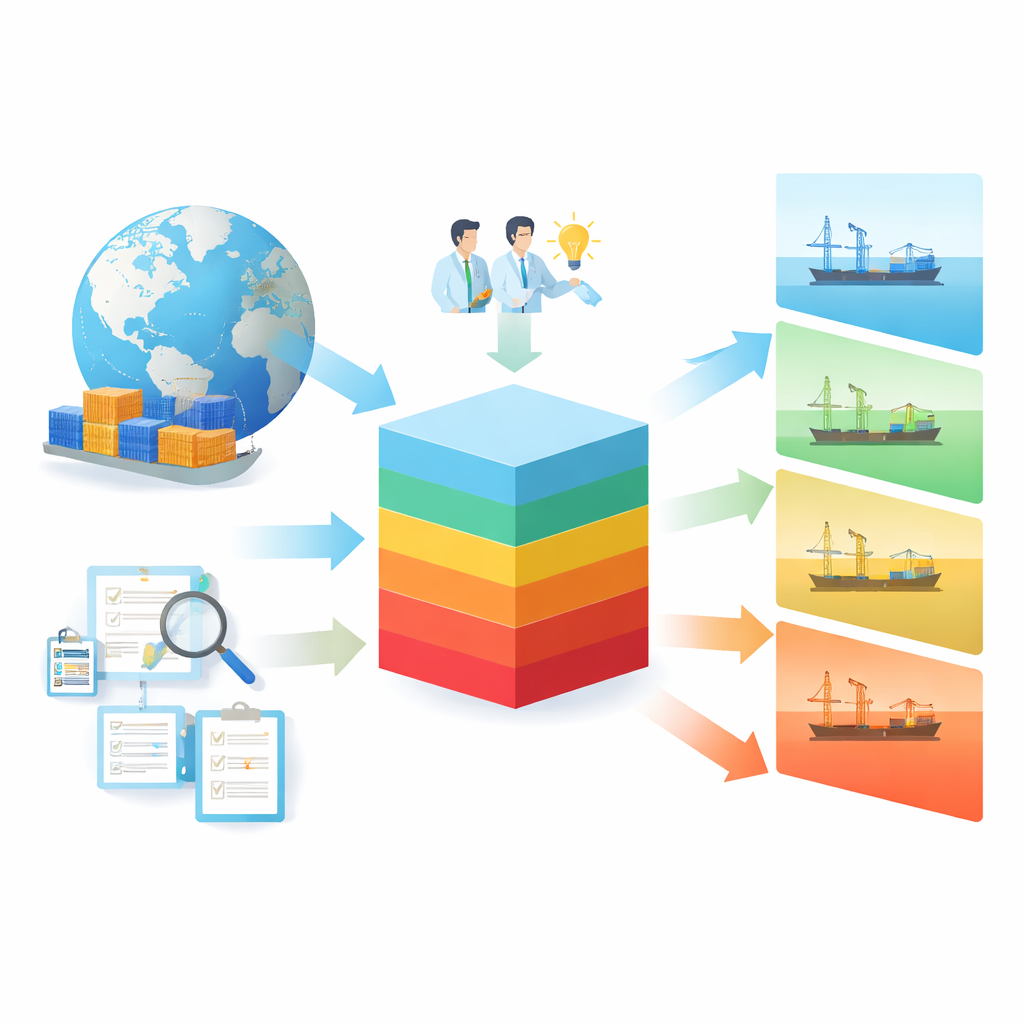
Choosing the right warning signs
To build a practical checklist, the team began with about 100 candidate indicators drawn from international guidelines, national rules, and port practice. They standardized the data so that indicators measured on different scales could be compared fairly. Clustering methods grouped similar indicators and helped remove those that added little new information. Principal Component Analysis (PCA), a common statistical tool, was then used to test whether the remaining indicators captured the main patterns in the data. After several rounds of refinement, the result was a three-level structure: 5 primary, 16 secondary, and 60 detailed indicators that together describe how infectious substances are handled from origin to final use.
Blending expert insight with data patterns
One major challenge in risk scoring is deciding how much weight to give each indicator. Experts may stress certain issues based on experience, while statistics may highlight different factors. Instead of choosing one side, the authors combine both. They first use a fuzzy version of the Analytic Hierarchy Process to convert expert pairwise comparisons into a set of subjective weights that capture uncertainty in human judgment. In parallel, they use PCA to derive objective weights based on how much variation each indicator explains across many cases. They then build a mathematical optimization model that searches for a single set of combined weights that stays as close as possible to both the expert and data-driven sets, under clear normalization rules. This "deviation-minimization" step yields a balanced weighting scheme that is less biased than either source alone and more transparent than ad hoc compromises.
Turning many numbers into clear risk levels
With the combined weights in hand, the authors move to a two-part scoring engine. The first part, TOPSIS, compares each port or shipment profile with an ideal best and an ideal worst case, using distances to judge how close each one is to the high-risk state. The second, Grey Relational Analysis (GRA), looks at how closely each profile’s indicator pattern resembles a reference risk pattern, which is helpful when information is incomplete. The outputs from TOPSIS and GRA are then normalized and fused into a single composite score for each case. In a scenario-based study of four stylized ports, this integrated TOPSIS–GRA model clearly separates high, moderately high, moderate, and low risk situations and highlights which specific factors push a port into a riskier category. 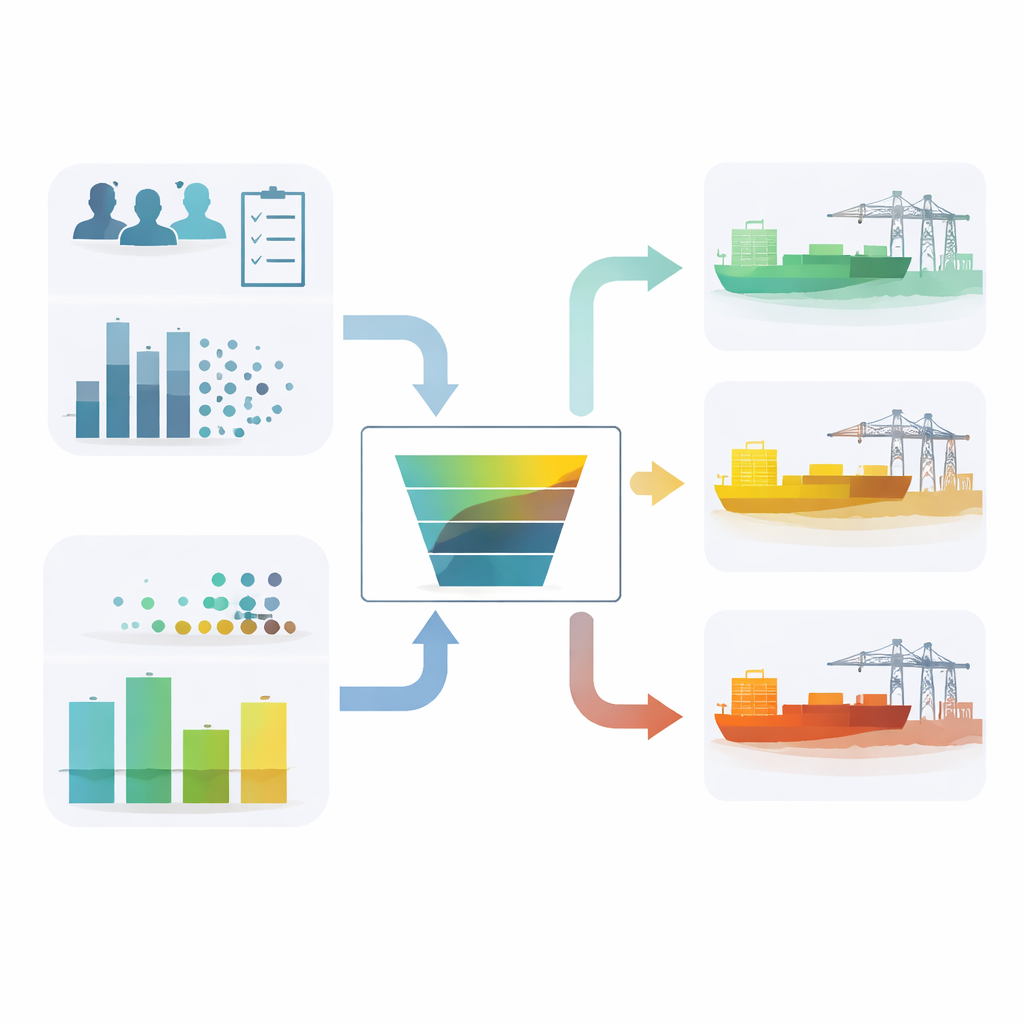
What this means for everyday safety
For non-specialists, the key message is that judging the danger posed by infectious shipments cannot rely on one number or one person’s opinion. This study shows how to turn a large, complex set of clues—about pathogens, laboratories, shipping routes, packaging, and emergency readiness—into a single, defensible risk score. By carefully combining expert knowledge with objective data and using two complementary scoring methods, the framework helps customs and health authorities decide where to focus inspections and how strict to be, while keeping the process traceable and reproducible. In practice, this can support faster, more reliable decisions at borders, lowering the chance that a mishandled infectious shipment will lead to an outbreak or disrupt trade.
Citation: Wu, F., Li, C., Bian, Y. et al. A multi-method integrated weighting framework for biosafety risk assessment of infectious substances. Sci Rep 16, 10431 (2026). https://doi.org/10.1038/s41598-026-39982-7
Keywords: biosafety risk assessment, infectious materials, border health security, multi-criteria decision-making, laboratory and transport safety