Clear Sky Science · en
Association of serum calcium levels with cardiac arrest risk in heart failure patients from the eICU database
Why a simple mineral in blood matters for weak hearts
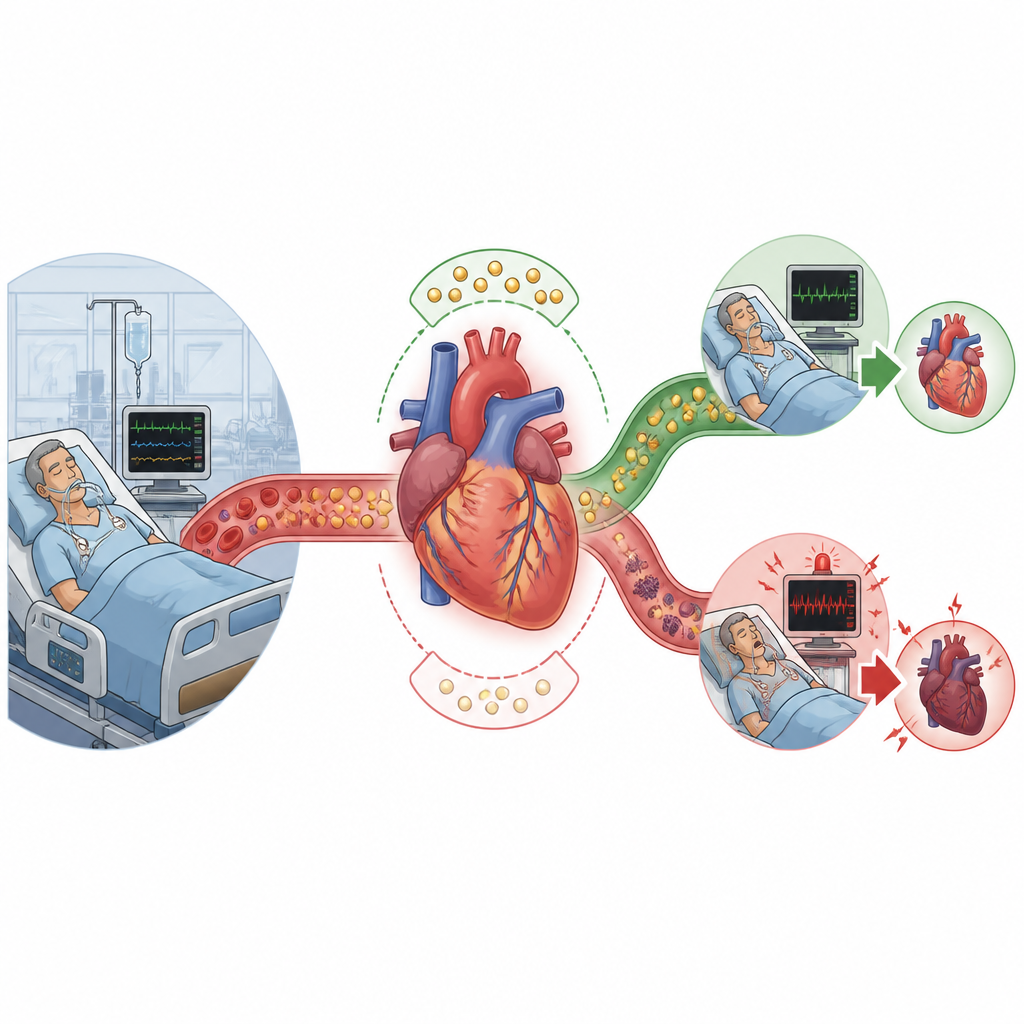
Sudden cardiac arrest is a terrifying event in which the heart abruptly stops pumping, often without warning. People living with heart failure are at especially high risk, yet doctors still struggle to predict who will suddenly collapse. This study looks at an everyday blood mineral, calcium, to see whether its level on arrival in the intensive care unit can help flag danger. The work suggests that both too little and too much calcium may tilt fragile hearts toward trouble, hinting that careful monitoring of this basic substance could become part of safer care.
Who was studied in the intensive care units
The researchers used a large U.S. database that collects detailed information from more than 200 hospitals. From this resource they identified 11,373 adults who were admitted to intensive care with a main diagnosis of heart failure between 2014 and 2015. Everyone had their blood calcium measured within the first day in the unit. The team then tracked which patients went on to suffer sudden cardiac arrest during their hospital stay, defined as a sudden loss of heartbeat that required electric shocks or chest compressions to attempt to restart the heart.
How calcium levels were linked to cardiac arrest
To explore the connection, the researchers divided patients into four groups based on their admission calcium level and also ran more detailed statistical models. In simple comparisons, those with higher calcium generally had fewer cardiac arrests. For every 1 milligram per deciliter rise in calcium, the raw odds of sudden arrest fell. Even after adjusting for age, sex, body weight, other illnesses like diabetes, kidney injury, lung disease, and sepsis, as well as several blood tests and a coma score, higher calcium was still tied to a lower risk overall.
A curve with a hidden tipping point
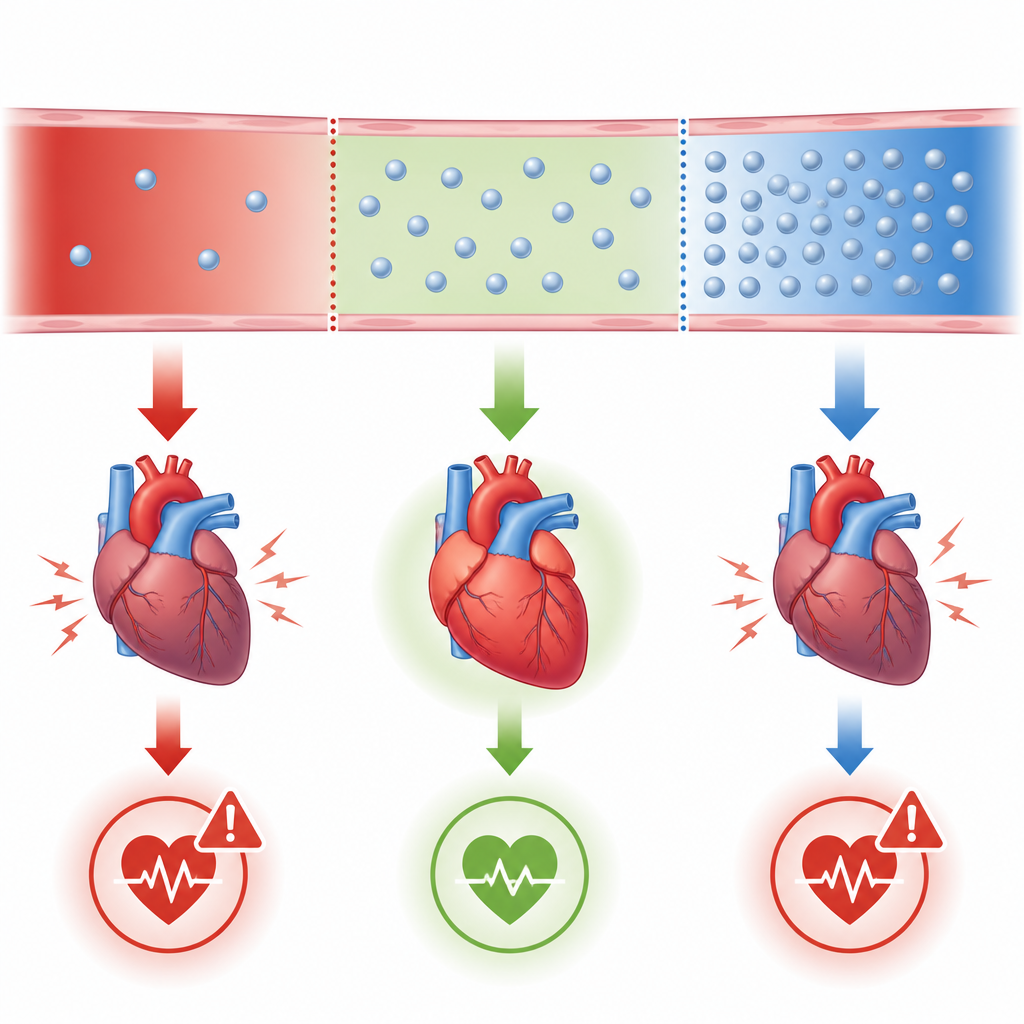
When the team allowed for more flexible shapes in their analysis instead of a straight line, an important nuance appeared. The relationship between calcium and cardiac arrest was not purely one direction but instead followed a U shaped curve. Below about 9.5 milligrams per deciliter, each small rise in calcium was linked to a clear drop in arrest risk. Above this turning point, however, the pattern reversed and higher calcium came with sharply higher odds of sudden arrest. A similar U shaped pattern showed up when they corrected calcium for blood protein levels in sensitivity checks and when they looked across many patient subgroups, suggesting the effect was robust.
What this could mean for patient care
Calcium is central to how heart cells generate electrical signals and contract, so it makes biological sense that both shortage and excess could disturb rhythm. Very low levels may alter how easily the heart muscle is excited, while very high levels can favor extra beats and dangerous rhythm disturbances. Still, this study was observational and used only a single calcium reading at admission, without continuous heart tracings or detailed drug timing. That means it can reveal associations but cannot prove that changing calcium up or down would directly prevent arrest.
Takeaway for families and clinicians
The authors conclude that in people with heart failure admitted to intensive care, admission calcium levels show a non linear link with in hospital sudden cardiac arrest: values that are too low or too high signal greater danger, while a mid range appears safer. They suggest that routine attention to calcium, alongside other electrolytes, may help identify patients who need closer watching, though any change in treatment strategy should await stronger evidence from future prospective and interventional studies.
Citation: Li, M., Yang, L. & Yue, Z. Association of serum calcium levels with cardiac arrest risk in heart failure patients from the eICU database. Sci Rep 16, 15418 (2026). https://doi.org/10.1038/s41598-026-39967-6
Keywords: heart failure, sudden cardiac arrest, serum calcium, intensive care, electrolyte balance