Clear Sky Science · en
Participatory One Health network modelling of climate-sensitive Vibrio and antimicrobial resistance risks in the Tasmanian oyster supply chain
Why warming seas matter for your seafood dinner
Oysters are often celebrated as a pure taste of the ocean, but the waters they come from are changing fast. As the climate warms and storms intensify, bacteria that naturally live in the sea can become more dangerous, and some are also growing harder to treat with medicines. This study looks at how heat, heavy rain, farming practices, and food handling interact to shape the safety of oysters from Tasmania, a major supplier of Pacific oysters in Australia. The researchers focus on Vibrio bacteria—which can cause serious stomach and blood infections—and on antimicrobial resistance, where microbes no longer respond well to antibiotics.
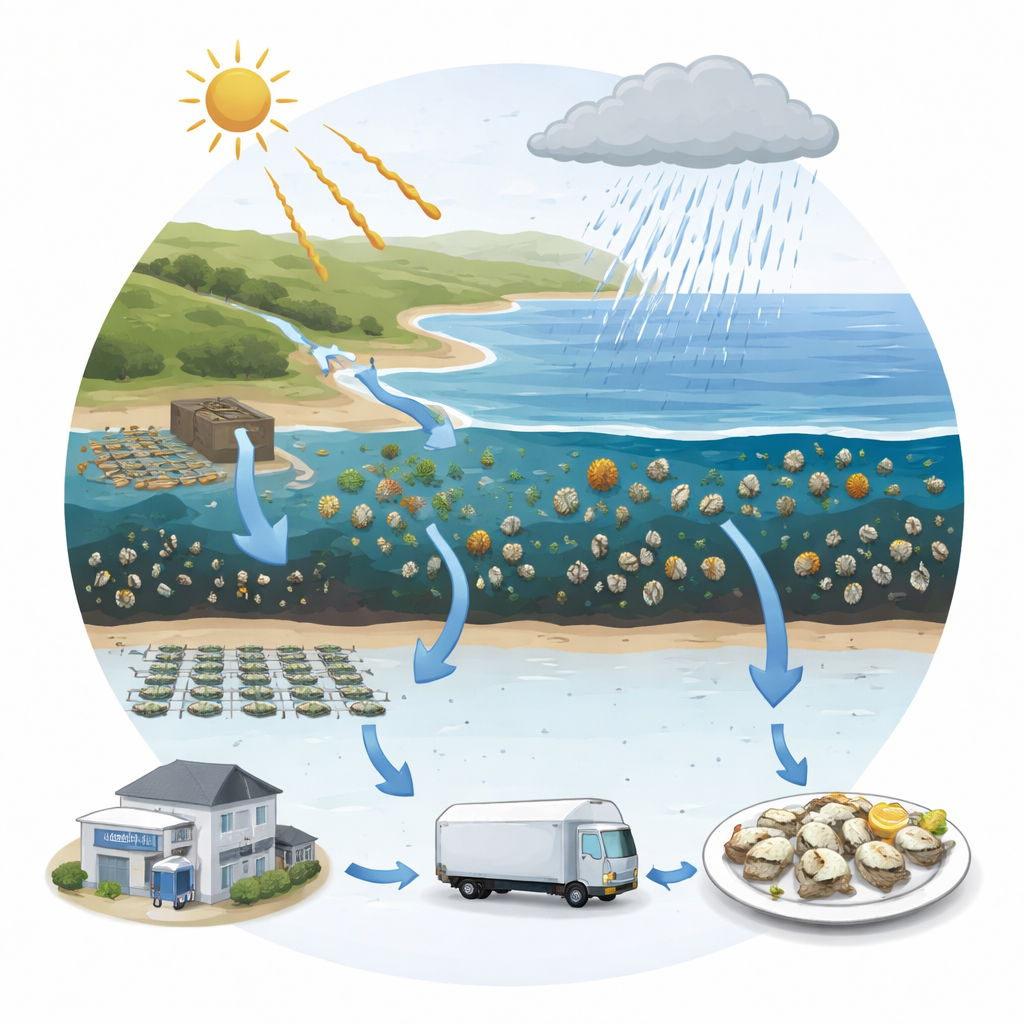
Changing oceans and hidden germs
The authors start by explaining that warming seas, shifting salt levels, and more nutrient pollution are rearranging marine microbial life around the world. Vibrio species, including Vibrio parahaemolyticus and Vibrio vulnificus, thrive in warmer, moderately salty water and can hitch a ride into our bodies through raw or lightly cooked seafood, especially oysters that filter large volumes of seawater. At the same time, antibiotic residues and other pollutants from farms, towns, hospitals, and fish cages can push bacteria to evolve drug resistance. In Tasmania and elsewhere, this combination of heat and contamination raises concern that more people could be exposed to harmful and harder-to-treat strains.
Looking at the whole system, not just the oyster
Instead of testing a single farm or microbe, the team used a “systems” approach. They gathered published studies, industry documents, and the experience of growers, regulators, and public health experts in workshops. Together, they mapped 25 key pieces of the puzzle: environmental factors like air and water temperature, marine heatwaves, and extreme rainfall; pollution and antibiotic use; how oysters are grown, harvested, cooled, transported, and sold; and how people handle and eat them. They then turned this map into a qualitative network model, a type of diagram that tracks how one factor pushes another up or down. Using computer simulations, they asked what happens to the whole system when, for example, air temperature rises, or when different agencies collaborate more closely on food safety.
Heat, storms, and breaks in the cold chain
The simulations showed that both warm seawater and warm air increase Vibrio levels in the ocean and in oysters. But rising air temperature had the strongest impact on the chances of a large Vibrio parahaemolyticus outbreak. Hot days make it harder to keep oysters cold after harvest: refrigerated trucks and storage rooms struggle, doors are opened more often, and oysters can be left out during transfers. The model suggested that these stresses boost the risk of temperature abuse, bacterial growth along the supply chain, and consumer mishandling at home. Heavy rainfall, by contrast, most strongly affected antimicrobial resistance by washing nutrients, pollution, and resistant microbes into coastal waters. However, data gaps made it hard to pin down exactly how this translates into human illness, highlighting priorities for future monitoring.
Working together to keep oysters safe
When the researchers simulated stronger cross-sector collaboration and higher food safety awareness—bringing together oyster growers, regulators, wastewater managers, and health authorities—the picture improved noticeably. Better coordination and education led to more investment in cooling equipment and handling practices, improved cold-chain performance, lower risks of temperature abuse and consumer mishandling, and better human health outcomes, all while supporting stable or increased demand for oysters. Even when they added combined climate pressures—warmer air and water plus more intense rainfall—boosting collaboration still reduced the likelihood of major outbreaks and softened many of the negative impacts on the industry and consumers.
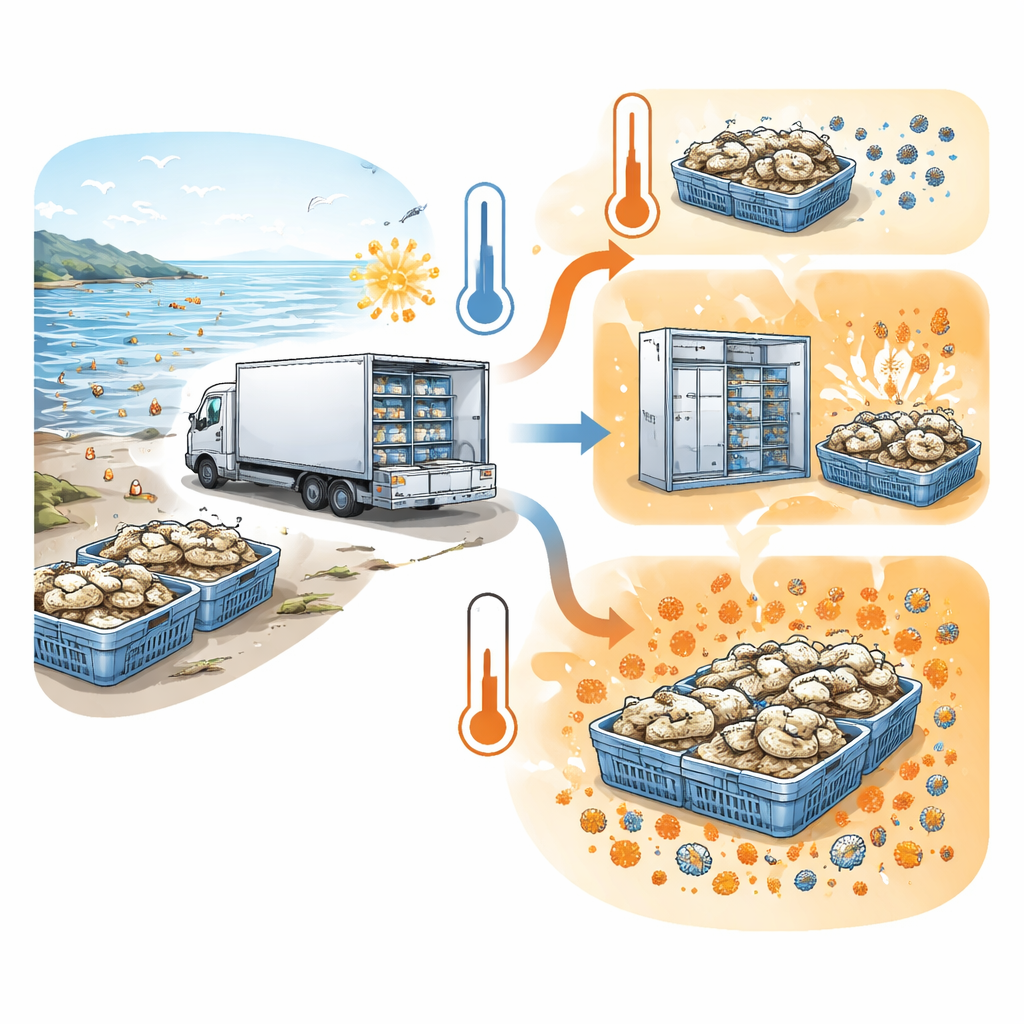
What this means for oyster lovers and coastal communities
In plain terms, the study finds that climate change is tilting the odds toward more Vibrio in Tasmanian oysters, especially as hotter air strains the cooling steps between farm and plate. Storm-driven pollution may also foster drug-resistant strains, though this is less well measured. Yet the work also shows that these risks are not fixed. By tightening temperature control from harvest to home, improving traceability, monitoring coastal pollution and resistance, and making sure agencies and industries share information and act together, it is possible to keep oysters safer in a warming world. The modelling framework itself offers a reusable tool to test “what if” options for food safety and climate adaptation, turning a complex, unseen web of interactions into practical guidance for protecting both public health and the future of seafood.
Citation: Subramaniam, R.C., Cox, I. & Onyango, E.A. Participatory One Health network modelling of climate-sensitive Vibrio and antimicrobial resistance risks in the Tasmanian oyster supply chain. Sci Rep 16, 9909 (2026). https://doi.org/10.1038/s41598-026-39965-8
Keywords: climate change and seafood safety, Vibrio in oysters, antimicrobial resistance, cold chain management, One Health aquaculture