Clear Sky Science · en
A comprehensive evaluation on the bioactivity, antibacterial efficacy and cell viability of PVA-PVP-chitosan electrospun scaffolds reinforced with calcium/zinc silicate
Helping Broken Bones Heal Themselves
When a bone is badly shattered, the body’s natural repair system sometimes needs a helping hand. Surgeons then rely on artificial “scaffolds” to guide new bone growth. This study explores a new type of ultra-thin fibrous scaffold made from a blend of familiar, body-friendly polymers and tiny glass-like particles containing calcium or zinc. The goal is to see which recipe best supports bone repair while fighting infection and remaining safe for living cells. 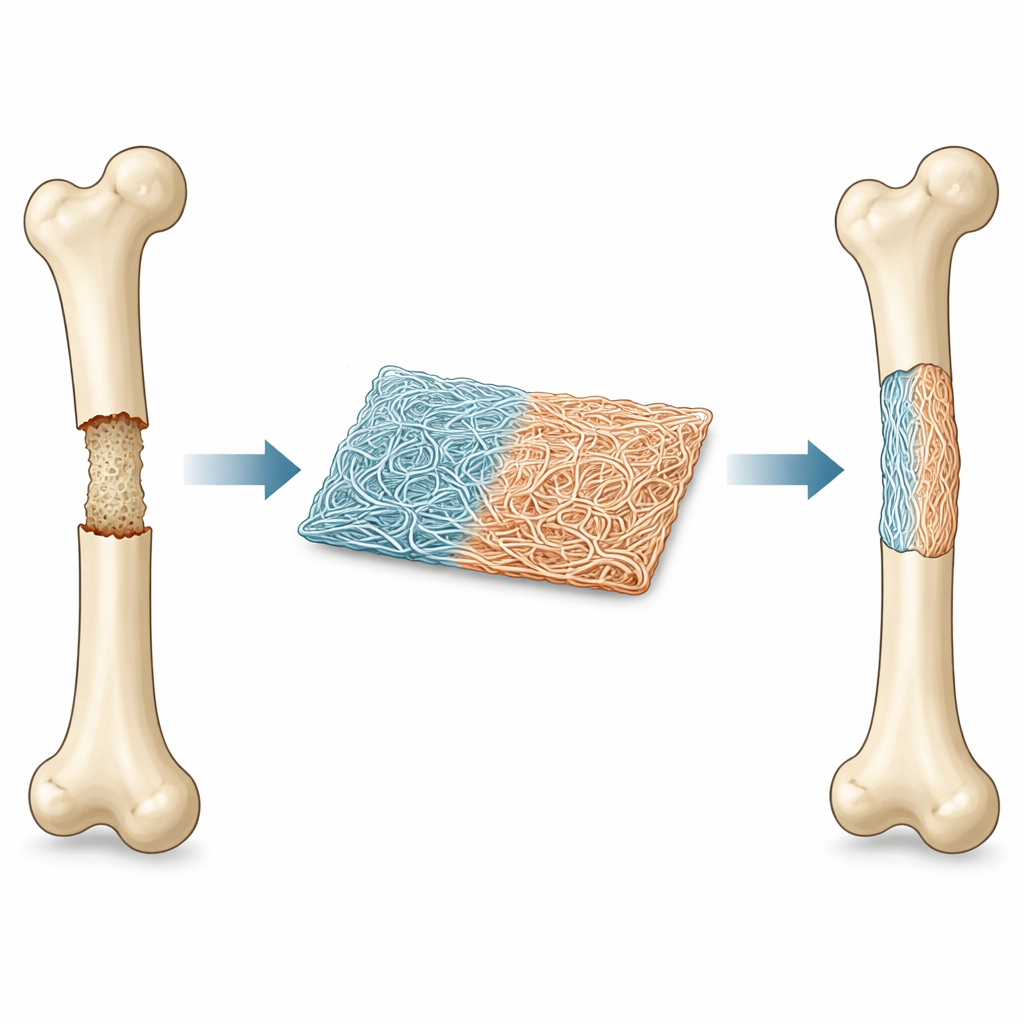
Building a Tiny Support for New Bone
The researchers created delicate mats of fibers using a process called electrospinning, which stretches liquid into hair-like threads using high voltage. The basic recipe mixed three polymers: polyvinyl alcohol and polyvinyl pyrrolidone, which are water-loving and flexible, and chitosan, a natural sugar-based material known for its healing and antibacterial traits. Into this web they added different amounts of calcium-containing or zinc-containing silicate particles, producing two families of scaffolds that only differed in which metal they carried.
Making Fibers that Look and Feel Like Bone Matrix
Under the microscope, all scaffolds formed smooth, bead-free fibers, but adding more ceramic particles made the fibers thinner and the overall structure more porous—features that are helpful because they let cells and nutrients move through more easily. Calcium-based fibers stayed smooth, while zinc-based ones sometimes showed small lumps, which slightly weakened their strength. Mechanical tests showed that higher ceramic content generally improved strength and stretchiness, with the calcium-rich scaffolds reaching the best balance. All versions readily absorbed water and had low contact angles, meaning their surfaces were welcoming to water and, by extension, to cells.
Encouraging Bone Minerals and Blocking Germs
To check whether these materials truly supported bone-like mineral growth, the team soaked the scaffolds in a solution that mimics human blood plasma. Within just three days, the calcium-containing scaffolds began to grow an apatite layer, a mineral similar to natural bone, and by seven days this layer had thickened; zinc scaffolds also formed apatite but more slowly and less intensely. At the same time, both types of scaffolds showed strong antibacterial activity against common harmful bacteria, with the zinc-containing versions generally performing better. This protection likely arises from a combination of chitosan’s natural antibacterial action and the metal ions disrupting bacterial membranes and metabolism. 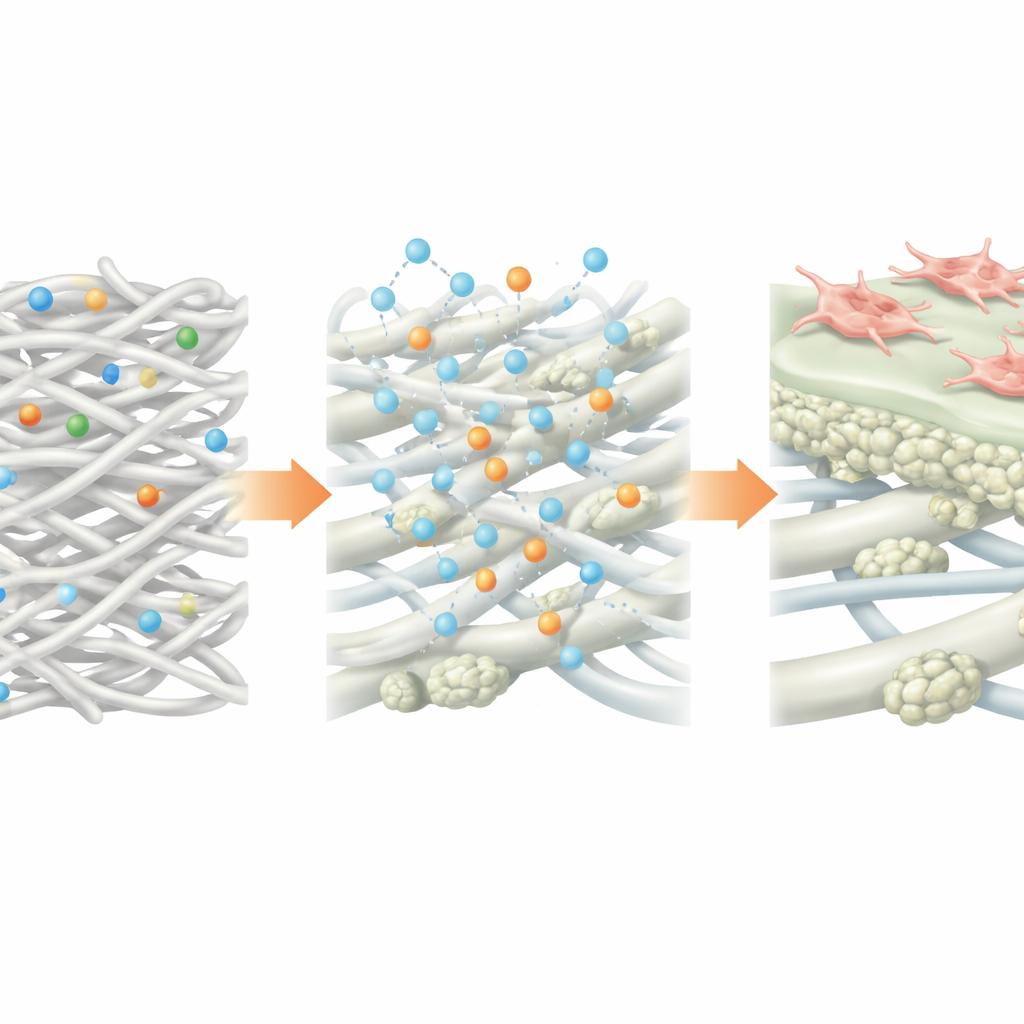
Staying Stable Long Enough to Do the Job
For any implant, it is crucial that it slowly dissolves as new tissue takes over, without disappearing too soon or lingering too long. In salt-buffer tests meant to mimic body fluids, all scaffolds gradually lost weight over four weeks. Calcium-rich versions broke down faster, thanks to their more rapid release of calcium ions, while zinc-rich scaffolds degraded more slowly and steadily. Measurements of water uptake, pore structure, and breakdown behavior showed these features were tightly linked: more porous, highly swelling scaffolds degraded more quickly, but still within a time frame that would allow bone to form.
Being Kind to Cells While Boosting Bone Activity
The team then tested how well bone-like cells grew on the most promising calcium and zinc scaffolds. Cell viability remained above commonly accepted safety thresholds, with calcium-containing samples showing somewhat higher survival and zinc-containing ones causing modest extra cell stress due to stronger ion release. Importantly, both scaffold types stimulated alkaline phosphatase, an early marker of bone-forming activity, and the zinc-rich scaffolds produced the highest levels over seven days. This suggests that, despite their slightly harsher environment, zinc-containing scaffolds may more strongly encourage cells to start building new bone matrix.
What This Means for Future Bone Repair
Overall, the study shows that these electrospun fiber mats combining soft polymers with calcium or zinc silicate particles can support bone-like mineral growth, resist harmful bacteria, and remain reasonably friendly to bone cells. Calcium-based scaffolds excel at forming bone minerals quickly and have better mechanical strength, while zinc-based versions offer stronger antibacterial action and higher early bone-forming signals, albeit with a bit more cellular stress and slower breakdown. Together, these findings point toward customizable scaffolds that doctors could tailor—favoring calcium, zinc, or a mix of both—to match the needs of different bone injuries and improve healing outcomes.
Citation: Joseph, A., Uthirapathy, V. A comprehensive evaluation on the bioactivity, antibacterial efficacy and cell viability of PVA-PVP-chitosan electrospun scaffolds reinforced with calcium/zinc silicate. Sci Rep 16, 13596 (2026). https://doi.org/10.1038/s41598-026-39945-y
Keywords: bone regeneration, electrospun scaffolds, bioactive glass, calcium silicate, zinc silicate