Clear Sky Science · en
Unraveling the impact of pilot fuel injection pressure on hydrogen-diesel engine performance through PCA and RSM analysis
Why cleaner engines still matter
Even as electric cars grab headlines, most heavy-duty trucks, tractors, and generators will rely on combustion engines for decades. Finding ways to make these engines cleaner and less dependent on fossil diesel is crucial for meeting climate goals without throwing away existing machines. This study explores a promising path: running a diesel engine on a mix of hydrogen gas and plant‑based biodiesel, then fine‑tuning how the liquid fuel is injected to squeeze out more efficiency while cutting the dirtiest emissions.
A new twist on an old workhorse
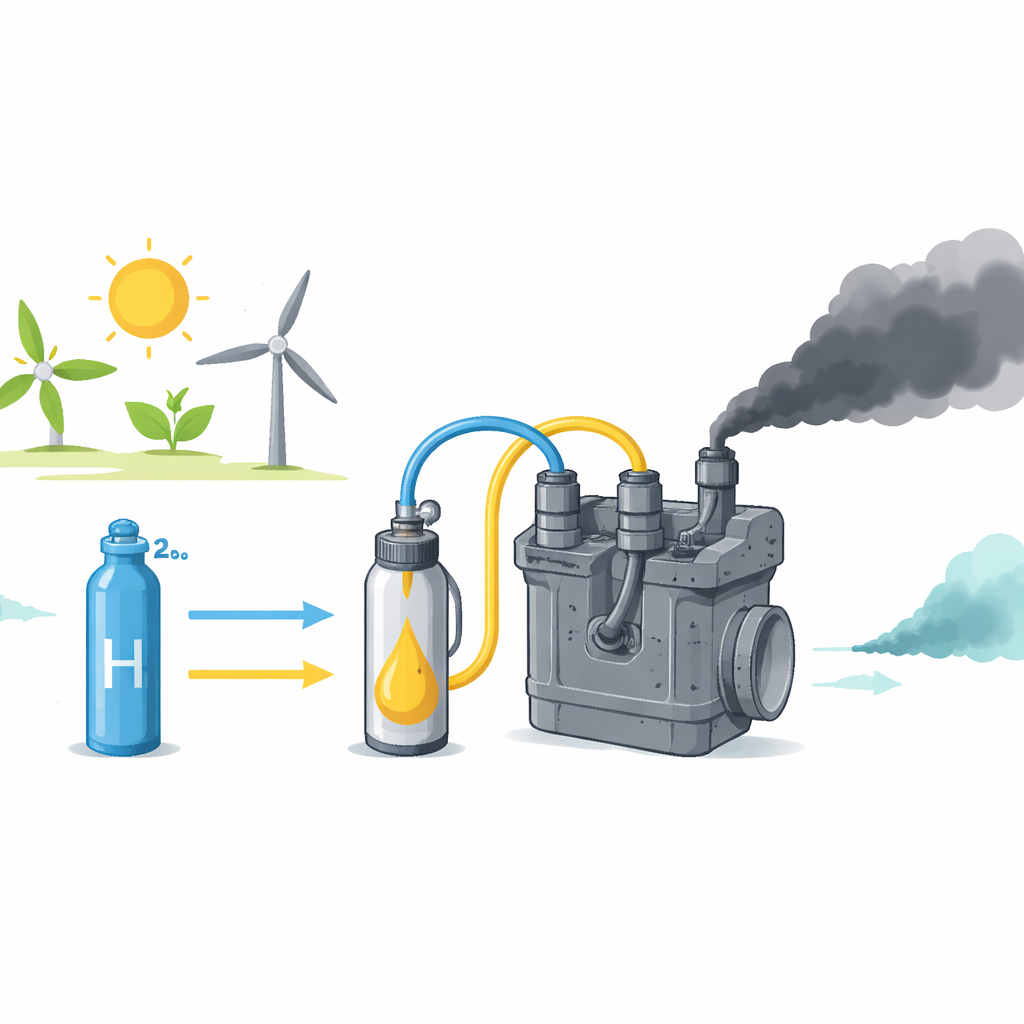
The researchers started with a small, single‑cylinder diesel engine like those used in light commercial vehicles. Instead of burning only standard diesel, they fed the engine two fuels at once. Hydrogen gas served as the main energy source, while a small amount of liquid Jatropha biodiesel acted as the “pilot” fuel that ignites first and sets off combustion. Jatropha oil comes from hardy, non‑food plants, making it attractive as a sustainable biofuel. By enriching the air with hydrogen and lighting it with a biodiesel spray, the team aimed to convert a conventional diesel engine into a lower‑carbon power unit without major hardware changes.
How pressure and load shape a cleaner burn
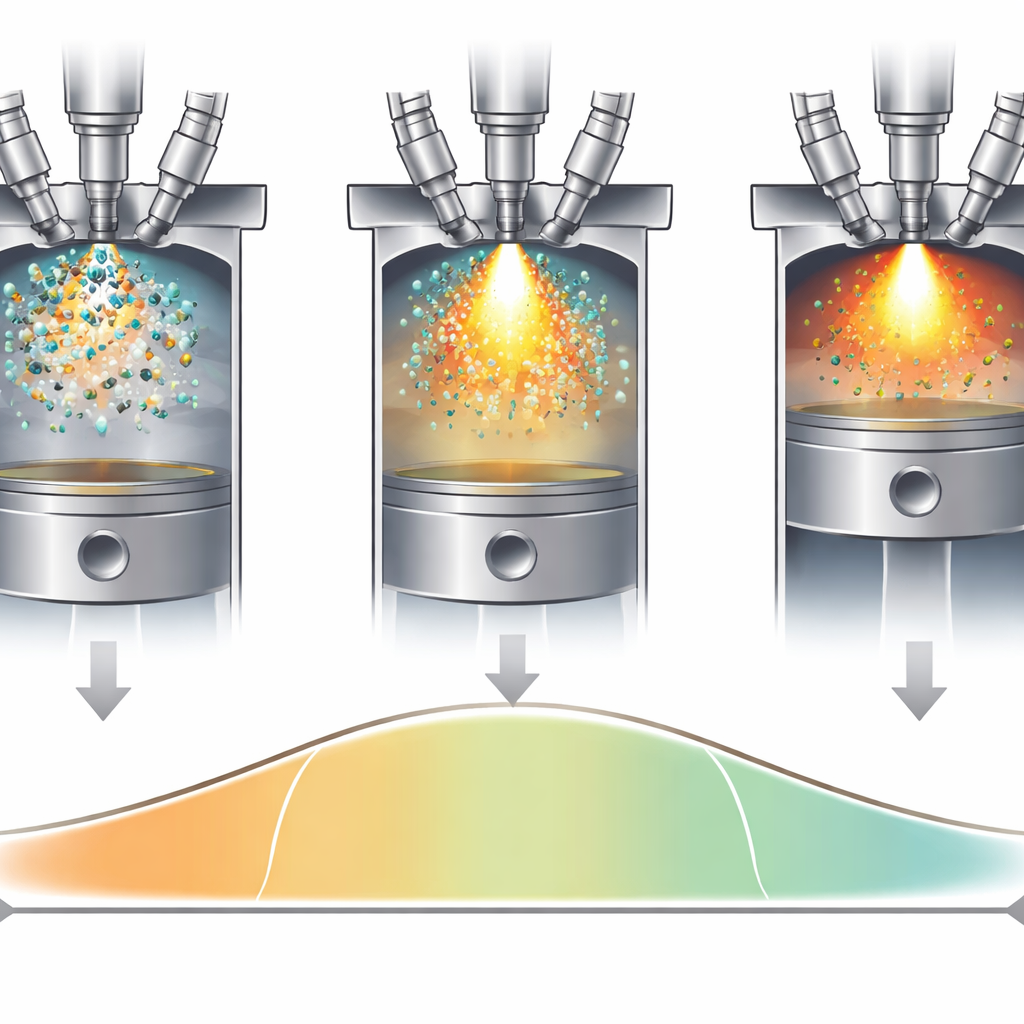
Two operating knobs were the focus: how hard the biodiesel is pushed through the injector (injection pressure) and how much power the engine is delivering (engine load). The team ran the engine at five load levels, from light to full power, and three different injection pressures. For each setting they measured classic performance indicators, such as brake thermal efficiency (how much of the fuel’s energy becomes useful work), and key pollutants like unburned hydrocarbons, carbon monoxide, and nitrogen oxides. Adding hydrogen generally improved efficiency and lowered hydrocarbon and carbon monoxide emissions compared with running on diesel alone, especially around mid‑range loads where the fuel and air mixed most effectively.
When cleaner combustion creates new problems
The story was more complicated for nitrogen oxides, a group of gases linked to smog and lung irritation. Hydrogen burns very quickly and, together with the oxygen present in biodiesel, can raise temperatures inside the cylinder. Hotter flames tend to generate more nitrogen oxides, and that is exactly what the team observed: at higher loads and with stronger injection pressures, nitrogen oxide levels climbed, even while the engine became more efficient and used far less liquid fuel. In other words, the very conditions that delivered better fuel economy and cleaner carbon‑based emissions also pushed up this other harmful pollutant, revealing a built‑in trade‑off that engine designers must manage.
Using data tools to find the sweet spot
Because many variables change at once inside an engine, the researchers turned to advanced statistical tools to make sense of the results. They used principal component analysis to tease out which combinations of measurements tended to rise and fall together, confirming that efficiency, liquid fuel savings, and nitrogen oxides are tightly linked. Then they applied a response surface approach powered by a Gaussian process model—a way to build smooth, predictive surfaces through scattered data points. This allowed them to mathematically explore thousands of hypothetical operating points and search for conditions that balance good efficiency with acceptable emissions, rather than optimizing any one metric in isolation.
Finding a practical middle ground
From this virtual map of engine behavior, the team identified an operating “sweet spot.” At a bit over 70% of maximum load and a pilot‑fuel injection pressure just above 205 bar, the engine reached solid efficiency while replacing nearly three‑quarters of the liquid fuel with hydrogen and keeping nitrogen oxide levels below its worst‑case values. In everyday terms, the engine runs hard enough to be useful and economical, burns much less plant‑based liquid fuel, and still avoids the sharpest spike in pollutants. While not a perfect solution—nitrogen oxides remain a challenge—these findings show that hydrogen‑assisted, biodiesel‑fueled diesel engines can meaningfully cut fossil fuel use and climate‑warming emissions if they are carefully tuned, offering a practical bridge technology on the path to cleaner energy systems.
Citation: Mohite, A.A., Kumar, N., De, D. et al. Unraveling the impact of pilot fuel injection pressure on hydrogen-diesel engine performance through PCA and RSM analysis. Sci Rep 16, 11546 (2026). https://doi.org/10.1038/s41598-026-39923-4
Keywords: hydrogen dual-fuel engine, biodiesel combustion, injection pressure, engine emissions, clean transportation