Clear Sky Science · en
Deep learning-based battery health prediction for enhancing electric vehicle performance
Why Smarter Batteries Matter for Everyday Drivers
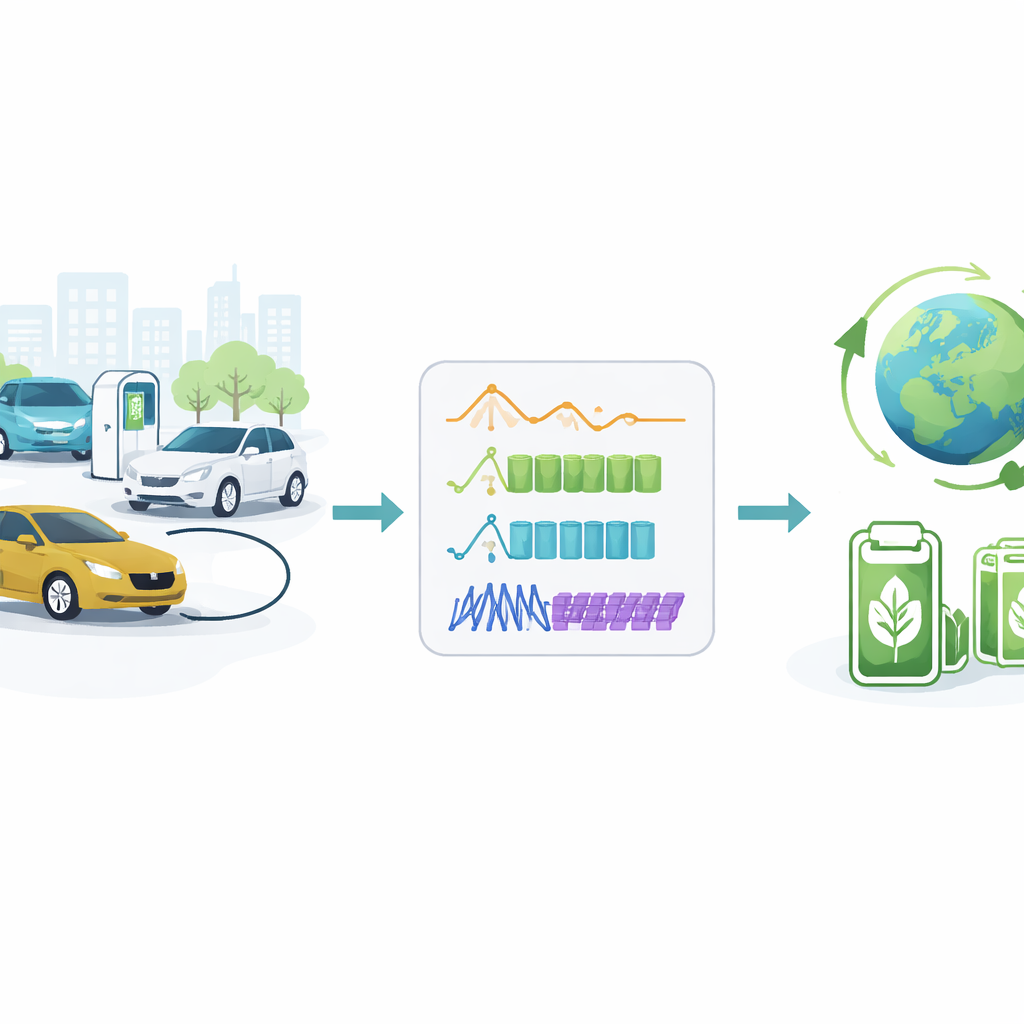
For many drivers, the appeal of an electric car is simple: quiet rides, low fuel costs, and cleaner air. But all of this depends on a hidden workhorse—the lithium‑ion battery. As these batteries age, driving range shrinks, charging takes longer, and replacement can be expensive and resource‑intensive. This paper explores a new way to “listen” to what is happening inside electric‑vehicle batteries using advanced pattern‑recognition tools. The goal is to predict battery health more accurately, using less computing power, so cars stay safer on the road for longer while supporting global clean‑energy goals.
How Electric Car Batteries Wear Out
Every trip in an electric car means thousands of tiny chemical reactions inside its battery. Over time, repeated charging and discharging, temperature swings, and side reactions slowly eat away at the battery’s ability to store and deliver energy. Drivers notice this as reduced range and weaker performance. Engineers track a measure called “state of health,” which compares today’s battery capacity to what it could deliver when brand new. Knowing this number accurately lets cars warn drivers about remaining life, schedule maintenance in advance, and even decide when a battery is better reused in a second‑life role, such as home energy storage, instead of being scrapped.
Listening to Hidden Signals Inside the Battery
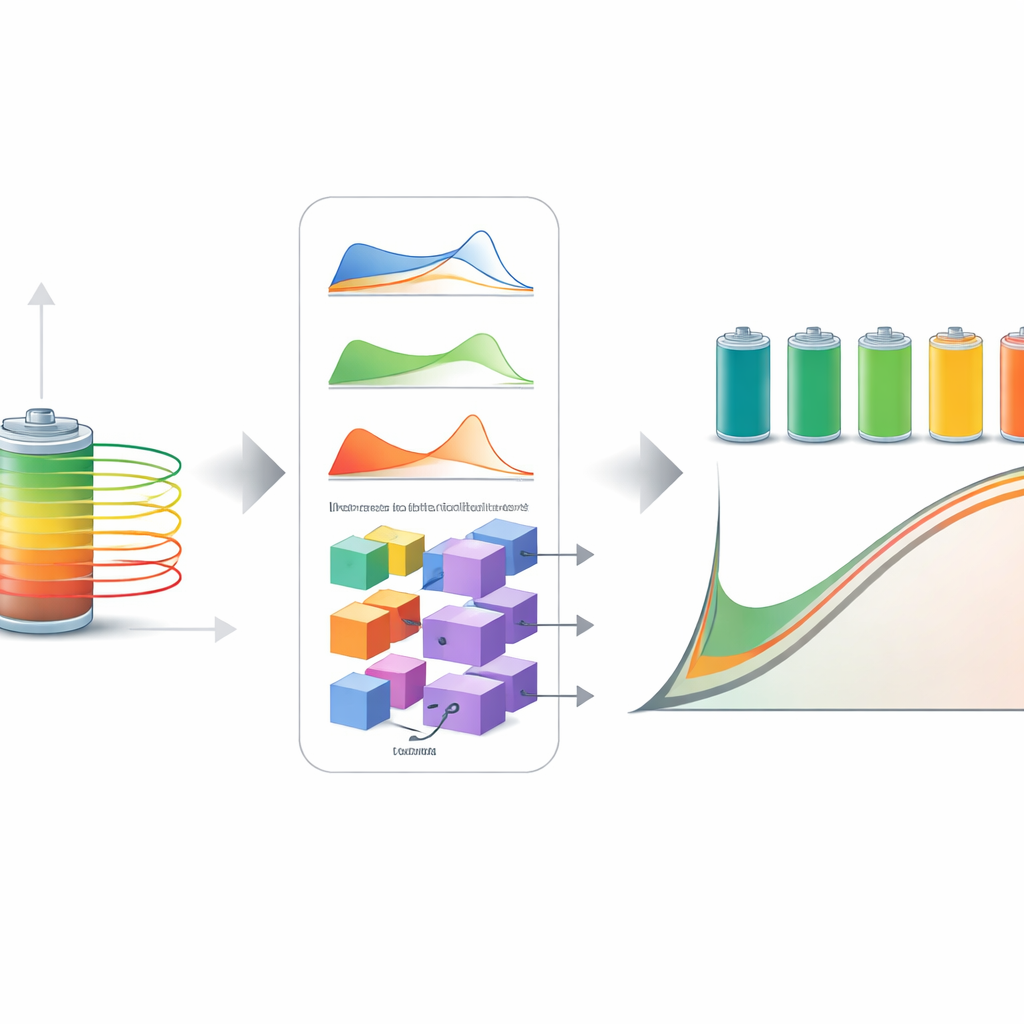
Modern batteries are already packed with sensors that record voltage, current, temperature, and how much charge flows in and out. Rather than adding expensive new hardware, the authors focus on squeezing more insight out of these familiar signals. They transform the raw measurements into three kinds of “fingerprints” that reveal subtle aging: how capacity changes with voltage, how voltage changes with charge, and how current reacts to voltage. As a battery wears down, peaks in these curves shift, broaden, or fade—signs of rising internal resistance, loss of active material, and other wear processes. The challenge is that these signatures are noisy, vary between battery types, and change slowly over thousands of cycles.
Teaching a Compact Neural Network to Read Battery Health
To decode these fingerprints, the researchers design a streamlined deep‑learning model that can run on the modest computers inside a car. First, they carefully clean and align data from more than 10,000 charge–discharge cycles taken from three major public battery datasets. Then they feed the three diagnostic curves into a layered network that combines several strengths: convolutional layers to spot local shapes in the curves, temporal layers to capture long‑term trends over many cycles, and memory units that track how degradation unfolds over time. An attention module helps the model focus on the voltage regions that matter most for aging instead of being distracted by noise or less informative segments.
Outperforming Heavier Models With Less Energy Use
When tested against well‑known approaches—such as traditional machine‑learning methods, simpler neural networks, and Transformer‑style sequence models—the new framework predicts battery health with higher precision. On the main NASA dataset, its estimates match measured health values so closely that the typical error is about two percent of capacity, and more than nine out of ten predictions fall within one and a half percent of the true value. Crucially, the model achieves this with only about a third of a million adjustable parameters, far fewer than many recent deep‑learning designs. That compact size translates into quicker responses—on the order of a few milliseconds per prediction—and roughly a quarter less energy used per calculation compared with bulkier architectures, making it practical for real‑time use in on‑board battery management systems.
Building Trust Through Transparent Patterns
Because safety is central in electric vehicles, the authors go beyond accuracy and examine what their model is “looking at” when it judges battery health. By visualizing internal attention weights and related tools, they find that the network naturally concentrates on voltage ranges known from electrochemistry to be sensitive to aging, rather than on arbitrary parts of the signal. This alignment with physical understanding helps build confidence that the predictions are not just numerical tricks. The team also checks how well the model adapts to different battery chemistries and test conditions, showing that a network trained on one dataset can still perform strongly on others with only a slight drop in accuracy.
What This Means for Clean and Affordable Travel
In plain terms, the study shows that a thoughtfully engineered, lightweight neural network can act as an early‑warning system for battery health without demanding supercomputer‑level resources. By giving car makers and grid operators a clearer picture of how batteries age in real time, such tools can extend battery lifetimes, reduce unnecessary replacements, and support safe second‑life uses. That means fewer raw materials mined, less electronic waste, and more reliable electric vehicles—all of which feed directly into broader efforts to make energy systems cleaner, more efficient, and more affordable worldwide.
Citation: Rahman, T., Deb, N., Moniruzzaman, M. et al. Deep learning-based battery health prediction for enhancing electric vehicle performance. Sci Rep 16, 9871 (2026). https://doi.org/10.1038/s41598-026-39911-8
Keywords: electric vehicle batteries, battery state of health, deep learning diagnostics, sustainable mobility, energy storage lifespan