Clear Sky Science · en
Evaluation of cerebral blood flow and glymphatic function in acute mountain sickness by MRI ASL and DTI ALPS
Why High Places Can Make Your Head Hurt
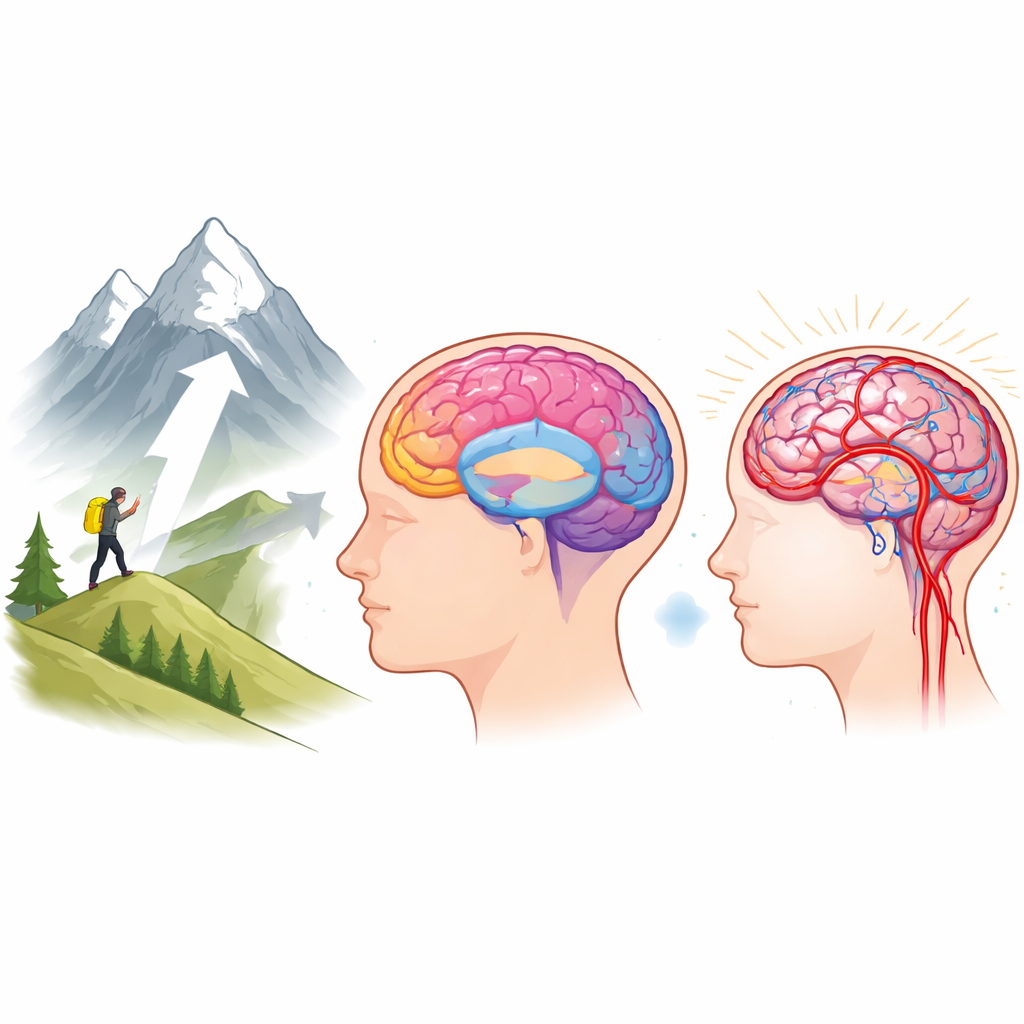
Anyone who has climbed a tall mountain or flown to a high plateau knows the strange mix of awe and discomfort that thin air can bring—pounding headaches, nausea, dizziness, and crushing fatigue. This study asks what is actually happening inside the brain during acute mountain sickness, a common high-altitude illness. Using advanced MRI scans, the researchers look at both how blood flows through the brain and how the brain’s own “cleaning system” clears out fluid and waste, to better understand why some people get sick while others feel fine in the same environment.
The Brain’s Hidden Cleaning Network
In recent years, scientists have discovered a remarkable housekeeping system in the brain, often called the glymphatic system. It uses channels that run alongside blood vessels to move clear fluid in and out of brain tissue, washing away metabolic waste. In this study, the team used a special MRI-based method, called DTI-ALPS, that tracks how water molecules move along these perivascular spaces, providing an indirect measure of how well this cleaning network is working. They focused on people who had rapidly traveled to high-altitude regions above 2,500 meters, where the air is low in oxygen and the risk of acute mountain sickness is high.
Who Was Studied and How
The researchers recruited 41 right-handed adults who developed symptoms after climbing rapidly to high altitude. Based on an established questionnaire—the Lake Louise Score—they were divided into two groups: 21 people with acute mountain sickness and 20 without it. Everyone underwent two types of MRI. One measured water movement in the brain’s white matter to estimate glymphatic activity, and the other, called arterial spin labeling, measured how much blood was flowing through specific brain regions, including the frontal and temporal lobes, hippocampus, and corpus callosum. The scans were analyzed in a standardized way, and the radiologists interpreting them did not know which participants were sick.
Cleaning Function Tied to How Bad You Feel
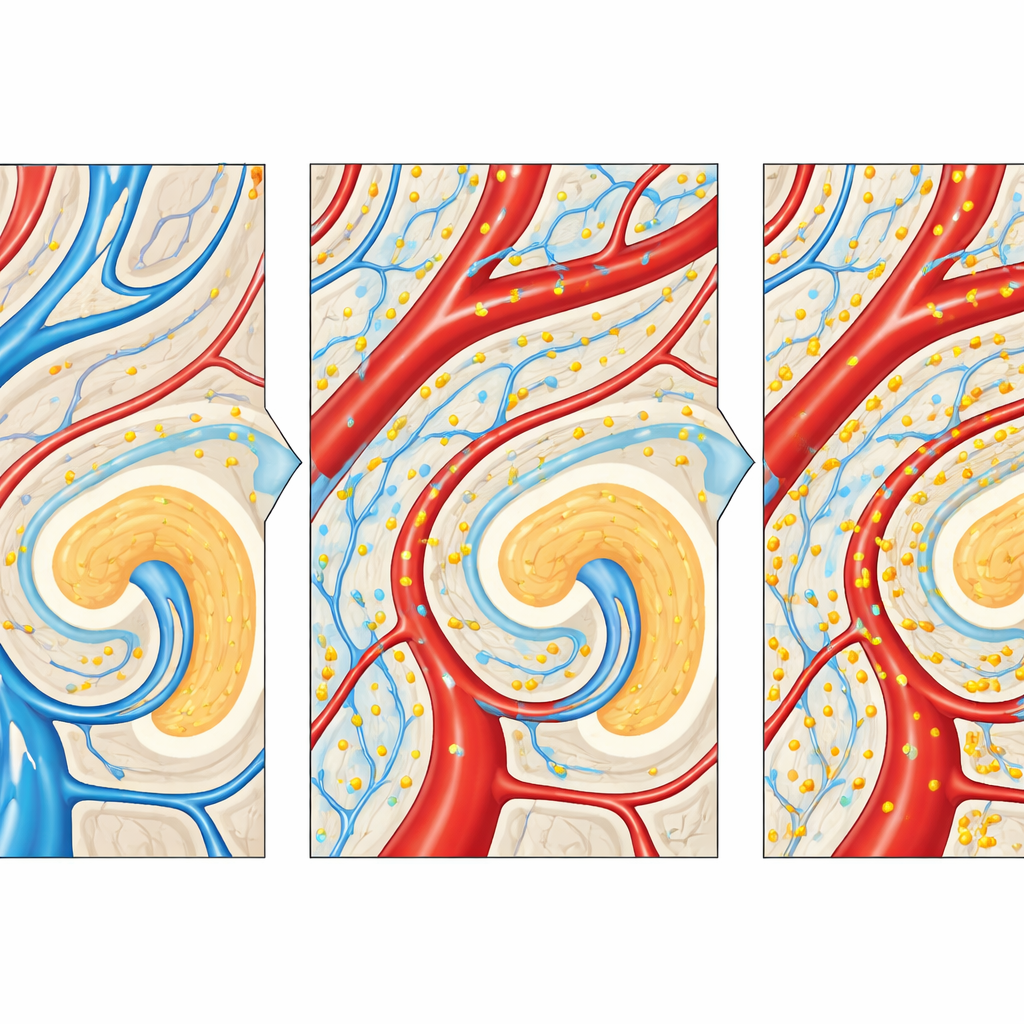
When the team compared average glymphatic measures between the sick and non-sick groups, they did not find a clear-cut difference. However, a more subtle pattern emerged: across all participants, those with worse symptoms tended to have lower glymphatic activity. In other words, as headache, dizziness, and other complaints intensified, the brain’s apparent ability to move fluid along its tiny channels declined. This suggests that even if the cleaning system is not dramatically different on average between groups, small changes in its function may still be closely linked to how badly a person feels at altitude.
Blood Flow Surges in Key Brain Areas
The story was different for blood flow. People with acute mountain sickness showed clearly higher blood flow in wide areas of the brain, including the cerebral cortex, deep white matter, temporal and frontal lobes, and both hippocampi. The corpus callosum—the thick fiber bundle connecting the two hemispheres—also had more blood flow in sick participants, and this increase showed a modest positive link with symptom scores. At the same time, the time it took blood to reach these areas did not change significantly, suggesting that the brain was truly being over-perfused rather than just receiving blood more slowly. Such hyperperfusion, especially when combined with limited drainage at high altitude, may contribute to swelling and increased pressure inside the skull.
What It All Means for High-Altitude Travelers
Together, these findings paint a picture of the brain under stress at high altitude: blood vessels open wide to bring in more oxygen, but this surge in flow may outstrip the brain’s ability to drain fluid and clear waste through its glymphatic network. The result may be subtle swelling, inflammation, and discomfort that show up as headache, nausea, and fatigue—hallmarks of acute mountain sickness. While the study is relatively small and cannot yet define who will get sick, it highlights two promising MRI-based markers: elevated blood flow in certain brain regions and reduced efficiency of the brain’s cleaning system. In time, this kind of imaging could help identify people at higher risk and guide strategies—such as safer ascent profiles, better sleep, or medications targeting fluid balance—to make high places safer for everyone.
Citation: Guo, Y., Wen, S., Tao, T. et al. Evaluation of cerebral blood flow and glymphatic function in acute mountain sickness by MRI ASL and DTI ALPS. Sci Rep 16, 11788 (2026). https://doi.org/10.1038/s41598-026-39900-x
Keywords: acute mountain sickness, high altitude brain, cerebral blood flow, glymphatic system, MRI perfusion