Clear Sky Science · en
Role of the ABCG2 transporter in the biodistribution of the food-borne uremic toxin p-cresyl sulfate
Why this food-borne toxin matters
What we eat does not just feed us; it also feeds the trillions of microbes in our gut. As they digest food, these microbes make small chemicals that can slip into our bloodstream and affect organs throughout the body. One of these chemicals, called p-cresyl sulfate, has been linked to kidney and heart disease and can even change the taste of milk. This study asks a simple but important question: how does the body control where this toxin goes, and what role does a single “gatekeeper” protein, known as ABCG2, play in keeping it in check?
From dinner plate to toxin in the blood
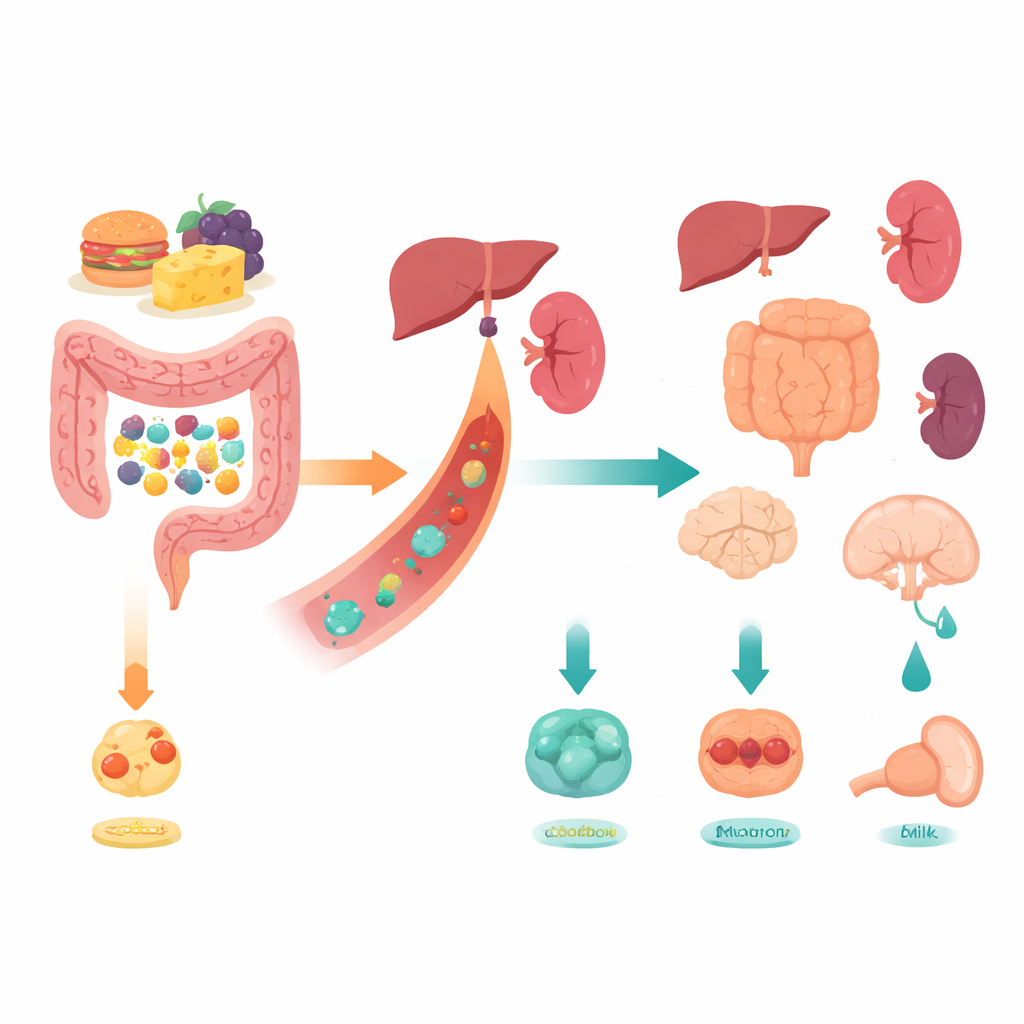
p-Cresyl sulfate begins its journey with common dietary building blocks, the amino acids tyrosine and phenylalanine. Bacteria in the colon convert these into p-cresol, which our own cells then modify into p-cresyl sulfate before it enters the bloodstream. In healthy kidneys, this compound is filtered out into the urine, and in farm animals it can also end up in milk, changing its flavor. When the kidneys are damaged, however, p-cresyl sulfate builds up in the blood and tissues, where it can trigger inflammation, oxidative stress, and injury in organs such as the kidneys, liver, blood vessels, and heart. Understanding how the body moves this toxin around is therefore vital for both human health and food quality.
The body’s toxin pump under the microscope
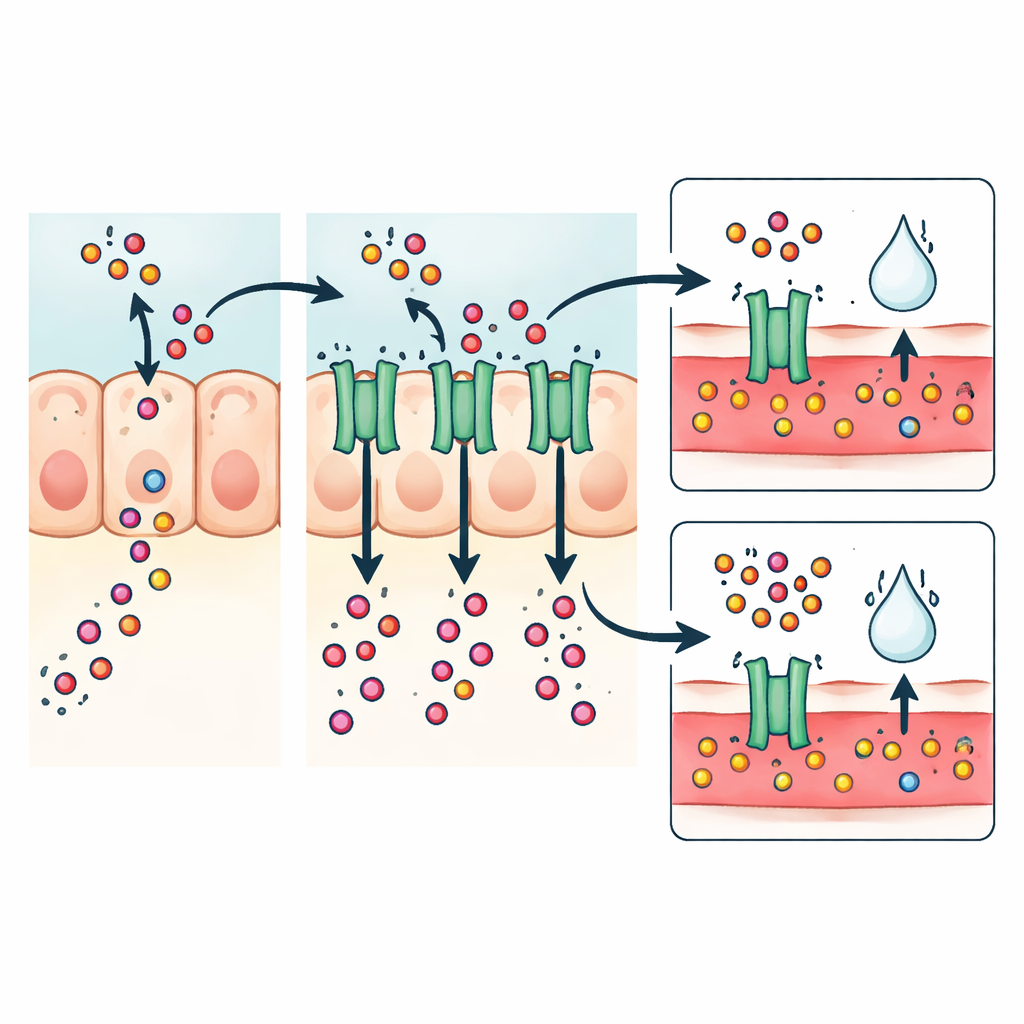
The ABCG2 protein acts like a tiny pump in the outer membrane of many cells, including those in the gut, liver, kidney, protective barriers, and the milk-producing mammary gland. It uses energy to push a wide variety of drugs and natural compounds out of cells, shaping how long they stay in the body and where they end up. Earlier hints suggested that p-cresyl sulfate might be one of its cargoes, but this had not been fully tested, especially in living animals. The researchers first grew kidney-derived cells in dishes and engineered them to produce ABCG2 from mouse, human, sheep, or cow. They found that, unlike its parent compound p-cresol, p-cresyl sulfate was efficiently pumped from the inner to the outer side of the cell layer by every version of ABCG2 tested, and this movement stopped when they used a specific blocker of the pump. These results showed that p-cresyl sulfate is a direct and effective cargo of this transporter.
Following the toxin through the body
To see what happens inside a living organism, the team studied normal mice and mice genetically engineered to lack ABCG2. They gave both groups p-cresol by mouth and then measured how much p-cresyl sulfate appeared in blood and organs. In males without the transporter, blood levels of p-cresyl sulfate rose higher and stayed elevated longer, and the overall exposure over four hours was about one and a half times that of normal mice. The toxin also accumulated more in several organs where ABCG2 is usually present, including liver, kidney, small intestine, spleen, and testis. At the same time, the contents inside the small intestine of normal mice contained more p-cresyl sulfate than those of the knockouts, suggesting that ABCG2 normally helps push the toxin back into the gut to be eliminated with feces.
From bloodstream to milk glass
The researchers then focused on milk, since p-cresyl sulfate is a major flavor-active compound in ruminant milk. In lactating female mice, blood concentrations of the toxin were similar whether or not ABCG2 was present, but its levels in milk told a different story. Milk from normal mothers carried more than three times as much p-cresyl sulfate as milk from mothers lacking the transporter, and the ratio of milk to blood levels was almost six times higher. Together with the cell culture experiments, this shows that ABCG2 is a key route by which p-cresyl sulfate is actively secreted into milk, where it can influence both flavor and potential exposure for nursing young or human consumers of animal milk.
What this means for health and food
By combining cell-based tests and mouse experiments, this study reveals ABCG2 as a central traffic controller for the food-derived toxin p-cresyl sulfate. When this pump works normally, it helps keep blood levels lower, limits buildup in organs, and channels the toxin out of the body through the intestine, kidneys, and milk. If the pump is weakened—by genetics, other drugs, diet, or disease—p-cresyl sulfate could accumulate more in tissues, potentially worsening kidney and cardiovascular damage and altering milk quality. In everyday terms, the work highlights how a single transport protein can shape the health impact of gut-derived chemicals, and suggests that future strategies to protect the kidneys or improve dairy products may need to consider not only our diet and microbiome, but also how well this microscopic pump is doing its job.
Citation: Millán-García, A., Álvarez-Fernández, L., Velasco-Díez, M. et al. Role of the ABCG2 transporter in the biodistribution of the food-borne uremic toxin p-cresyl sulfate. Sci Rep 16, 10126 (2026). https://doi.org/10.1038/s41598-026-39854-0
Keywords: p-cresyl sulfate, ABCG2 transporter, gut microbiota toxins, kidney health, milk quality