Clear Sky Science · en
Genome-wide association study of Mycoplasma anserisalpingitidis strains for antibiotic susceptibility
Why this tiny germ matters to farmers and beyond
Hidden in the throats and reproductive tracts of geese lives a tiny bacterium called Mycoplasma anserisalpingitidis. Most of the time it causes little trouble, but under stress it can trigger infertility, inflamed organs and serious losses for goose farmers. As vets turn to antibiotics to control these outbreaks, the microbe is gradually learning how to dodge our drugs. This study asked a simple but urgent question: which pieces of the bacterium’s DNA are tied to its ability to withstand treatment, and can those clues help us stay a step ahead of resistance?
Tracking illness in flocks
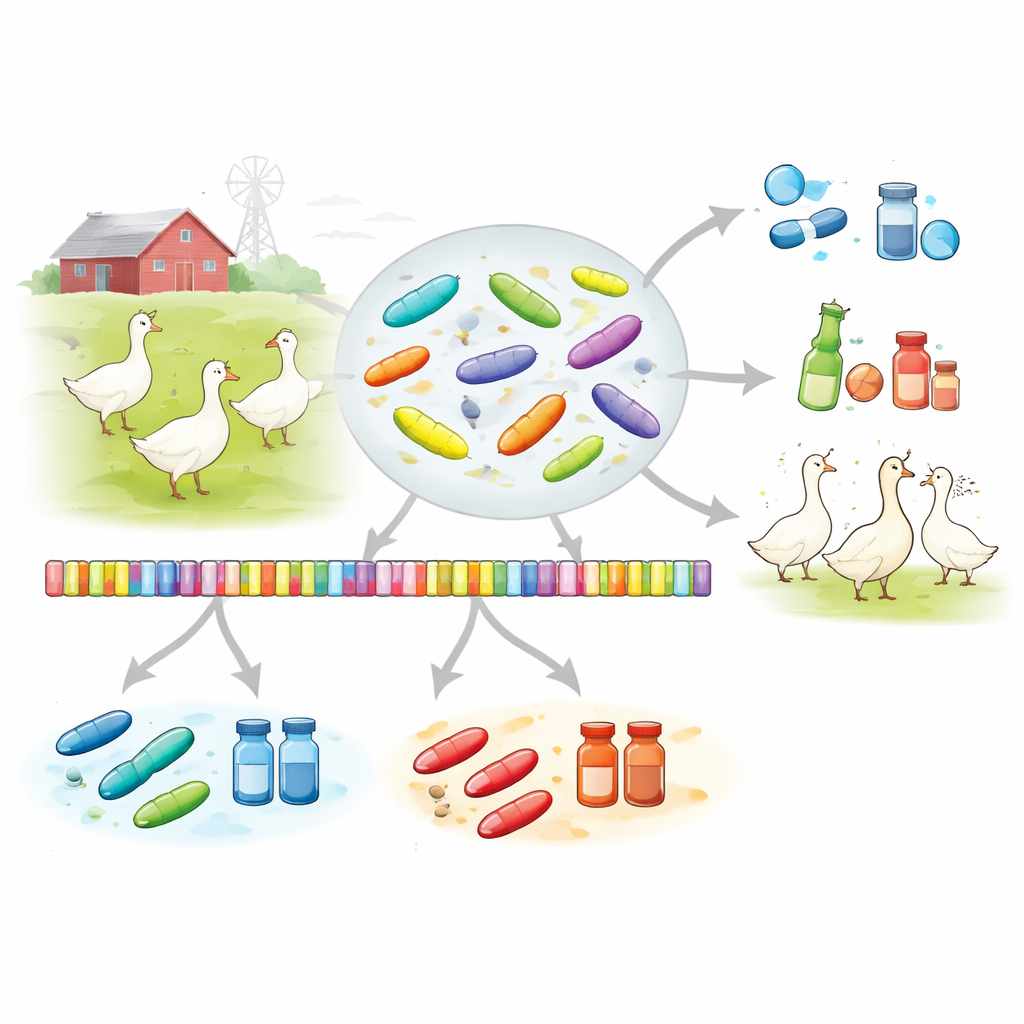
To explore this, researchers collected 110 bacterial strains from geese (and one duck) over several decades in Hungary, Poland, China and Vietnam. The samples came from many body sites, including the cloaca, reproductive organs, air sacs and lungs. In the lab, the team measured how much of nine different antibiotics was needed to stop each strain from growing, using a standard test that gradually increases drug levels in small wells. Some medicines, such as certain macrolides and tetracyclines, needed very high doses to curb growth in many strains, signaling reduced susceptibility. Others remained more effective but still showed worrisome variation from strain to strain.
Reading the microbe’s genetic playbook
Next, the scientists sequenced the full genomes of all strains, reading nearly a million DNA letters per genome with high accuracy and deep coverage. They then used a technique borrowed from human genetics called a genome-wide association study. Instead of looking for single, predefined mutations, they scanned for short DNA fragments that tended to appear in strains with higher or lower drug tolerance. This broad, agnostic sweep allowed them to catch both known and unexpected genetic features linked to resistance, including fragments sitting within genes, between genes or near switching regions that control when genes turn on.
Many small tricks, not one silver bullet
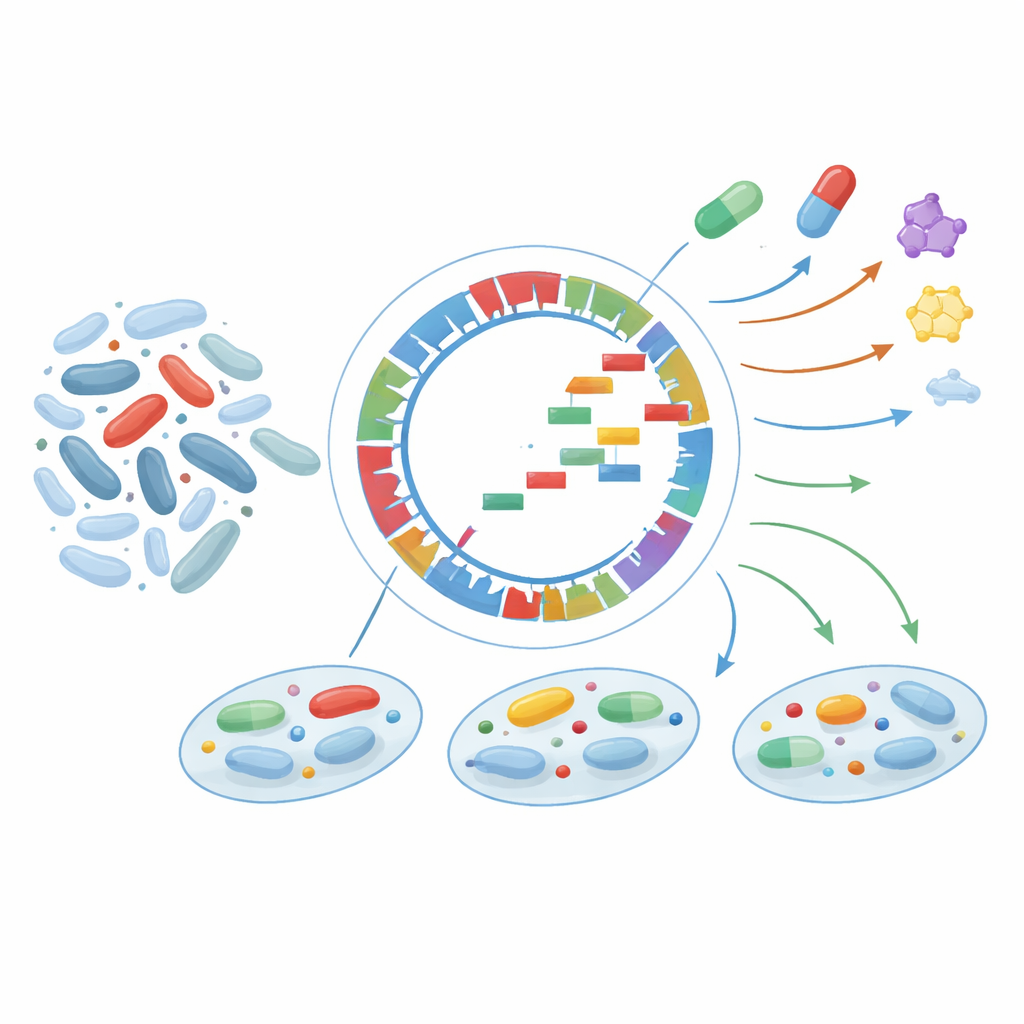
The scan revealed thousands of significant DNA fragments tied to susceptibility for five of the nine antibiotics tested: two macrolides (tilmicosin, tylvalosin), the lincosamide lincomycin, the fluoroquinolone enrofloxacin and the aminocyclitol spectinomycin. No strong signals emerged for tiamulin, tetracyclines or the macrolide tylosin, likely because resistance there is influenced by factors that this DNA-only method cannot easily detect. Among the hits, several groups of genes stood out. Many encoded transferases, especially methyltransferases, which can subtly modify DNA or drug targets and change how well antibiotics bind. Another large group consisted of efflux pump components—molecular “bouncers” that actively expel drugs from the bacterial cell, lowering their internal concentration. The study also found numerous genes involved in DNA repair and replication, as well as parts of the protein-making machinery, all of which can shape how a microbe responds to different antibiotic classes.
Hints of gene swapping and hidden pathways
Intriguingly, some resistance-linked DNA pieces mapped to regions previously identified as prophage-like—remnants of viruses that once infected the bacteria and left their genetic cargo behind. This suggests that gene swapping via such mobile elements may help spread resistance traits across bacterial lineages. The team also saw signals in genes with poorly understood or entirely unknown functions, and even in pathways like quorum sensing, which bacteria use to sense their own density. These unexplored areas hint that the bacterium may rely on a web of overlapping tricks—beyond the classic textbook mechanisms—to survive antibiotic attack.
What this means for future treatments
For non-specialists, the key message is that antibiotic resistance in this goose pathogen is not driven by a single “bad gene” but by many cooperating changes scattered across its compact genome. By mapping these changes, the study builds a catalogue of genetic markers that can be turned into faster DNA-based tests, helping vets choose effective drugs before resistance spreads through a flock. At the same time, the discovery of genes within viral remnants and unknown regions underscores that we still do not fully understand how this microbe escapes treatment. Continued work on these newly flagged genes and pathways could refine both farm management and antibiotic use, and may offer broader insights into how other animal and human pathogens evolve resistance.
Citation: Kovács, Á.B., Wehmann, E., Bekő, K. et al. Genome-wide association study of Mycoplasma anserisalpingitidis strains for antibiotic susceptibility. Sci Rep 16, 10306 (2026). https://doi.org/10.1038/s41598-026-39804-w
Keywords: antibiotic resistance, waterfowl health, bacterial genomics, veterinary microbiology, genome-wide association