Clear Sky Science · en
Determinants of adoption of climate-smart agriculture (CSA) practices in mushroom farming in Bangladesh
Why smart mushroom farming matters
Mushroom cultivation is becoming an important source of income and nutrition for families in Bangladesh, especially where land is scarce and jobs are limited. But shifting weather patterns, rising temperatures, and costly energy use threaten this promising enterprise. This study looks at which farmers are most likely to adopt “climate‑smart” ways of growing mushrooms—methods that save resources, protect the environment, and keep harvests reliable even as the climate changes. Understanding these patterns can help design training and support that reach the people who need them most.
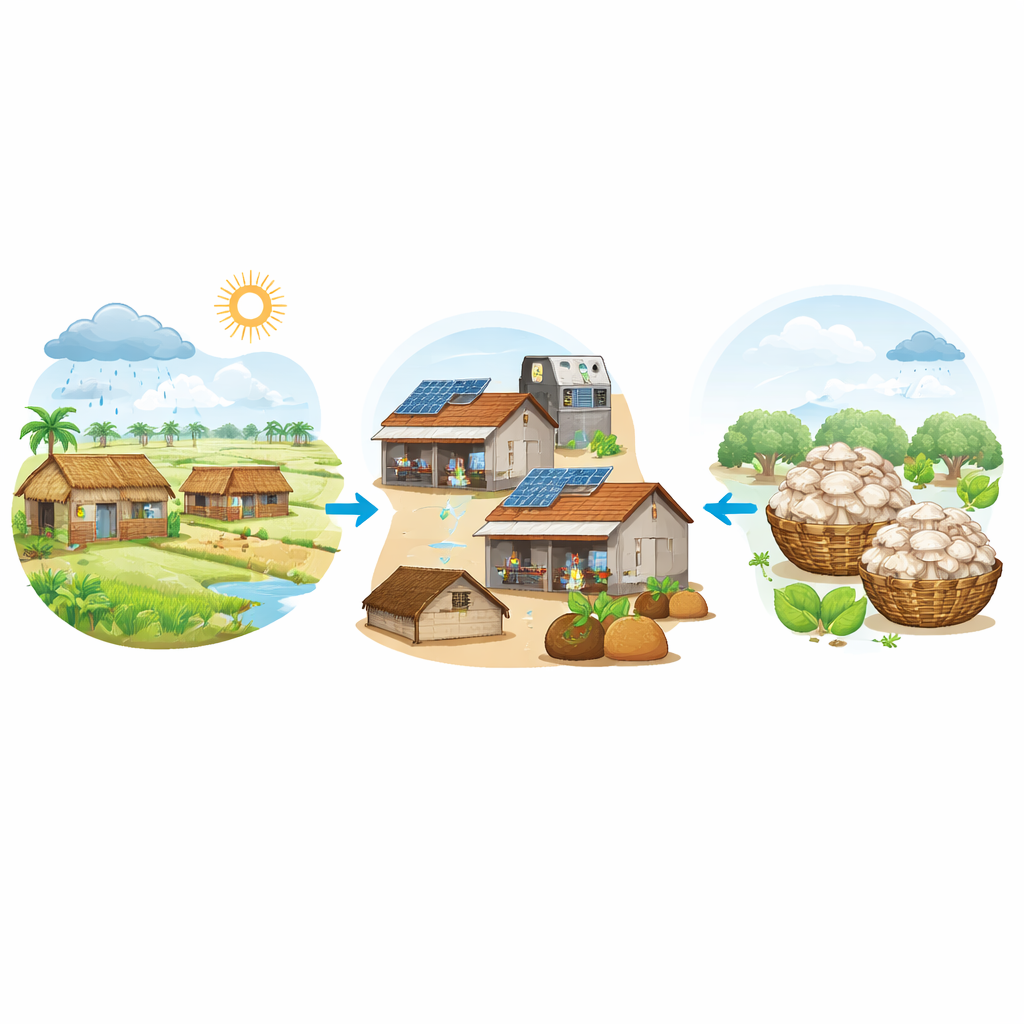
Growing food in a changing climate
Bangladesh is already feeling the effects of climate change, with hotter days, wetter monsoons, and drier dry seasons. Mushroom farming, which relies on carefully controlled temperature, humidity, and cleanliness, is particularly sensitive to these shifts. At the same time, conventional mushroom production can consume a lot of electricity and contribute to greenhouse gas emissions. Climate‑smart agriculture aims to raise yields, make farms more resilient to shocks, and cut pollution at the same time. For mushrooms, this includes using energy‑saving equipment, better varieties, organic inputs, and simple monitoring tools so farmers can respond quickly to changing conditions in their grow houses.
What farmers are actually doing
The researchers surveyed 150 mushroom farmers in Savar Upazila, one of Bangladesh’s main mushroom‑producing areas. They asked whether farmers used at least one climate‑smart practice, such as sterilizing growing media with an autoclave or electric steamer, choosing hardy and high‑yielding mushroom types, using organic fertilizer and compost made from sawdust or rice straw, installing solar panels, or relying on basic climate control tools like fans, misters, and sprinklers. Just under half of the farmers (48 percent) reported using at least one such practice. Low‑cost, low‑tech options—like high‑yielding varieties, organic fertilizer, and composted growing media—were far more common than expensive equipment such as automated sensors, air‑conditioning systems, or advanced monitoring devices.
Who leads the way in smart practices
To understand why some farmers adopt climate‑smart methods while others do not, the team combined traditional statistical approaches with modern machine‑learning tools. They found that a few simple traits consistently separated adopters from non‑adopters. Farmers with at least a secondary‑school education, those who owned the land where they grew mushrooms, and those who had received formal training in mushroom cultivation were all much more likely to use climate‑smart approaches. Prior awareness of climate‑smart ideas and regular access to weather and climate information were especially important: farmers who already knew about these practices, or who could easily obtain climate data, had several times higher odds of adopting them.
Money, information, and modern tools
Access to credit turned out to be another powerful driver. Farmers who could borrow money, or otherwise secure financing, were far better positioned to invest in improved facilities and equipment. When the researchers used a suite of nine machine‑learning models to predict which farmers would be adopters, the best‑performing systems confirmed the same story: knowledge about climate‑smart methods, climate information, land ownership, training, and credit access dominated the predictions. The algorithms also highlighted two additional factors—having internet access and understanding soil or substrate quality—as useful clues for identifying farmers likely to modernize their operations.
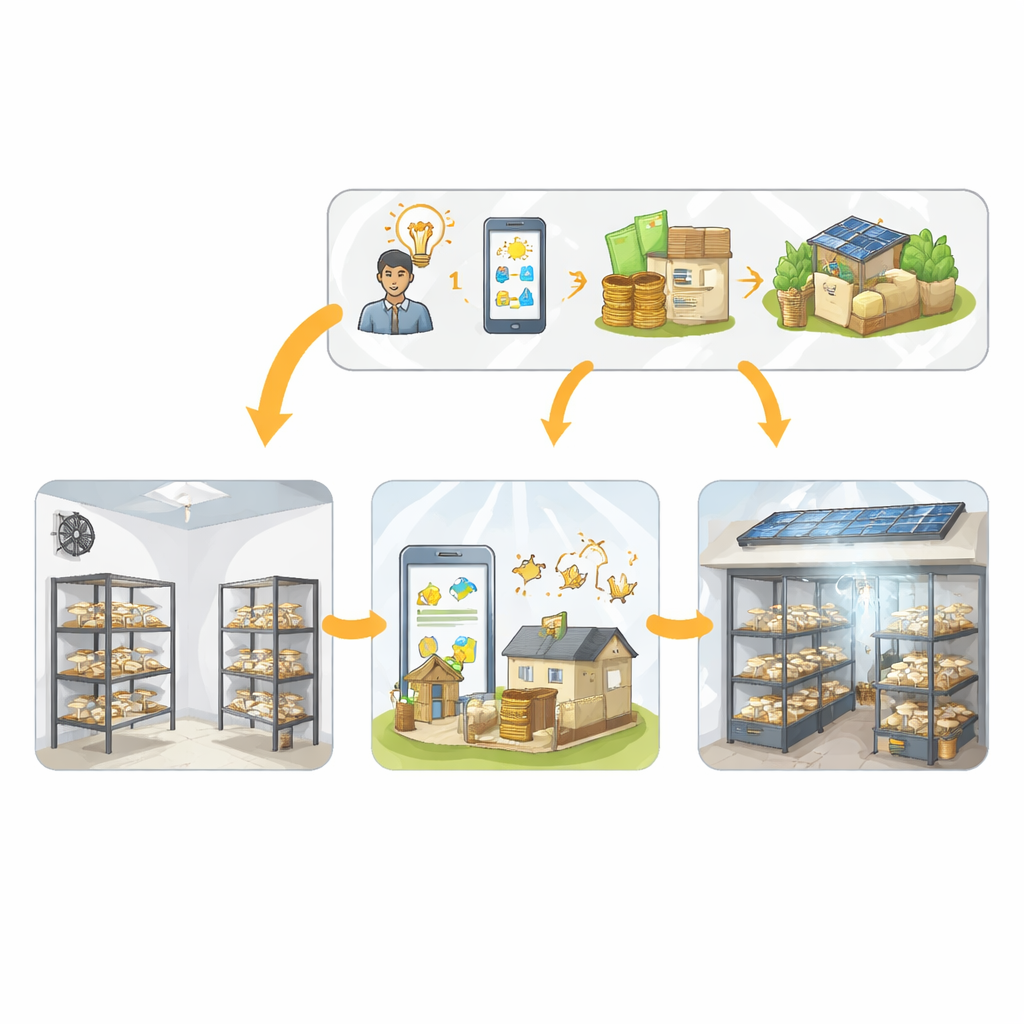
What this means for farmers and policy
For readers, the message is straightforward: climate‑smart mushroom farming is less about fancy gadgets and more about people having the knowledge, security, and modest resources needed to upgrade their practices. The study suggests that focused training programs, better delivery of local climate information, easier access to small loans, and stronger land rights could quickly expand the use of sustainable methods among mushroom growers. By investing in these enabling conditions, Bangladesh can help small farmers protect their livelihoods, produce more nutritious food, and reduce environmental impacts at the same time.
Citation: Haq, I., Rahman, M., Datta, T. et al. Determinants of adoption of climate-smart agriculture (CSA) practices in mushroom farming in Bangladesh. Sci Rep 16, 9942 (2026). https://doi.org/10.1038/s41598-026-39761-4
Keywords: climate-smart agriculture, mushroom farming, Bangladesh, smallholder farmers, machine learning