Clear Sky Science · en
Silver nanoparticles synthesized from Sempervivum tectorum leaf extract show antibacterial activity against canine Staphylococcus pseudintermedius
Why dog owners might care
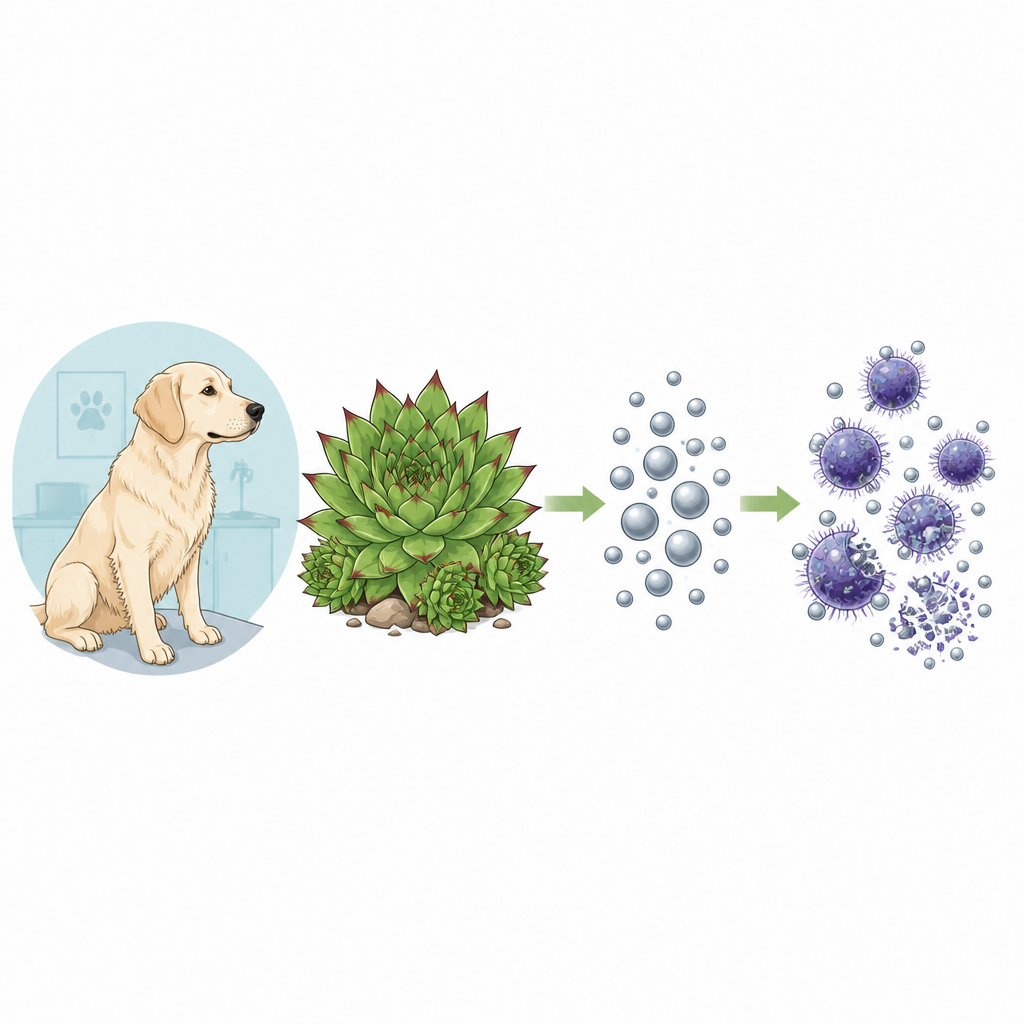
Skin and ear infections are among the most common reasons dogs visit the vet, and many of these infections are becoming harder to treat as bacteria outsmart standard antibiotics. This study explores whether tiny particles of silver made using an everyday garden plant, the houseleek (Sempervivum tectorum), could one day offer vets a new tool against stubborn bacteria that trouble dogs.
A common but tricky dog germ
The researchers focused on Staphylococcus pseudintermedius, a bacterium that normally lives on dogs but can cause itchy skin infections and painful ear disease. Around the world, many strains of this germ no longer respond well to multiple antibiotics, which worries both veterinarians and public health experts. Finding new ways to slow or stop these bacteria, especially methods that do not rely on familiar drugs, is an important goal in veterinary medicine.
Turning a hardy plant into tiny fighters
To build a possible new weapon, the team turned to Sempervivum tectorum, a succulent long used in folk remedies. They prepared a leaf extract with water and ethanol and mixed it with a simple silver salt solution. With gentle heating, natural chemicals in the plant helped transform silver ions into solid silver nanoparticles while also coating and stabilizing them. The resulting particles were mostly small, round, and crystalline, ranging from about 10 to 60 billionths of a meter across, depending on how concentrated the plant extract was. Higher extract levels produced smaller nanoparticles, a relationship confirmed by several physical measurements and statistical tests.
Testing the power against dog bacteria
The scientists then tested how well these plant-made silver particles could stop S. pseudintermedius collected from dogs, including a standard laboratory strain and several clinical isolates. In plate tests, drops of nanoparticle solution created clear circles where bacteria could not grow, with larger circles at higher nanoparticle concentrations. At the two strongest levels, the size of these clear zones closely matched those produced by a reference antibiotic, norfloxacin. More precise tests measured the lowest nanoparticle amounts needed to halt growth or kill the bacteria outright. These values fell in a range similar to those reported in other studies of silver nanoparticles, showing that the particles were active but generally required higher doses than standard antibiotics.
How small particles may damage germs
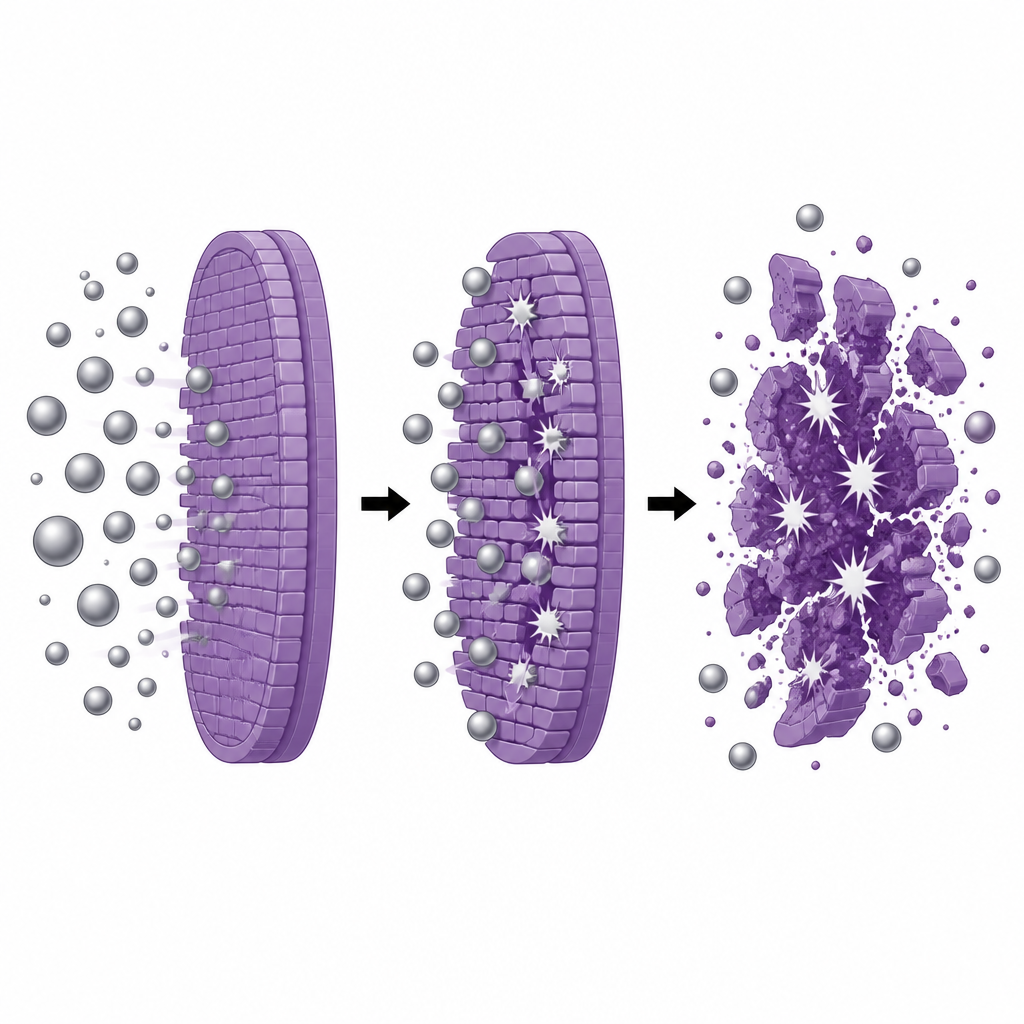
The study and earlier work suggest that these silver nanoparticles attack the bacteria in several ways at once. Because they are so small, they can stick to the bacterial surface and slip through the thick cell wall. Once there, they are thought to trigger the production of reactive oxygen molecules and interfere with vital proteins and genetic material. The plant chemicals clinging to the surface of each particle may make them more stable in liquid and help them interact more efficiently with bacterial membranes. Time-based tests showed that, at suitable doses, the nanoparticles could reduce live bacterial counts to undetectable levels within 6 to 14 hours, with no return of growth over a full day.
What this could mean for future dog care
The authors conclude that silver nanoparticles made using Sempervivum tectorum extract can reliably slow and kill S. pseudintermedius in the laboratory and that higher concentrations perform about as well as a modern antibiotic in simple plate tests. For dog owners, this does not yet translate into a new medicine, because the work was done only in test tubes and on a small set of bacterial strains. Before any practical use, researchers must confirm safety for canine skin and ears, understand how these particles behave in living animals, and check that they do not cause unwanted environmental effects. Still, the results point to plant-guided silver nanoparticles as a promising platform for developing future non-antibiotic treatments for resistant infections in pets.
Citation: Dégi, DM., Lányi, K., Florea, T. et al. Silver nanoparticles synthesized from Sempervivum tectorum leaf extract show antibacterial activity against canine Staphylococcus pseudintermedius. Sci Rep 16, 15197 (2026). https://doi.org/10.1038/s41598-026-39749-0
Keywords: silver nanoparticles, Sempervivum tectorum, Staphylococcus pseudintermedius, canine skin infections, antibiotic resistance