Clear Sky Science · en
Ischemic stroke prediction model of sick sinus syndrome patients without atrial fibrillation: insights from atrial myopathy
Why heart rhythm problems matter for stroke risk
Most people know that an irregular heartbeat called atrial fibrillation can raise the risk of stroke. But many patients have a different heart rhythm problem, sick sinus syndrome, where the heart’s natural pacemaker beats too slowly or unevenly. These patients often have otherwise normal heart rhythms on standard tests, yet they may still suffer strokes with no obvious cause. This study asked a simple but important question: can we better predict which people with sick sinus syndrome, but without atrial fibrillation, are in danger of an ischemic stroke, so that doctors can protect them earlier?
A closer look at a hidden heart problem
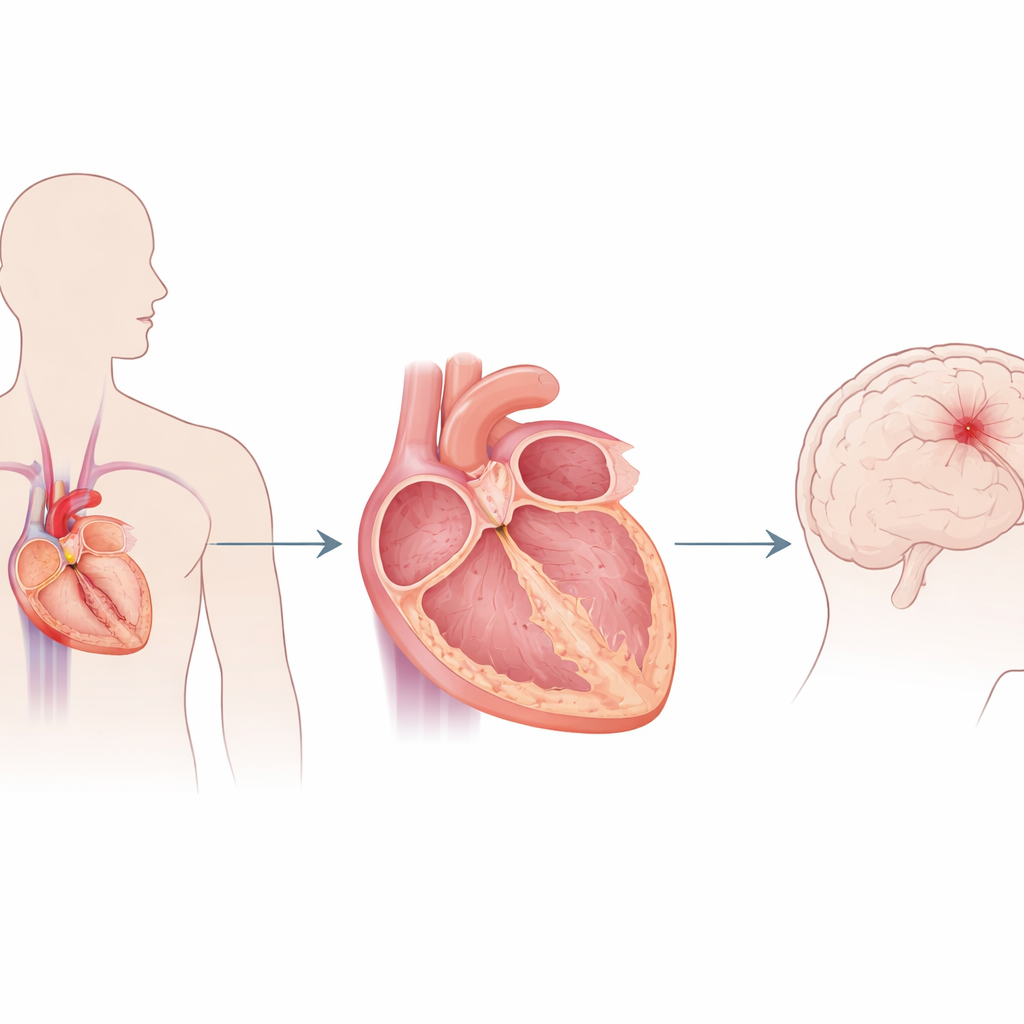
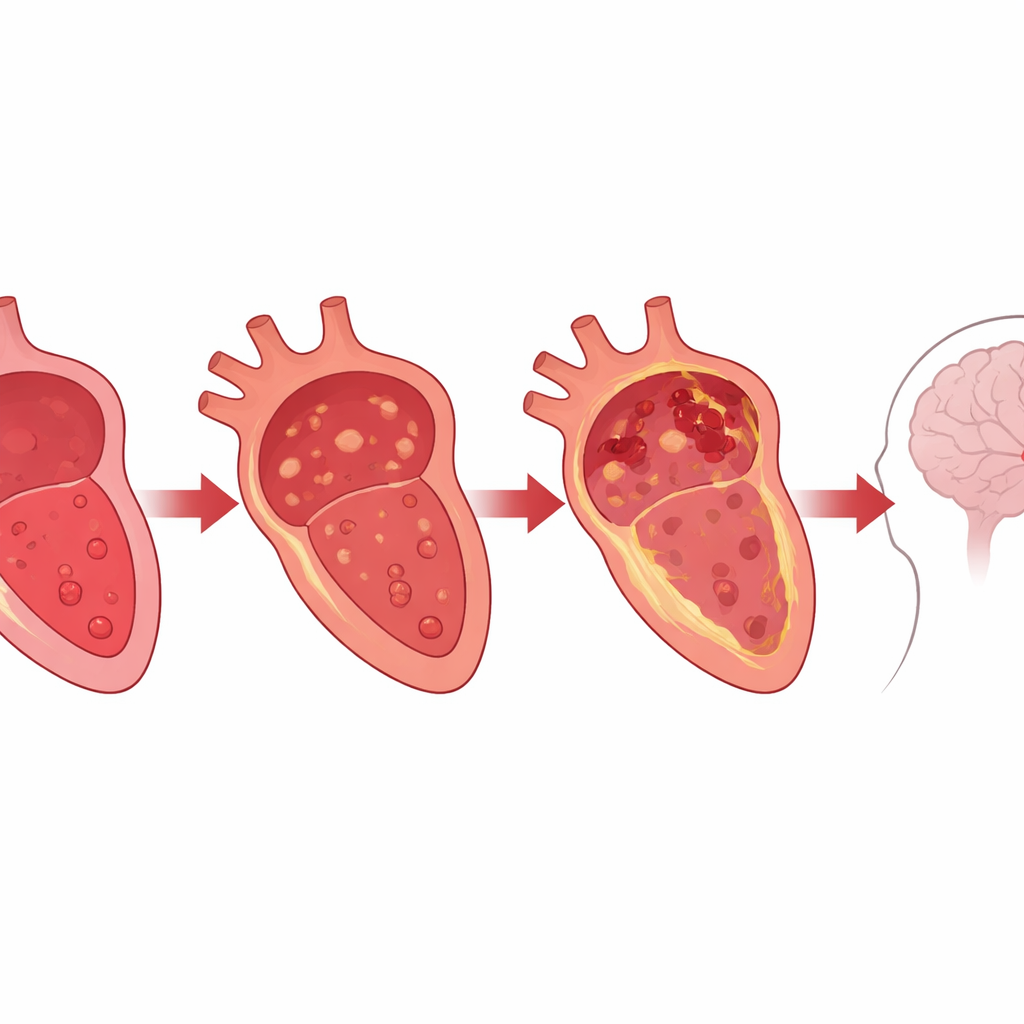
Sick sinus syndrome (SSS) is a collection of disorders affecting the sinus node, the small cluster of cells that sets the heart’s pace. People with SSS can have very slow heart rates, pauses, or swings between slow and fast rhythms. At the same time, scientists have begun to focus on “atrial myopathy” – subtle damage and scarring of the heart’s upper chambers that can disturb blood flow and encourage clot formation, even when the heartbeat appears regular. The authors suspected that in SSS patients, these hidden changes in the atria, rather than classic atrial fibrillation, might be the real link to stroke.
Following patients over time
The research team studied more than 2,000 people treated for SSS at a major heart center in China between 2011 and 2021. They excluded anyone who already had atrial fibrillation or flutter, and then carefully monitored the rest with repeated clinic visits, electrocardiograms, 48-hour Holter monitors, and device checks if they had pacemakers. Anyone who later developed atrial fibrillation or flutter during follow-up was removed from the analysis, so the focus stayed on patients with SSS but without this well-known rhythm problem. In the final group of 1,645 patients, the median follow-up was about three years, and nearly 12% suffered a symptomatic ischemic stroke, a rate high enough to cause serious concern.
Uncovering the strongest warning signs
To find the best predictors of stroke, the researchers examined many clinical factors: age, blood pressure, diabetes, prior clots, blood tests, heart imaging, and detailed measurements from electrocardiograms. Using statistical models that track the timing of events, they identified a small set of features that stood out. Older age increased risk. So did a larger left atrium, measured as left atrial diameter on echocardiography, and a prolonged P-wave duration on the ECG, which reflects slowed electrical conduction across the atrium. Episodes of non–atrial fibrillation atrial tachyarrhythmias (such as frequent extra beats or short runs of rapid atrial rhythm), a higher neutrophil-to-lymphocyte ratio (a simple marker of inflammation), and a history of previous stroke or other clots also signaled higher danger.
Building a practical stroke risk score
From these six features, the authors created a nomogram – a visual scoring tool that allows a doctor to assign points for each factor and then read off a patient’s estimated chance of remaining stroke-free over three, five, or ten years. They tested the tool by splitting the patients into a development group and a separate validation group. In both, the model could clearly distinguish between those who did and did not go on to have a stroke, with accuracy measures higher than 0.89, which is considered very strong. When compared with the widely used CHA2DS2-VASc score, the new SSS-focused model reclassified many patients more correctly, showed better agreement between predicted and observed stroke rates, and would offer greater net clinical benefit across realistic decision thresholds.
What this means for patients and doctors
For patients with sick sinus syndrome who do not have atrial fibrillation, this work shows that stroke risk is still substantial and not fully captured by traditional scoring systems. The study highlights that subtle structural and electrical changes in the atria, plus simple clinical history and routine blood tests, can together reveal which patients are silently moving toward a clot-related stroke. The new risk tool, if confirmed in other hospitals and populations, could guide closer monitoring, stronger lifestyle and risk-factor control, and perhaps earlier use of blood-thinning medications in selected high-risk individuals. In everyday terms, the message is that a “slow” or faulty natural pacemaker is not always benign, and careful assessment of the atria themselves may help prevent devastating strokes before they happen.
Citation: Yang, Y., Dong, H., Wang, S. et al. Ischemic stroke prediction model of sick sinus syndrome patients without atrial fibrillation: insights from atrial myopathy. Sci Rep 16, 12221 (2026). https://doi.org/10.1038/s41598-026-39742-7
Keywords: sick sinus syndrome, ischemic stroke, atrial myopathy, stroke prediction, heart rhythm