Clear Sky Science · en
Study of the effects of photoselective shades on growth quality, nutrient absorption and biochemical indices of Polianthes (Polianthes tuberosa L.)
Why growing flowers in a warming world matters
As heatwaves and droughts become more common, even tough garden plants can struggle. For flower growers, this is not just an aesthetic problem but an economic one: high temperatures and intense sunlight can spoil flower shape, color, and vase life. This study explores a simple but powerful idea—using colored shade nets that filter sunlight in different ways—to see how they change growth, nutrition, and internal chemistry in tuberose (Polianthes tuberosa), a popular fragrant cut flower.
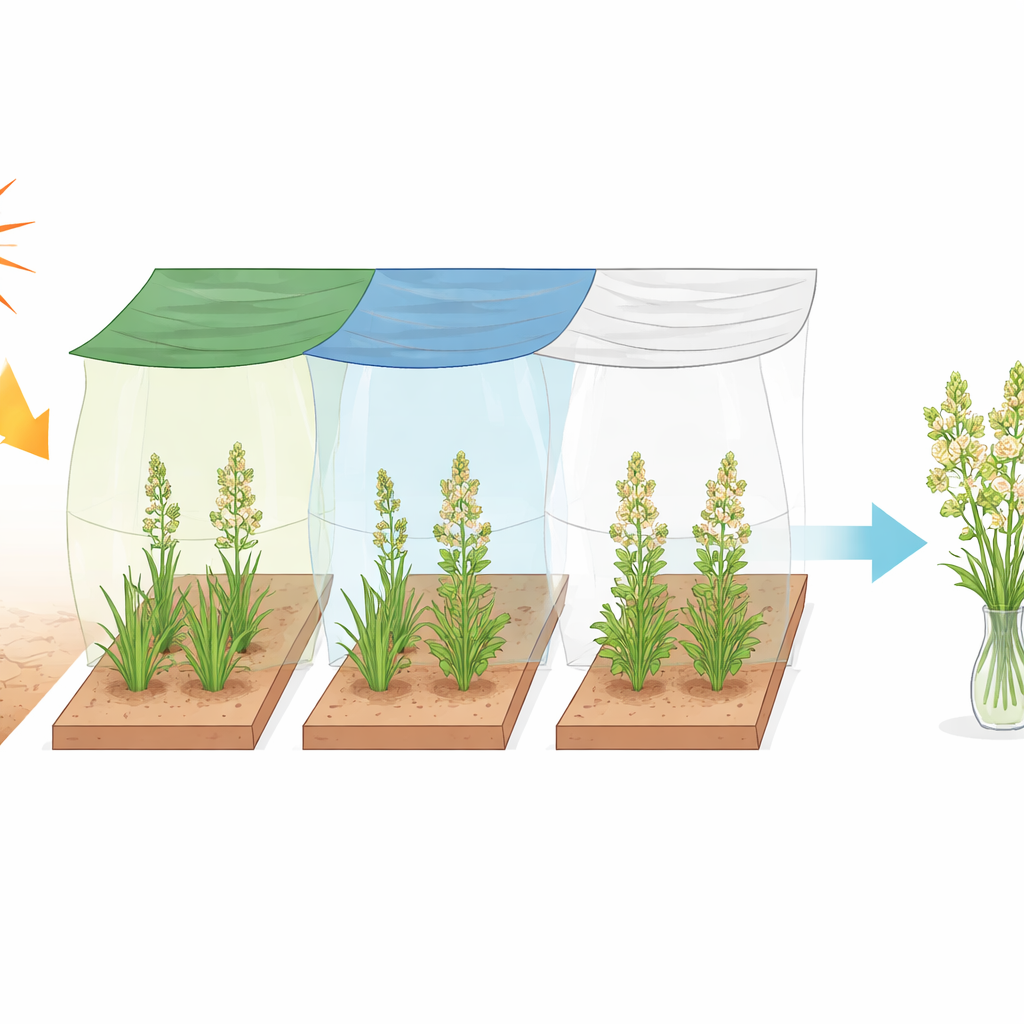
Colored roofs for delicate blooms
The researchers grew tuberose under three types of photoselective nets—green, blue, and white—that all cut light intensity by about half but altered the color mix of the light reaching the plants. A fourth group grew in full sun as a control. Over a 16‑week season on a research farm in Iran, they measured plant size, flower traits, leaf nutrients, and several biochemical markers linked to stress and photosynthesis. By comparing plants under each net color with those in open sun, they could tease apart how changes in light quality, not just light quantity, shape the plants’ performance.
How shade color changed plant shape
Surprisingly, the nets did not dramatically change stem thickness or overall spike length, although shaded spikes tended to be a bit shorter and sturdier—useful features for cut flowers that must travel and stand in vases. The most striking visual change was in flower size. All shaded plants produced larger individual florets than those in full sun, with green nets giving the biggest boost: flower diameter increased by about one‑fifth compared with unshaded plants. Blue nets encouraged broader leaves and greater leaf area, while green nets produced somewhat smaller leaves but still improved certain aspects of flower quality.
Feeding and protecting the plants from within
Shade nets did more than change how the plants looked; they also improved how the plants fed and defended themselves. Leaves under all three net colors contained more nitrogen, phosphorus, and especially potassium than those in full sun, suggesting healthier roots and better nutrient absorption. At the same time, pigments that power photosynthesis—chlorophylls and carotenoids—increased sharply under shade, particularly beneath white and green nets. These pigments help the plant capture light efficiently while also acting as shields against light damage. Under full sun, tuberose accumulated more proline, a compound plants stockpile when stressed. All net colors significantly lowered proline levels, signaling reduced stress. Another enzyme, peroxidase, which helps detoxify harmful oxygen by‑products, was more active under white and green nets but depressed under blue nets, hinting that some nets prime the plant’s protective systems more effectively than others.
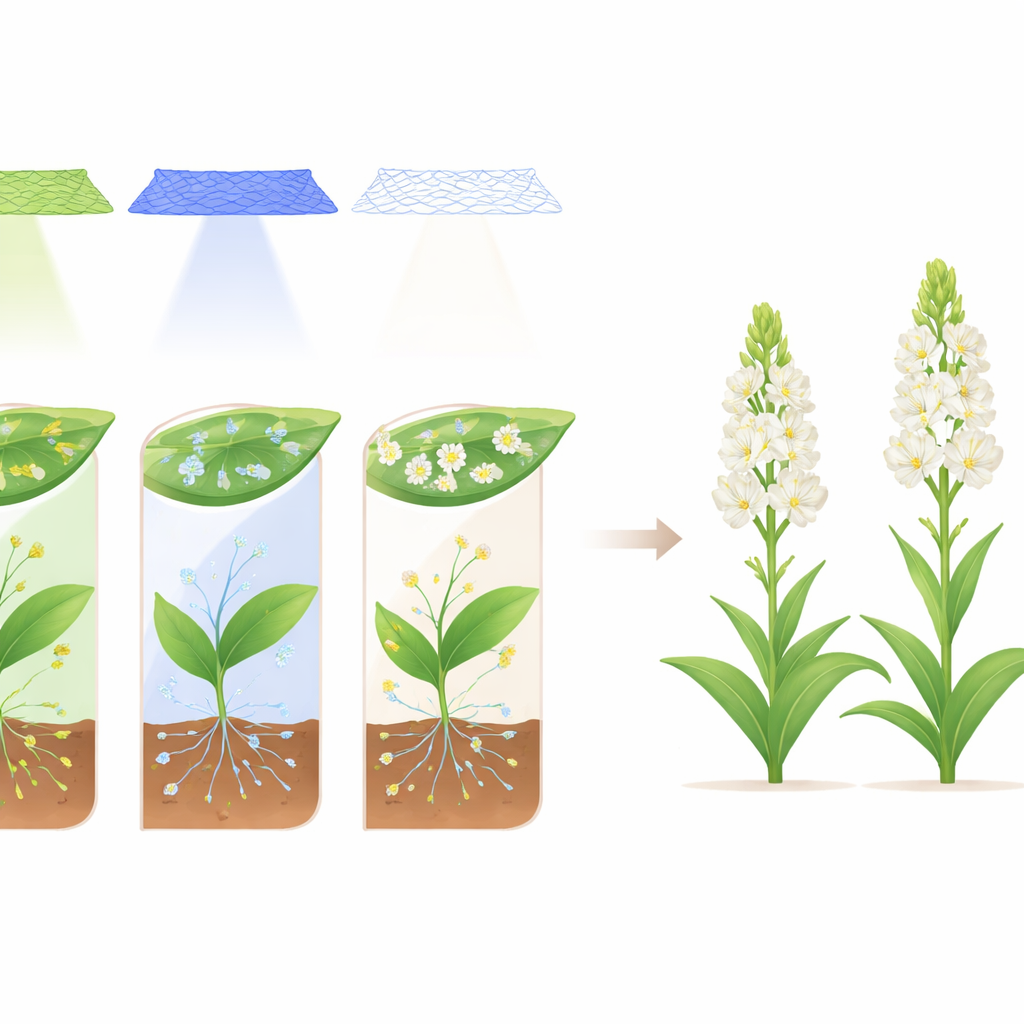
Connecting light, nutrients, and flower quality
When the researchers looked at all measurements together using multivariate statistics, clear patterns emerged. Plants under green nets clustered with traits linked to desirable cut‑flower quality: longer sub‑spikes that carry florets, larger flower diameter, higher pigment levels, and richer stores of nitrogen and potassium. Strong positive correlations among pigment content, nutrient levels, and spike traits showed that better light conditions under the nets supported a more powerful photosynthetic engine, which in turn fueled better flowering. Full‑sun plants, by contrast, emphasized vertical growth and dry matter build‑up, paired with higher stress markers, rather than optimal flower form.
What this means for growers and gardeners
In plain terms, the study shows that colored shade nets act like a “light recipe” for tuberose. Instead of simply dimming the sun, these nets fine‑tune the color mix of daylight in ways that influence how the plant grows, what nutrients it takes up, and how it handles stress. All three colors improved at least some aspects of flower quality and internal health compared with full sun, but green nets gave the best overall balance of larger, attractive flowers, enhanced nutrient content, and reduced stress signals. For commercial growers—and dedicated gardeners—this work suggests that choosing the right shade color can turn rising heat and harsh light from a threat into an opportunity to produce higher‑quality, more resilient blooms.
Citation: Edrisi, B., Khalaj, M.A., Esmaeili, S. et al. Study of the effects of photoselective shades on growth quality, nutrient absorption and biochemical indices of Polianthes (Polianthes tuberosa L.). Sci Rep 16, 10377 (2026). https://doi.org/10.1038/s41598-026-39714-x
Keywords: tuberose, shade nets, ornamental horticulture, light spectrum, flower quality