Clear Sky Science · en
Optimisation of verapamil hydrochloride loaded polyhydroxyalkanoate nano and microparticles using response surface methodology
Why tiny drug carriers matter
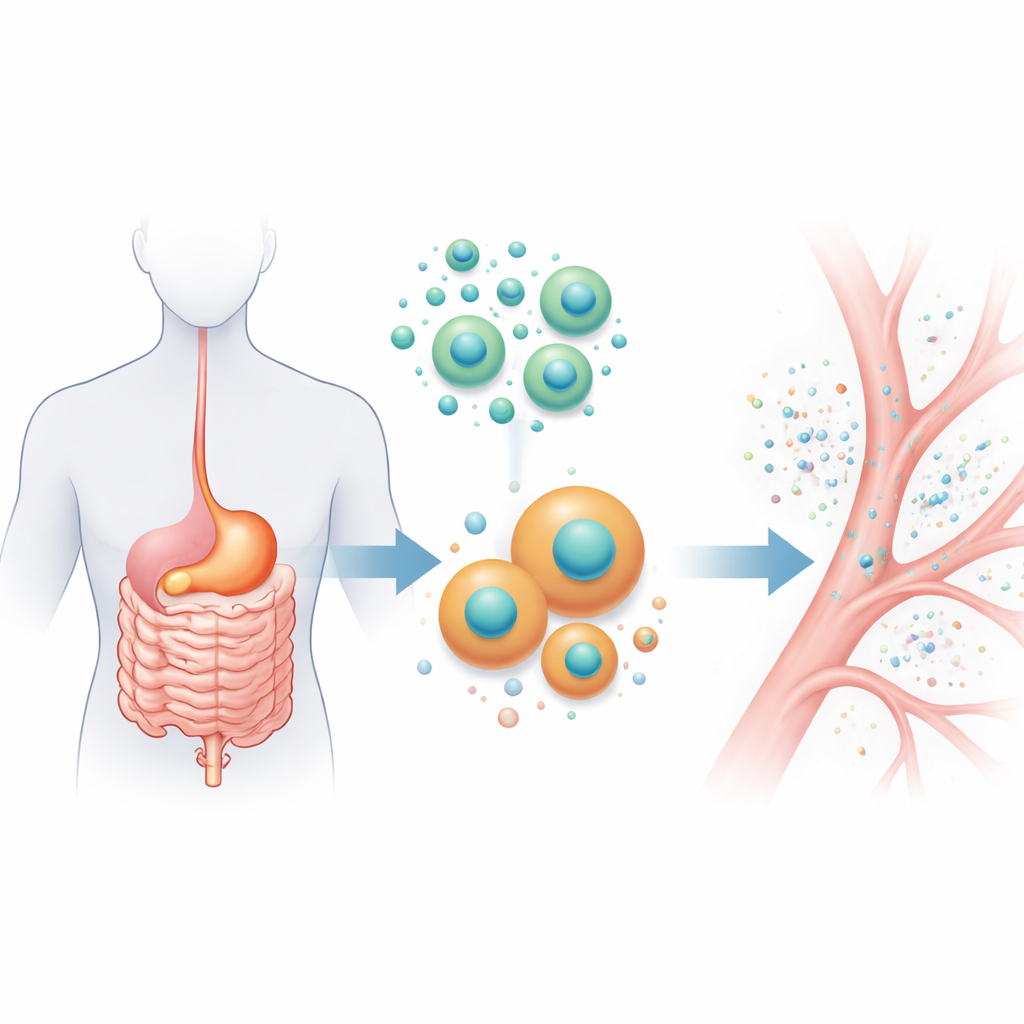
Many modern medicines work well in theory but struggle to reach the right place in the body at the right time. Verapamil, a common heart drug, is one such example: it is quickly absorbed in the gut, but most of it is broken down before it can help. This study explores how to package verapamil inside tiny biodegradable spheres made from natural bacterial plastics, so that the drug can be protected, carried, and released more predictably—potentially improving treatment while reducing side effects.
Turning bacterial plastic into smart medicine
The researchers focused on a family of materials called polyhydroxyalkanoates, or PHAs. These are natural plastics produced by bacteria as an energy store and are already known to be safe and biodegradable. In this work, the team engineered bacteria to make a special PHA that combines four slightly different building blocks. This blend gives the material a useful mix of flexibility, strength, and slow breakdown inside the body. Careful testing showed that the polymer was very pure, had the expected structure, and was free from fever-causing impurities, making it a promising base for medical use.
Designing nano and micro drug spheres
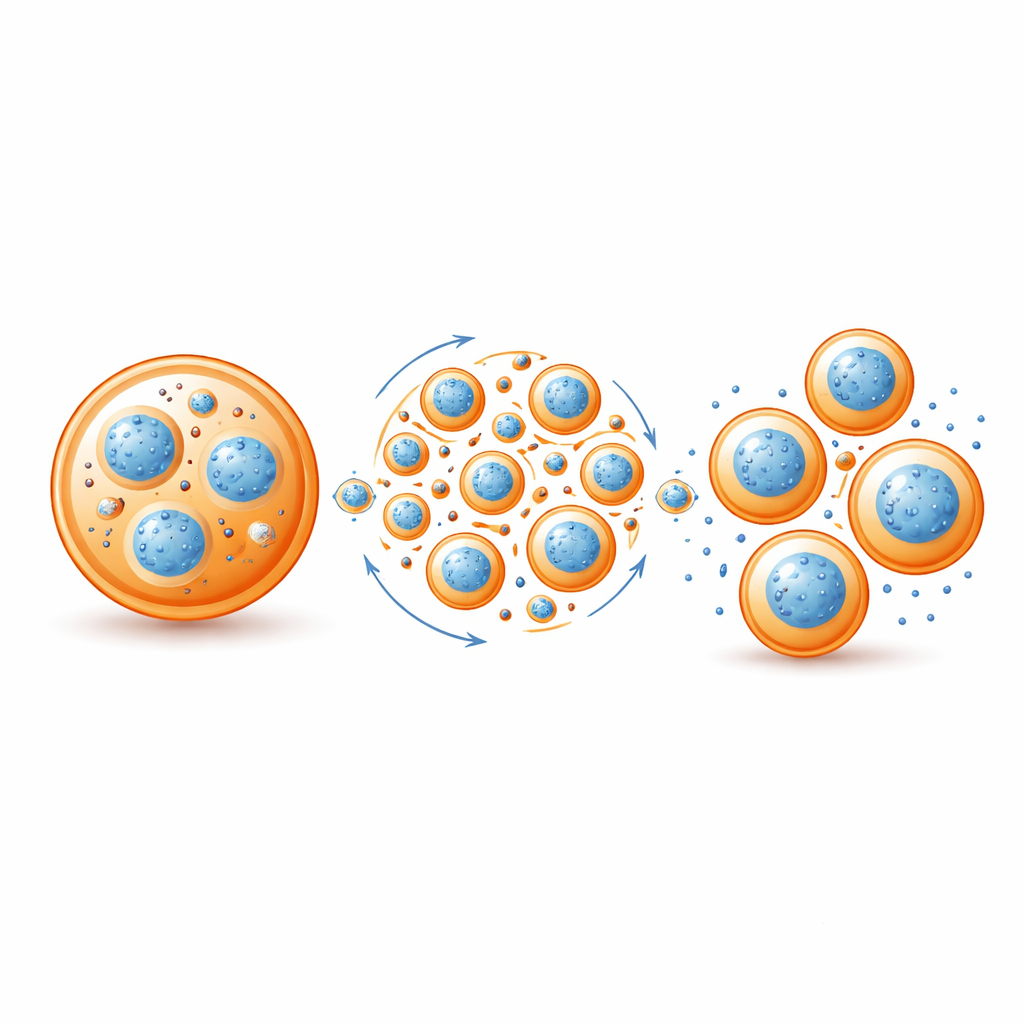
To turn this polymer into drug carriers, the scientists made two sizes of particles: nanoparticles hundreds of times smaller than a red blood cell, and microparticles about the size of fine dust. Both were produced using a "double emulsion" process, where water droplets containing dissolved verapamil are first trapped inside a cloud of polymer dissolved in an organic liquid, and this mixture is then dispersed again into water containing a stabilizing agent. As the organic liquid evaporates, solid spheres form with the drug locked inside. The team systematically varied three key ingredients—amount of polymer, amount of drug, and stabilizer concentration—to see how each affected particle size and how much drug ended up inside.
Using smart statistics to find the sweet spot
Instead of changing one ingredient at a time, the researchers used a statistical approach called response surface methodology. This allowed them to explore how the three formulation variables work together and to predict combinations that would give particles of the right size with good drug content. For nanoparticles, the best recipe produced particles about 245 nanometres across with a narrow size spread, modestly negative surface charge, and moderate drug content and trapping efficiency. For microparticles, the optimized formulation gave particles around two micrometres across with similar surface properties and slightly higher trapping efficiency, though with more variation in size, which is typical for particles in this range.
What controls how much drug gets inside
The analysis revealed clear patterns that help explain how these carriers behave. Increasing the amount of polymer tended to make particles larger but could dilute the drug inside each sphere. Adding more verapamil generally improved how much drug was captured, up to a point, but too little polymer led to leaky droplets that lost drug to the surrounding water. The stabilizing agent helped keep droplets from merging, which narrowed the size distribution, but in excess it encouraged the water-loving drug to escape into the outer water phase instead of staying in the forming particles. Across both nano and micro scales, the balance between polymer mass and drug amount emerged as the main driver of size and drug content, with the stabilizer playing a supporting, fine-tuning role.
What this means for future treatments
For non-specialist readers, the key message is that the team showed it is possible to tuck a very water-loving heart drug into a fully water-fearing, biodegradable plastic made by bacteria, and to do so in a controlled, predictable way at two very different size scales. Although the resulting particles hold only a moderate fraction of the drug, the work provides a clear roadmap for how to adjust ingredients to tune size and loading. This kind of design framework could speed up the development of new long-acting or targeted versions of existing medicines—using materials that safely break down in the body—moving us closer to treatments that are both more effective and gentler on patients.
Citation: Ramachandran, S., Prakash, P., Raman, S. et al. Optimisation of verapamil hydrochloride loaded polyhydroxyalkanoate nano and microparticles using response surface methodology. Sci Rep 16, 12288 (2026). https://doi.org/10.1038/s41598-026-39694-y
Keywords: biodegradable drug delivery, nanoparticles, microparticles, polyhydroxyalkanoates, verapamil