Clear Sky Science · en
Green approach for improving functionality of medical protective textiles using ZnO NPs
Cleaner, Safer Medical Fabrics
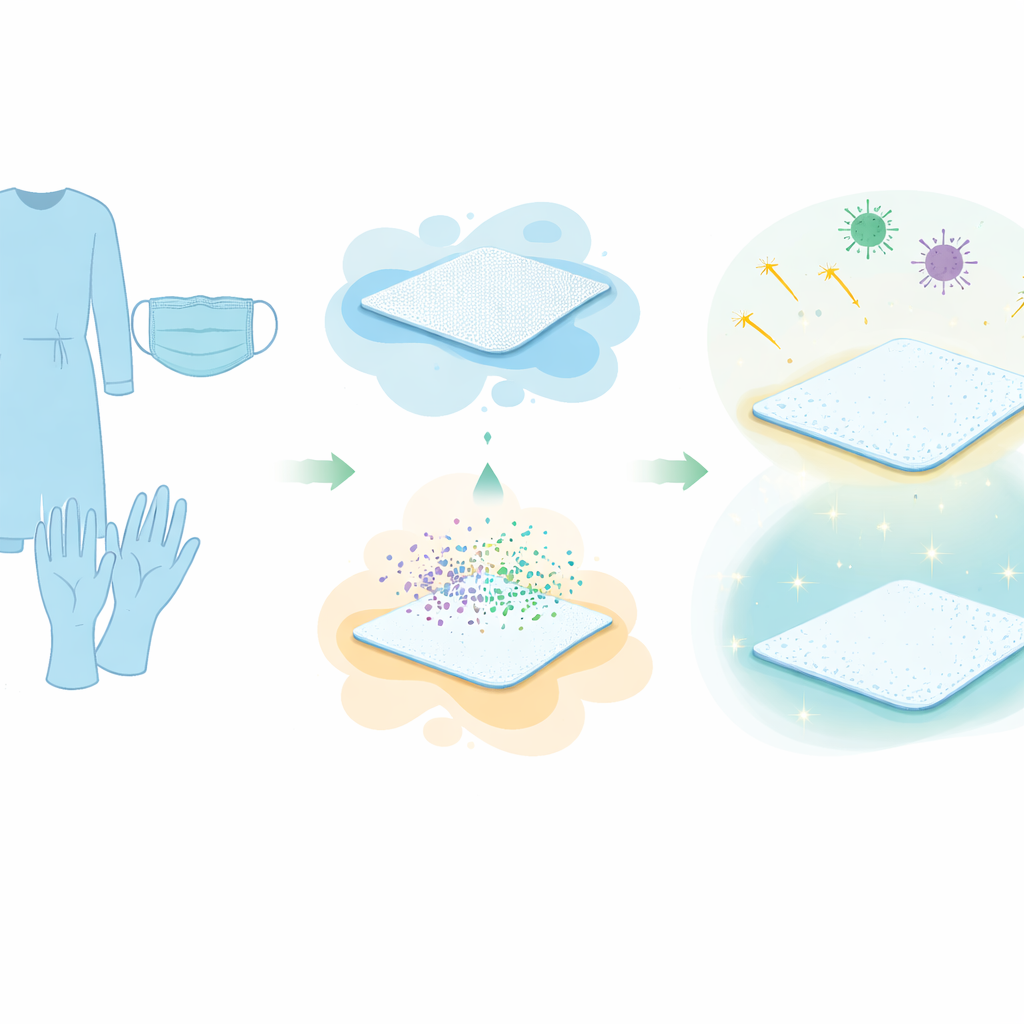
Hospital gowns, masks, and bedding are meant to shield patients and healthcare workers from germs and harsh ultraviolet (UV) light, yet the fabrics themselves can become weak, uncomfortable, or lose their protective finishes after repeated washing. This study presents a gentle, eco-conscious way to upgrade common cotton and polyester–cotton textiles so they can better fight microbes and block UV radiation, while remaining durable and suitable for mass use in medical settings.
Why Everyday Blends Need an Upgrade
Many uniforms and medical textiles are made from blends of cotton and polyester because they are strong, wrinkle resistant, and affordable. However, these fabrics pill over time, can feel rough, and offer only limited built-in protection against bacteria and UV rays. Traditional methods to add antimicrobial or sun-blocking finishes often rely on harsh chemicals that may wash out quickly or raise environmental and safety concerns. The authors sought a greener approach that works with existing industrial processes, using mild biological treatments to prepare fabric surfaces to hold onto protective particles more securely.
Using Nature’s Tools to Prepare the Fabric
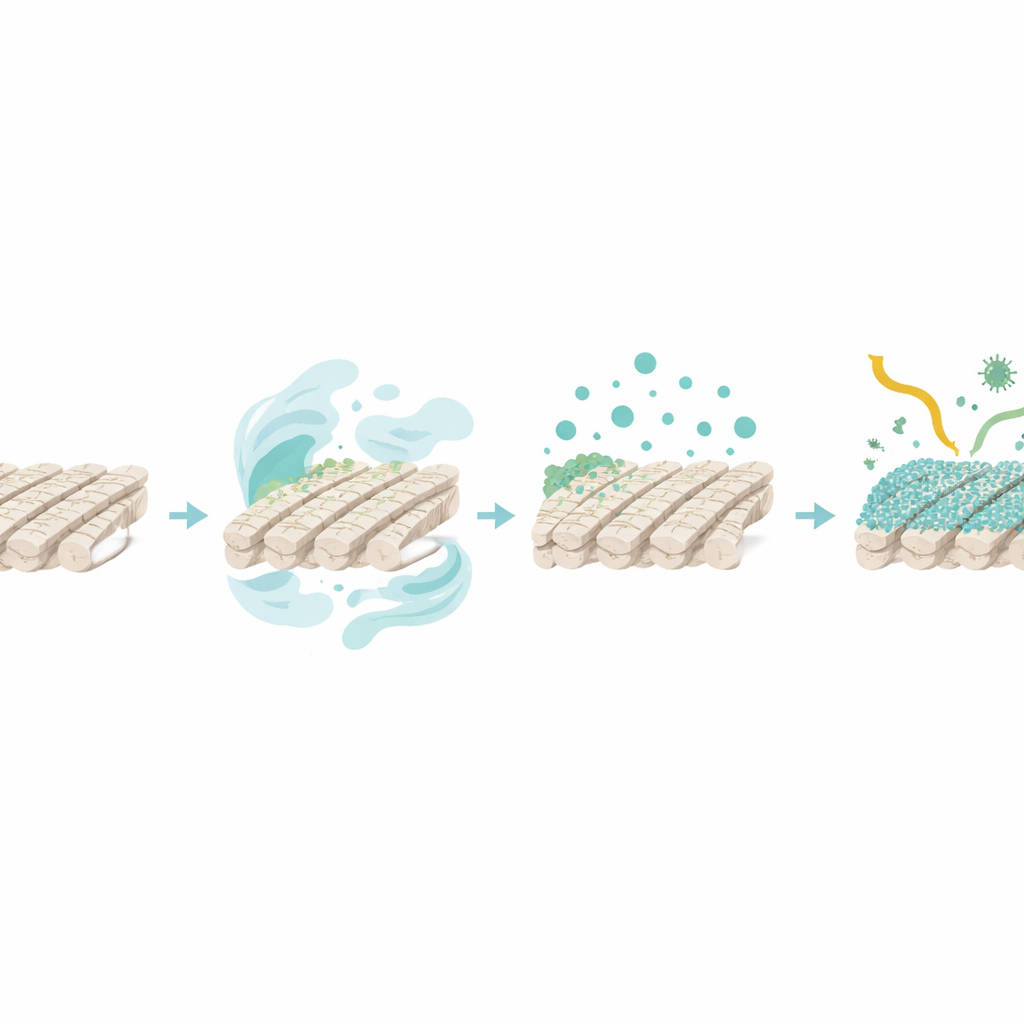
The researchers turned to enzymes—proteins that act as natural catalysts—to gently "polish" the fabric surface before adding tiny zinc oxide particles. They used two types of cellulase enzymes, one working best in slightly acidic conditions and the other in neutral conditions, to treat pure cotton and polyester–cotton blend fabrics. These enzymes nibble away at loose surface fibers and partially break certain bonds in the cotton and polyester components. As a result, the fabric surface becomes smoother to the touch but richer in chemical groups that can attract and hold on to metal-based particles.
Growing Protective Particles Directly on Fibers
Instead of simply dipping fabrics into a ready-made particle suspension, the team formed zinc oxide nanoparticles directly on and within the fabric using a sol–gel process carried out in water. First, the enzyme-treated textiles were soaked in a zinc salt solution, where the newly formed surface groups on the fibers attracted zinc ions. Then, by carefully adjusting temperature and alkalinity, these ions were converted into solid zinc oxide nanoparticles that grew in place on the fibers. Microscopy images showed the fabric surfaces becoming evenly coated with a thin, continuous layer of tiny particles, while elemental analysis and infrared spectroscopy confirmed that zinc oxide was indeed present and attached after this treatment and even after multiple wash cycles.
Fighting Germs and Blocking the Sun
The enhanced fabrics were then tested against several troublesome microbes, including common disease-causing bacteria and a fungus. Samples that had been activated with enzymes and then loaded with zinc oxide showed strong reductions in living microbes, even after five industrially simulated laundry cycles. In contrast, untreated and enzyme-only fabrics showed no meaningful antimicrobial effect. The same modified textiles were evaluated for their ability to block UV radiation. While the original cotton and polyester–cotton blends offered only poor to modest UV protection, the zinc oxide–treated fabrics leapt to the highest protection rating used for clothing, and this performance persisted over repeated washings. Fabrics activated with the acid-working enzyme tended to retain slightly more particles and thus provided somewhat superior protection compared with those treated with the neutral enzyme.
What This Means for Future Protective Clothing
In simple terms, the study shows that gently preparing textiles with enzymes lets them grip protective zinc oxide particles far more effectively, creating medical fabrics that can kill germs and screen out harmful UV rays while standing up to everyday laundering. Because the approach relies on water-based processing and enzymes already familiar to the textile industry, it offers a practical, eco-friendlier alternative to more aggressive chemical or energy-intensive methods. This blend of biotechnology and nanotechnology could lead to safer, longer-lasting protective garments for healthcare workers and patients, without sacrificing comfort or environmental responsibility.
Citation: Zagloul, T.M., Hassan, T.M. & Al-Balakocy, N.G. Green approach for improving functionality of medical protective textiles using ZnO NPs. Sci Rep 16, 8491 (2026). https://doi.org/10.1038/s41598-026-39660-8
Keywords: medical textiles, antimicrobial fabrics, zinc oxide nanoparticles, eco-friendly finishing, UV-protective clothing