Clear Sky Science · en
Silver nanoparticles derived from Calotropis and Plumeria plants as a green approach to extend the vase life of Alstroemeria flowers
Keeping Bouquet Blooms Fresh for Longer
Anyone who has watched a beautiful bouquet fade in just a few days has wondered how to keep cut flowers fresh for longer. This study explores a new, plant-based way to slow wilting and leaf yellowing in Alstroemeria, a popular florist flower often sold as the Peruvian lily. By using tiny particles of silver made with extracts from two tropical plants, the researchers tested whether they could extend vase life in a safer and more environmentally friendly way than standard chemical preservatives.
Why Cut Flowers Fade So Quickly
Once flowers are cut, they no longer receive water and food from the plant’s roots. Bacteria build up in the vase water and clog the stem, leaves lose their green color, petals lose pigment, and the whole stem eventually droops and dries out. In Alstroemeria, a key problem is that the leaves turn yellow before the petals fall, making otherwise attractive stems look old and unsellable. The flower industry has long used silver-based chemicals to kill bacteria and delay aging, but these substances can be toxic to people and the environment, spurring a search for greener alternatives.
Turning Tropical Leaves into Tiny Helpers
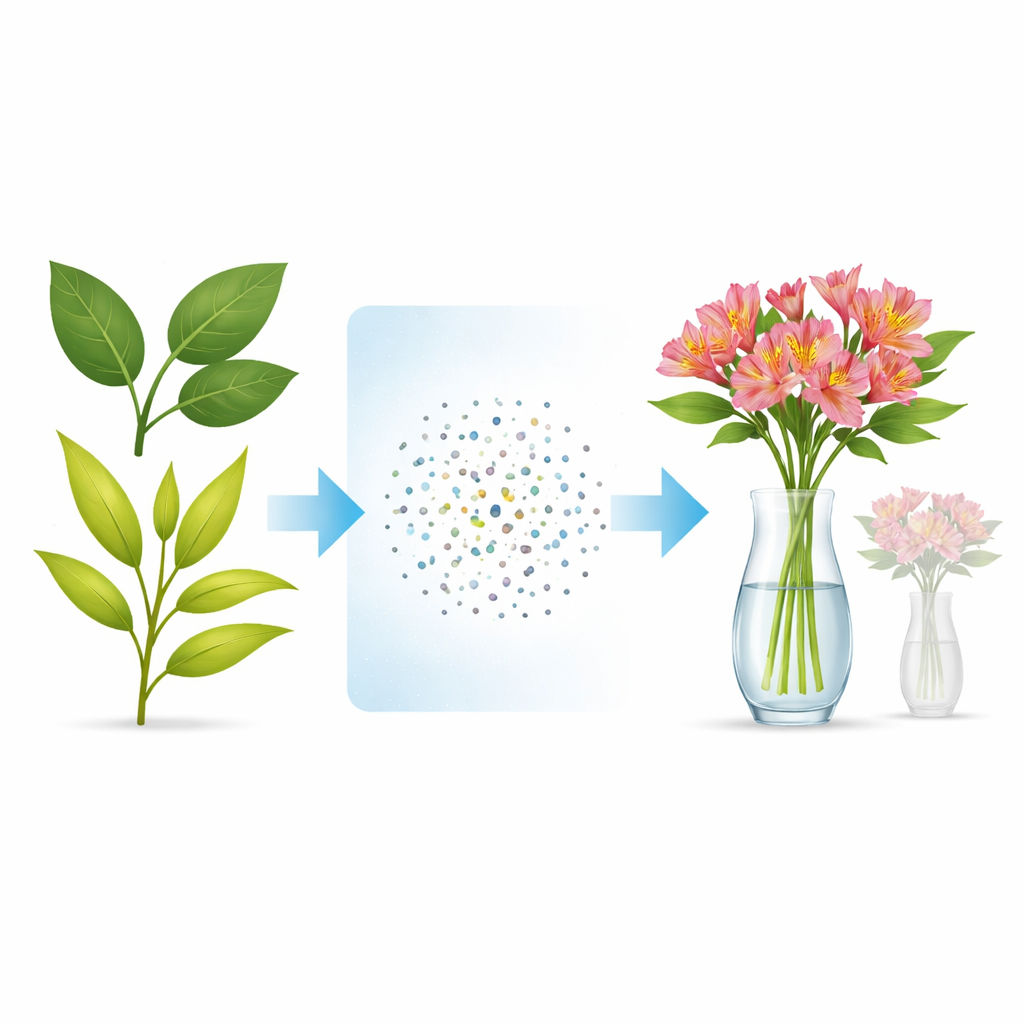
The team focused on two tropical species, Plumeria rubra and Calotropis procera, whose leaves are rich in natural antioxidant and antimicrobial compounds. They boiled dried leaves in water to make extracts, then mixed these with a silver salt solution. This caused silver nanoparticles—extremely small particles only about a few billionths of a meter across—to form. The result was “green” silver nanoparticles, created and stabilized by plant chemicals instead of harsh industrial reagents. These particles were then added, at three different strengths, to vase solutions for freshly cut Alstroemeria stems, alongside comparisons with chemically made silver nanoparticles, plain sugar water, and water alone.
Testing What Happens in the Vase
Over nine days, the researchers measured how long the flowers stayed attractive, how well buds opened, how much water the stems took up, and a range of internal signals linked to aging and stress. These included leaf greenness, petal color pigments, sugar levels, and the activity of two key protective enzymes that help cells clean up harmful oxygen by-products. They also checked how “leaky” the cell membranes were, since leaky cells are a sign of damage and advanced aging. All of these traits were tracked on days three, six, and nine to build a detailed picture of how each treatment influenced the flowers’ health over time.
Greener Silver Gives Flowers a Second Wind
Plant-based silver nanoparticles, especially those made with Plumeria leaves, clearly outperformed both plain sugar and many of the chemical silver treatments. A low dose of Plumeria nanoparticles (called NP10 in the study) kept Alstroemeria stems fresh for up to 18 days, compared with 13 days for the highest dose of chemical silver and less for the controls. More than 93 percent of buds opened fully with NP10, and stems treated with a slightly higher dose (NP15) showed about 22 percent higher fresh weight and 18 percent greater water uptake than untreated flowers. These greener treatments also boosted the flowers’ internal defenses: key protective enzymes were up to 1.6 times more active than in control stems, helping to preserve chlorophyll in the leaves and red pigments in the petals. At very high doses, however, both green and chemical nanoparticles could begin to stress the flowers, underscoring the importance of finding the right concentration.
What This Means for Everyday Bouquets
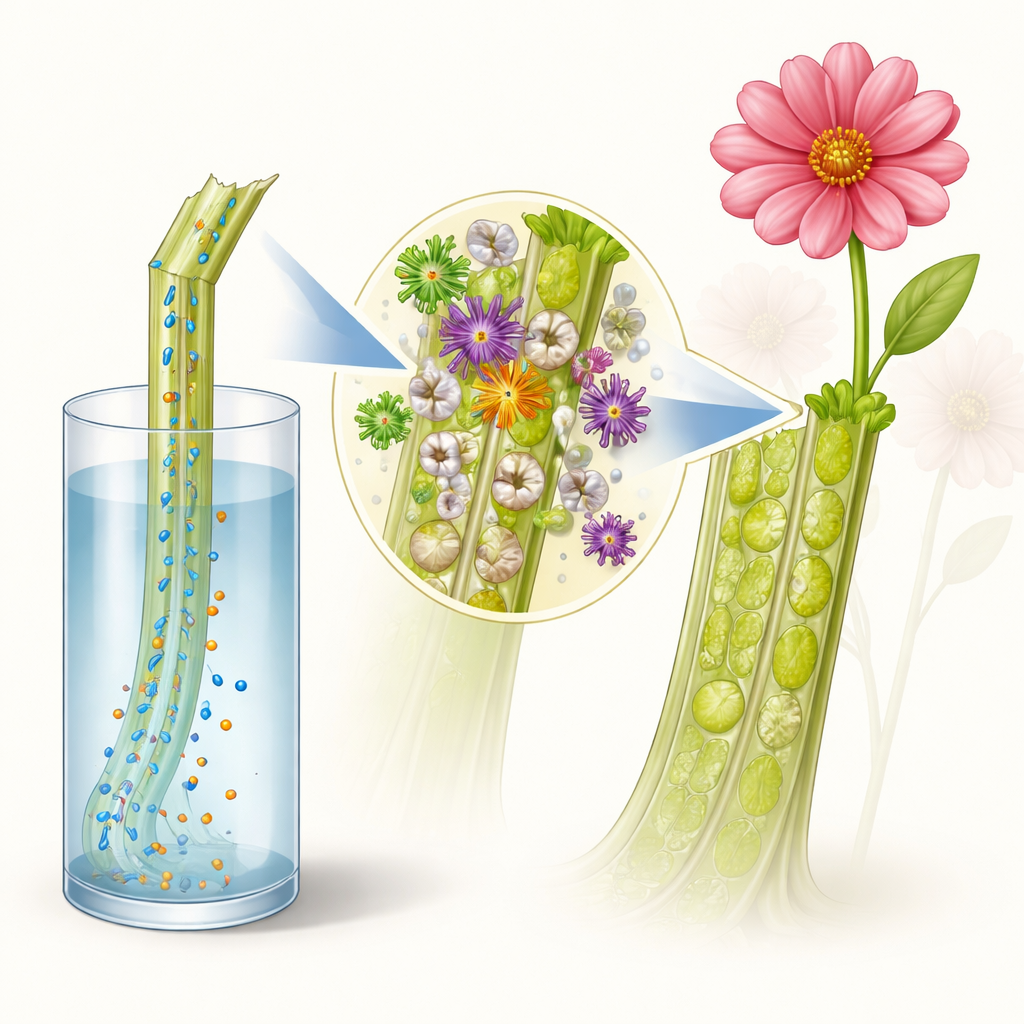
From a layperson’s perspective, the takeaway is straightforward: tiny silver particles made using everyday plant leaves can help keep cut flowers standing tall, colorful, and fully opened for several extra days, and they do so with fewer toxicity concerns than standard chemical preservatives. By curbing bacteria in the vase, improving water flow through the stems, and strengthening the flowers’ own protective systems, these green nanoparticles delay the usual signs of aging. The authors suggest that such plant-derived silver treatments, especially at low doses based on Plumeria extract, could become a practical, more sustainable way for growers, florists, and even home users to enjoy longer-lasting, greener bouquets.
Citation: Abid, N., Samsampour, D. & Babarabie, M. Silver nanoparticles derived from Calotropis and Plumeria plants as a green approach to extend the vase life of Alstroemeria flowers. Sci Rep 16, 10222 (2026). https://doi.org/10.1038/s41598-026-39654-6
Keywords: cut flower vase life, green silver nanoparticles, Alstroemeria, plant extracts, postharvest floriculture